
Planning a road trip involves more than choosing a destination and starting your car. A successful journey requires a practical route, realistic driving hours, fuel planning, accommodation arrangements, and a vehicle ready for long-distance travel.
A reliable road trip planner helps you organize these details before departure, reducing unexpected expenses, unnecessary driving, and stressful last-minute decisions.
Whether you’re planning a weekend getaway, family vacation, or cross-country drive across America, this guide explains how to prepare your trip from start to finish.
How to Plan a Road Trip From Start to Finish
Choose Your Destination and Route
Start by deciding where you want to travel and how many days you have available.
Consider your interests, including scenic highways, national parks, beaches, historic towns, or outdoor adventures.
When selecting a route, evaluate:
- Total driving distance
- Highway versus scenic-road travel
- Weather and seasonal road closures
- Fuel stations and rest areas
- Toll roads and parking availability
For example, a 600-mile trip may require approximately 10 hours of actual driving at an average speed of 60 MPH, excluding traffic and stops.
Driving time should always include additional allowances for meals, sightseeing, and rest.
Plan Realistic Daily Driving Distances
Avoid scheduling excessively long driving days.
For a relaxed sightseeing trip, approximately 200–300 miles per day may be a reasonable starting point, depending on road conditions and available drivers.
AAA recommends taking breaks approximately every two hours or 100 miles to help manage driver fatigue. Your AAA Network
Select Your Overnight Stops
Identify towns where you can comfortably stop for the night.
Compare accommodation prices, parking availability, and distance from your next destination.
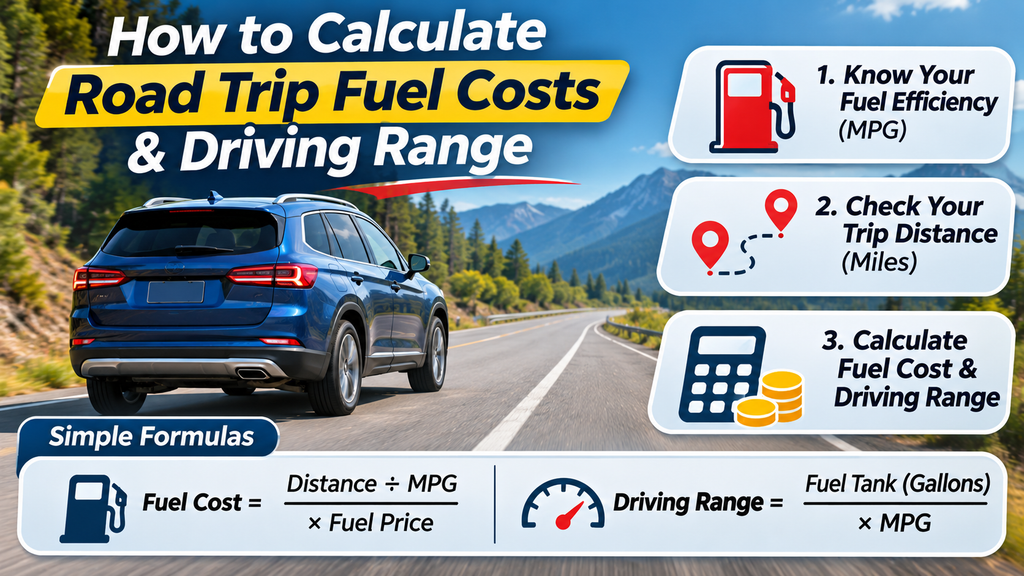
Fuel is one of the most important expenses to estimate before traveling.
Understanding your vehicle’s fuel efficiency helps determine how many gallons you’ll need and how often you should refuel.
Calculate Fuel Requirements
Use this formula:
Fuel required = Total distance ÷ Vehicle MPG
For example, consider a 1,200-mile journey in a vehicle averaging 30 MPG.
- Total distance: 1,200 miles
- Average fuel efficiency: 30 MPG
- Gasoline required: 40 gallons
- Assumed gasoline price: $3.50 per gallon
- Estimated fuel expense: $140
Road Trip Fuel Budget Comparison
| Trip distance | 20 MPG car | 30 MPG car | 40 MPG car |
|---|---|---|---|
| 300 miles | $52.50 | $35 | $26.25 |
| 600 miles | $105 | $70 | $52.50 |
| 900 miles | $157.50 | $105 | $78.75 |
| 1,200 miles | $210 | $140 | $105 |
Illustrative estimates using gasoline priced at $3.50 per gallon.
How Far Can Your Car Travel on One Tank?
Calculate theoretical driving range using:
Fuel tank capacity × Vehicle MPG = Estimated range
For example, a 15-gallon tank and 30 MPG provide a theoretical range of 450 miles, approximately 724 kilometers.
Actual range changes with vehicle loading, traffic, weather, driving speed, and terrain.
Plan refueling stops before reaching an empty tank, especially in remote areas.
How to Prepare Your Car and Pack for a Road Trip
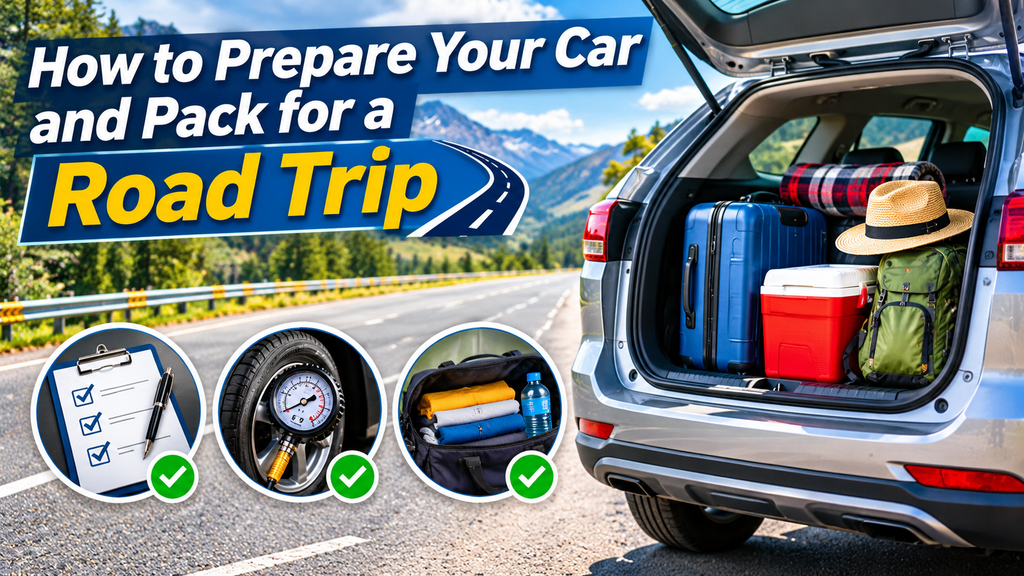
A complete road trip planner should include vehicle maintenance and essential travel equipment.
Check Your Vehicle Before Departure
Inspect the following components:
- Tires: Check cold tire pressure, tread condition, and spare-tire equipment.
- Brakes: Address unusual noises, vibrations, or reduced braking performance.
- Engine oil: Check the level and follow manufacturer maintenance recommendations.
- Coolant: Verify the correct coolant level when the engine is cold.
- Battery: Check its condition and charging performance.
- Lights and wipers: Confirm proper operation before traveling.
The National Highway Traffic Safety Administration recommends checking tires, fluids, lights, batteries, and other important vehicle systems before long journeys. NHTSA
Pack Essential Road Trip Equipment
Bring a first-aid kit, drinking water, phone charger, flashlight, tire-pressure gauge, emergency tools, and necessary medications.
Keep luggage secured so that loose objects cannot move dangerously during sudden braking.
For families, include age-appropriate child restraints, snacks, entertainment, and comfortable clothing.
Prepare for Unexpected Situations
Save offline maps, carry roadside assistance information, and check weather forecasts before leaving.
If your route includes national parks, confirm entrance requirements, reservations, and current alerts. National Park Service
ShiftAndCruise Road Trip Planning Framework
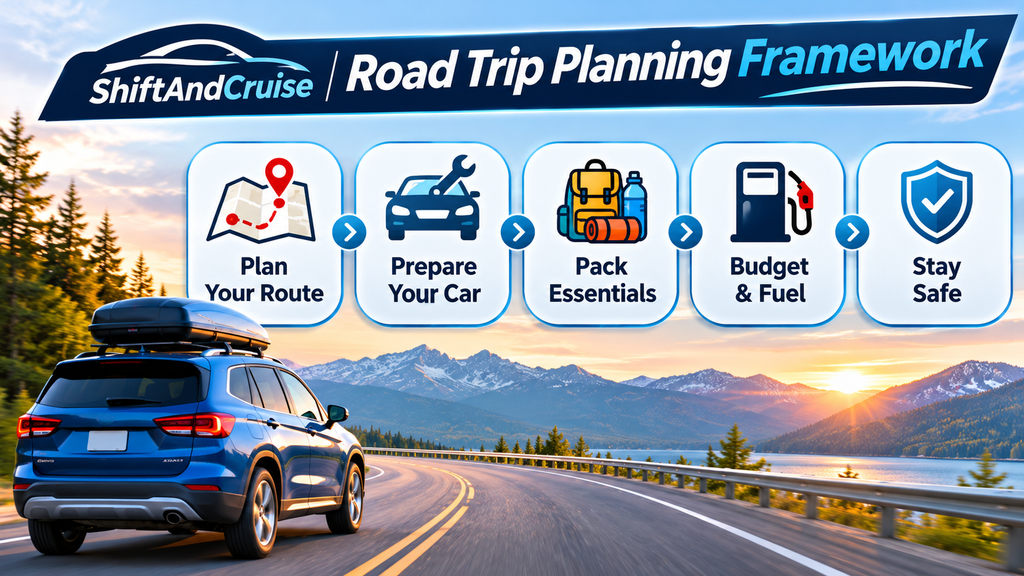
The ShiftAndCruise Six-Check Travel Matrix helps travelers organize important decisions before starting their journey.
| Planning factor | What to calculate or check | Why it matters |
|---|---|---|
| Destination | Route and attractions | Avoid unnecessary detours |
| Driving time | Daily mileage and breaks | Reduce driver fatigue |
| Fuel | MPG, tank capacity, gas prices | Estimate fuel costs |
| Accommodation | Hotels, parking, availability | Manage overnight expenses |
| Vehicle | Tires, brakes, fluids, battery | Reduce breakdown risks |
| Safety | Weather, emergency kit, navigation | Improve preparedness |
Example: Three-Day Road Trip Itinerary
Day 1
Departure and scenic stops
Drive approximately 200 miles, visit selected attractions, and check into accommodation.
Day 2
Explore the destination
Visit major attractions, keep driving limited, and allow time for meals and relaxation.
Day 3
Return journey
Check fuel and tires, travel home, and take scheduled rest breaks.
This is an illustrative schedule. Adjust distances to your actual destination and driving conditions.
How to Keep Your Road Trip Within Budget
Compare accommodation prices, pack snacks and water, avoid unnecessary detours, and estimate toll charges.
Set aside an emergency fund for unexpected expenses such as vehicle repairs, additional accommodation, or route changes.
For electric vehicles, replace gasoline calculations with expected energy consumption, charging prices, compatible charging locations, and realistic charging time.
Final Takeaway

Using a road trip planner makes long-distance travel easier by connecting route selection, driving schedules, fuel expenses, and vehicle preparation into one practical plan.
Choose realistic daily distances, estimate your car’s fuel consumption, prepare essential supplies, and allow flexibility for unexpected delays.
The best road trip isn’t the one covering the most miles. It’s the journey that balances safe driving, comfortable travel, meaningful destinations, and a realistic budget.