
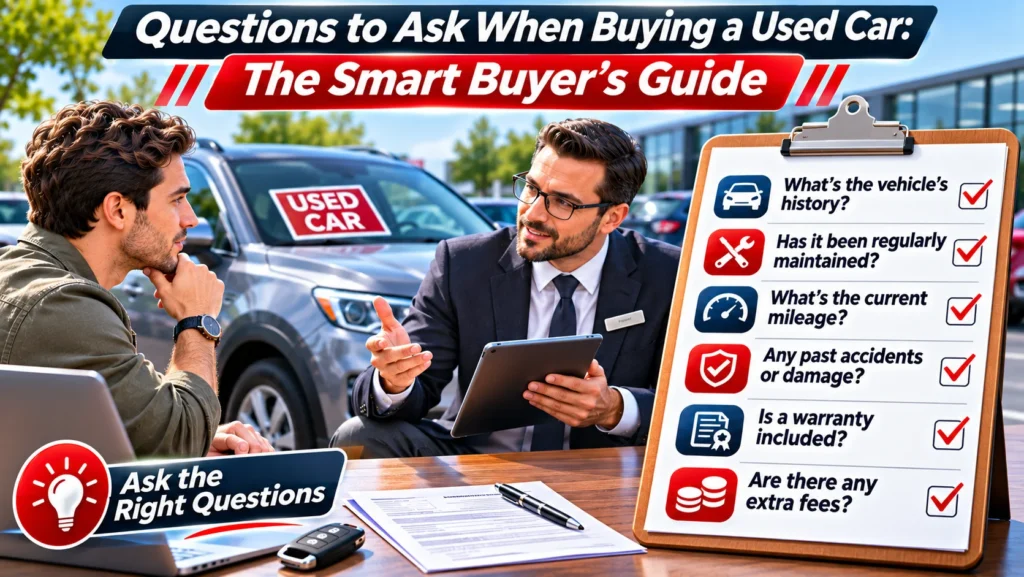
Buying a used car isn’t just about finding a good price. It’s about understanding what you’re paying for and identifying problems before they become your responsibility.
Knowing the right questions to ask when buying a used car helps uncover hidden damage, questionable maintenance, ownership problems, and unexpected costs.
At ShiftAndCruise, we recommend the Ask–Verify–Decide Framework: ask the seller specific questions, verify important answers independently, and decide whether the vehicle deserves further inspection.
These 20 questions can help you evaluate dealership vehicles and private-party listings with greater confidence.
Questions About Vehicle History and Ownership
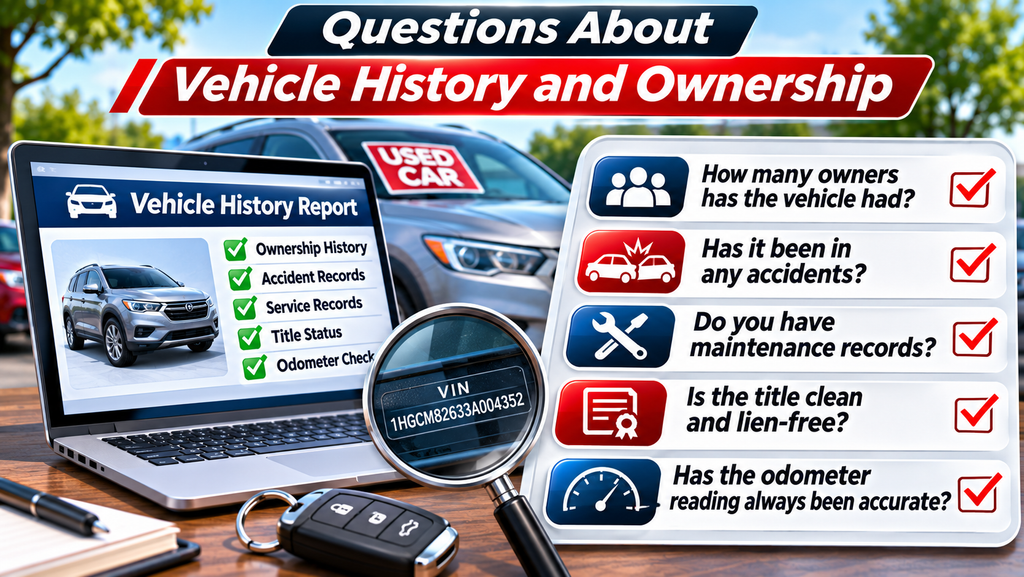
A car’s history can reveal risks that aren’t visible during a quick inspection.
Why Are You Selling the Car?
Private sellers may be upgrading, relocating, or changing vehicles. Ask for a clear explanation and watch for inconsistent answers.
How Many Previous Owners Has the Vehicle Had?
Multiple owners aren’t automatically problematic. However, frequent ownership changes deserve investigation, especially when maintenance records are unavailable.
Has the Car Ever Been Involved in an Accident?
Ask about collision severity, structural repairs, airbag deployment, and replacement parts. Minor cosmetic damage differs significantly from major structural damage.
Can You Provide the Vehicle Identification Number?
Use the VIN to investigate title branding, reported mileage, and certain damage records.
The Department of Justice’s NMVTIS-approved providers offer vehicle-history reports that can identify important title-related problems.
Does the Vehicle Have a Clean Title?
Ask whether the title is branded salvage, rebuilt, or flood-damaged. Also confirm whether any lender holds a lien.
Buyer insight: A clean history report is useful evidence, but it cannot guarantee that a vehicle has never been damaged.
Questions About Maintenance and Mechanical Condition
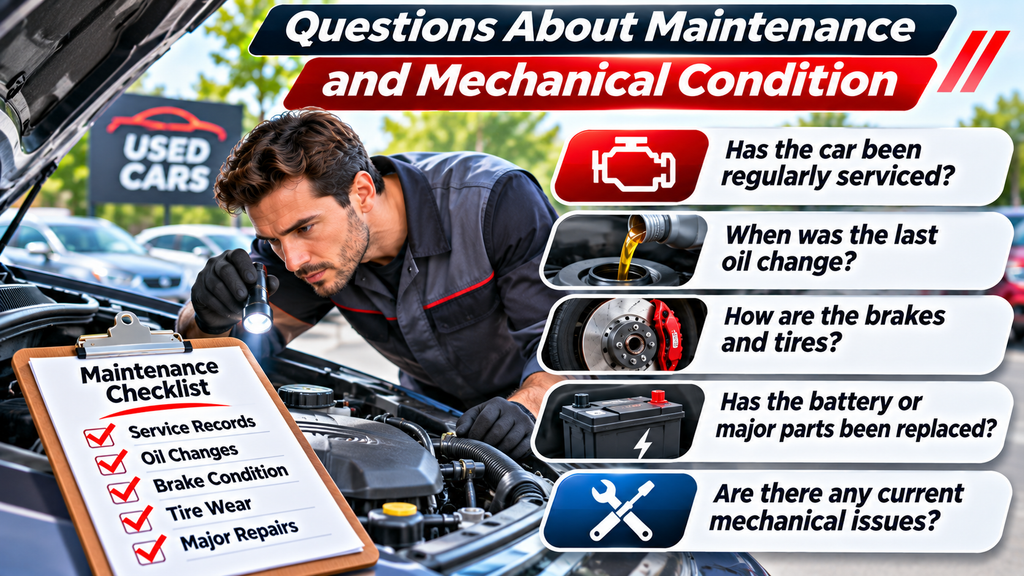
A well-maintained older vehicle can be a better purchase than a newer car with neglected servicing.
Do You Have Complete Maintenance Records?
Look for oil changes, brake servicing, scheduled inspections, and manufacturer-recommended maintenance.
Have Any Major Components Been Repaired or Replaced?
Ask specifically about the engine, transmission, suspension, cooling system, and hybrid battery when applicable.
Are There Any Known Mechanical Problems?
Ask about unusual noises, warning lights, fluid leaks, overheating, and difficult starting.
When Were the Tires and Brakes Last Replaced?
Tires and brakes are essential safety components. Their condition can also influence the vehicle’s immediate ownership costs.
Can I Arrange an Independent Pre-Purchase Inspection?
This is one of the most important questions.
The Federal Trade Commission recommends an independent mechanical inspection even for vehicles advertised as certified or sold with warranties.
A seller’s refusal isn’t proof of a hidden problem, but it creates uncertainty worth taking seriously.
Original Framework: The Answer Verification Matrix
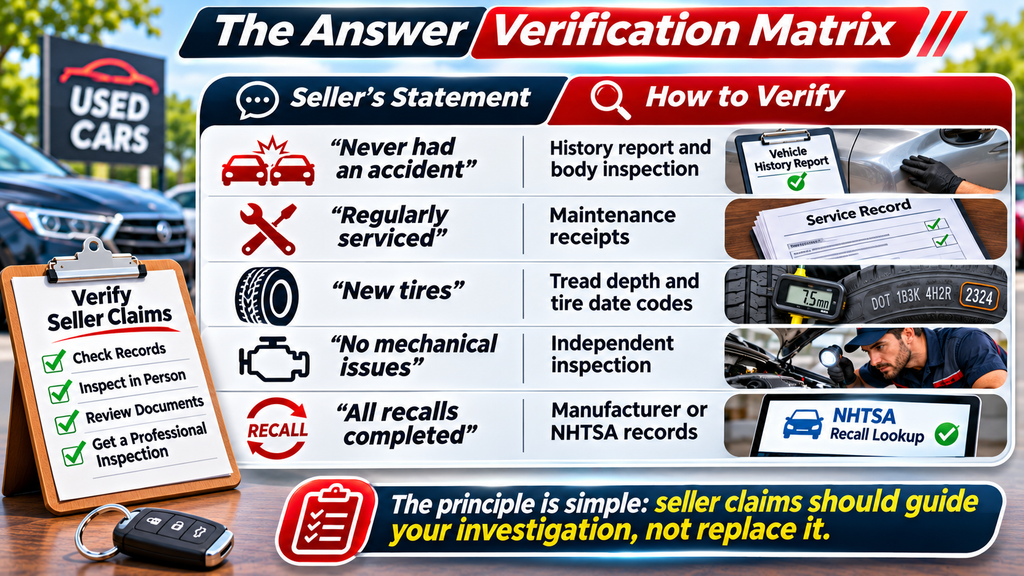
| Seller’s statement | How to verify |
|---|---|
| “Never had an accident” | History report and body inspection |
| “Regularly serviced” | Maintenance receipts |
| “New tires” | Tread depth and tire date codes |
| “No mechanical issues” | Independent inspection |
| “All recalls completed” | Manufacturer or NHTSA records |
The principle is simple: seller claims should guide your investigation, not replace it.
Questions to Ask During the Inspection and Test Drive
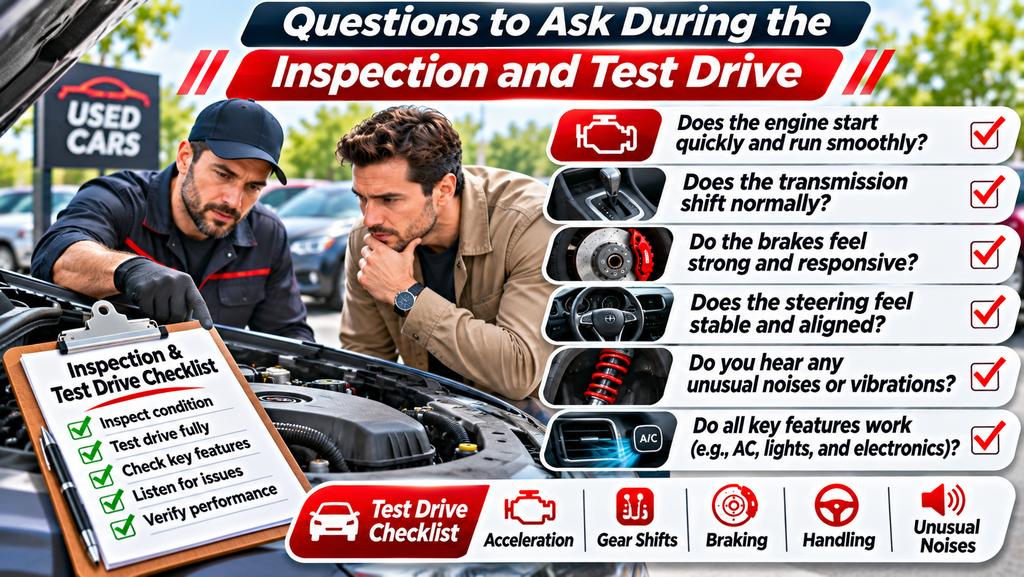
A vehicle may look attractive in photographs but behave differently on the road.
These are some of the most important questions to ask when buying a used car during an in-person inspection.
Can I Inspect the Vehicle in Daylight?
Daylight makes paint inconsistencies, rust, dents, and exterior damage easier to notice.
Can I Start the Engine When It’s Cold?
A cold start may reveal startup noises or running problems that are less noticeable after warming up.
Can I Take an Extended Test Drive?
Ask to drive on city streets and suitable higher-speed roads. Check acceleration, braking, steering, shifting, and unusual vibrations.
Have Any Dashboard Warning Lights Appeared Recently?
Ask specifically about the check-engine, ABS, airbag, and transmission warning lights.
A recently cleared warning light does not establish that the underlying problem was repaired.
Are There Any Outstanding Safety Recalls?
Use the NHTSA recall lookup to check for unrepaired safety recalls. Follow manufacturer instructions for any identified defect.
For additional guidance, pair these questions with a detailed used car inspection checklist covering the exterior, engine, interior, and test drive.
Questions About Price, Warranty, and Final Costs
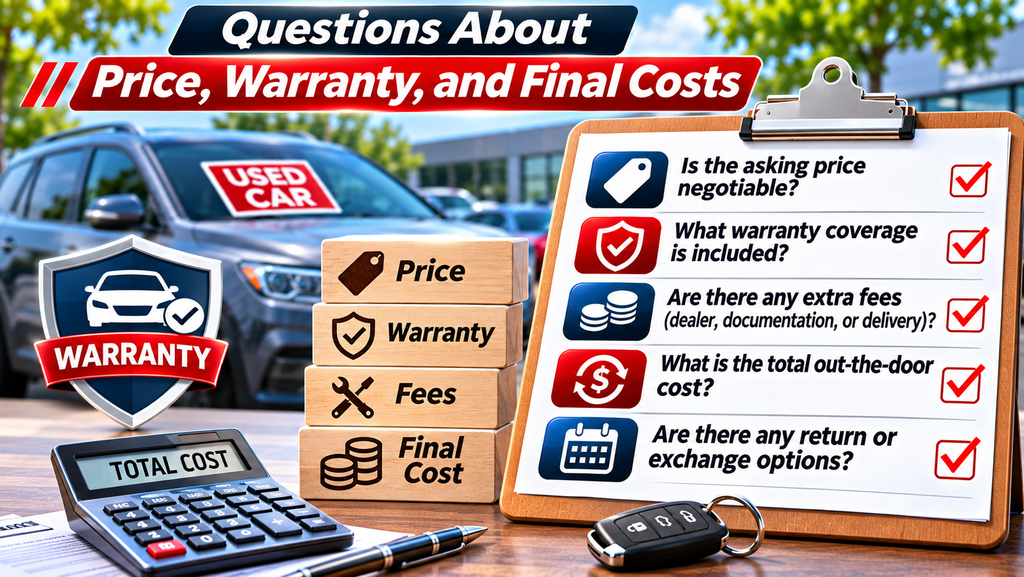
The advertised price is only one part of the purchase decision.
Is the Asking Price Negotiable?
Compare similar vehicles by model year, mileage, trim, condition, and location before negotiating.
What Is the Complete Out-the-Door Price?
Request a written breakdown covering taxes, documentation charges, registration, dealer fees, and optional extras.
Is the Vehicle Sold As-Is or With a Warranty?
Ask what is covered, for how long, and who pays for repairs.
For dealer purchases, review the FTC Buyers Guide. Warranty terms and verbal promises should be documented.
Are There Additional Financing Charges?
Compare interest rates, loan terms, total payments, and financing fees rather than focusing only on monthly payments.
What Is the Return or Cancellation Policy?
Ask for the policy in writing. Federal law does not automatically provide a three-day cancellation right for dealer vehicle purchases; state requirements vary.
Original Framework: The True Purchase Cost Calculator
Use this formula before accepting an offer:
Total Purchase Cost = Vehicle Price + Taxes and Fees + Immediate Repairs + Overdue Maintenance
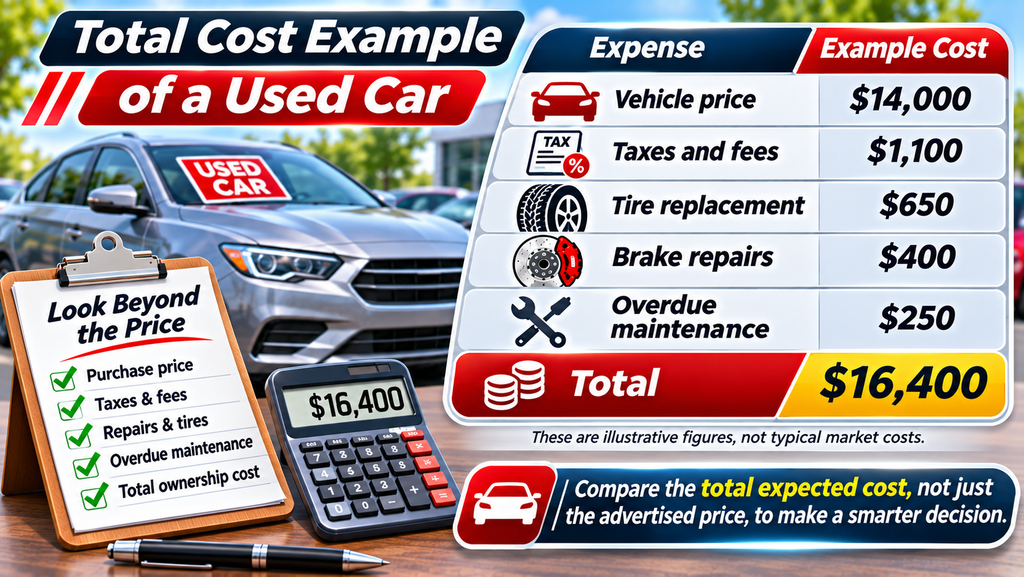
| Expense | Example |
|---|---|
| Vehicle price | $14,000 |
| Taxes and fees | $1,100 |
| Tire replacement | $650 |
| Brake repairs | $400 |
| Overdue maintenance | $250 |
| Total | $16,400 |
These are illustrative figures, not typical market costs.
This approach makes comparing two used vehicles more meaningful than comparing their advertised prices alone.
How to Decide Whether to Buy or Walk Away
Not every imperfection makes a vehicle a bad purchase. The important distinction is between manageable expenses and serious uncertainty.
The Three-Level Decision Framework
| Decision | Conditions |
|---|---|
| Buy | Verified history, acceptable inspection, reasonable total cost |
| Negotiate | Documented repairs needed, but risks are understood |
| Walk away | Unresolved title problems, serious safety concerns, or refused inspection |
For private-party purchases, verify the seller’s ownership, follow your state’s title-transfer requirements, and use a secure payment method.
For dealership purchases, obtain the complete agreement and review every charge before signing.
Final Takeaway
Asking questions protects your money, but verifying the answers protects your decision.
The most important steps are checking ownership documents, reviewing maintenance history, completing a test drive, and arranging an independent inspection.
Use these 20 questions to compare vehicles consistently. A trustworthy seller should be willing to discuss the car’s condition and support important claims with d