
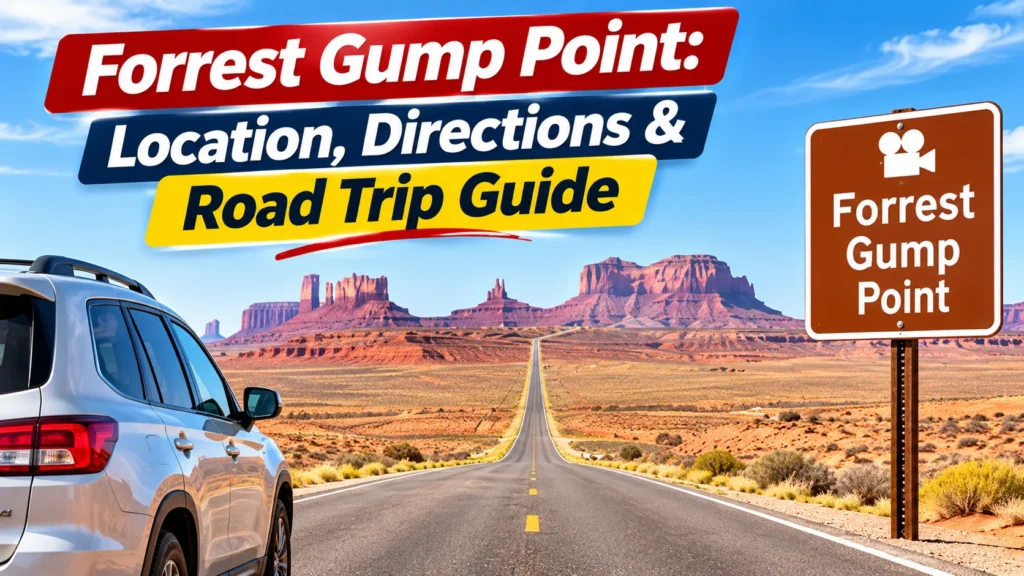
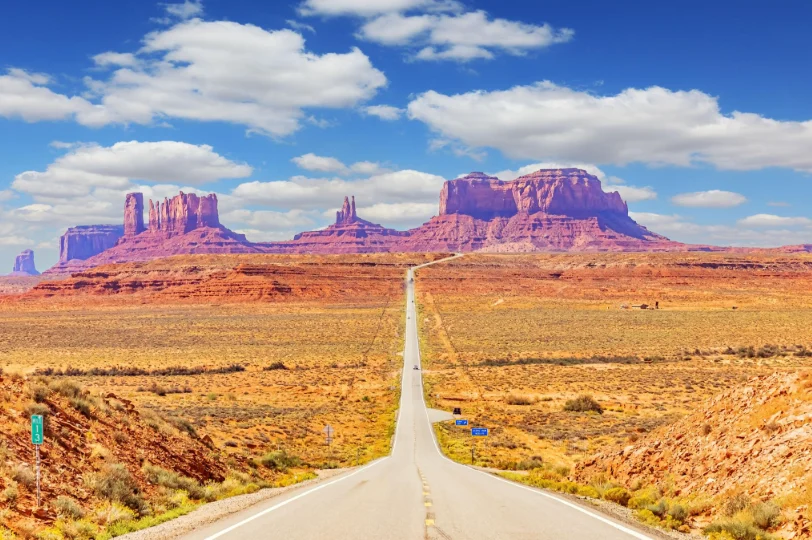
Few road trip destinations capture the American Southwest quite like Forrest Gump Point. Located along U.S. Highway 163 in southeastern Utah, this famous roadside viewpoint offers an unforgettable scene: a seemingly endless highway stretching toward the towering red sandstone formations of Monument Valley.
The location became internationally famous after appearing in the 1994 film Forrest Gump. Today, it attracts travelers, photographers, and movie enthusiasts exploring Utah and Arizona.
Quick Answer: Forrest Gump Point is located near mile marker 13 on U.S. Highway 163, approximately 13 miles north of Monument Valley Navajo Tribal Park. The roadside viewpoint is free to visit, requires no hiking, and provides one of the Southwest’s most recognizable highway views. Visitors must remain off the roadway when taking photographs.
This ShiftAndCruise guide covers the exact location, driving directions, photography conditions, nearby attractions, and important safety considerations.
Where Is Forrest Gump Point Located?
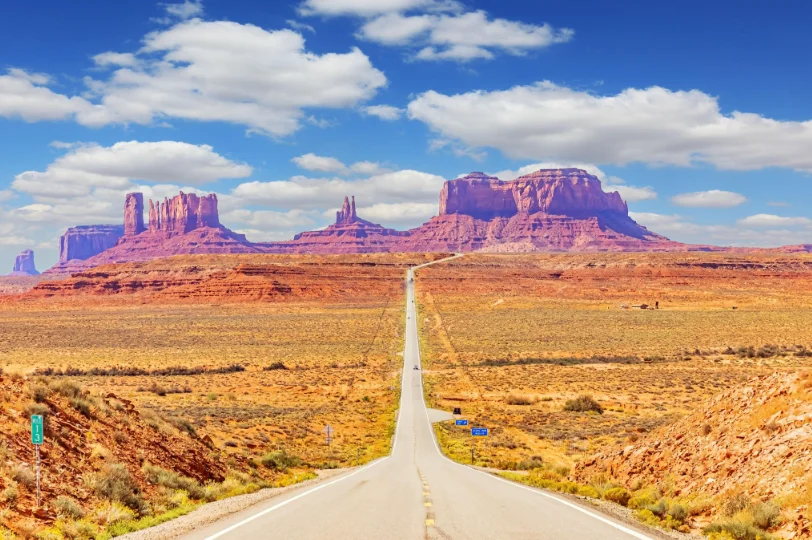
Monument Valley Mile Marker 13 Forrest Gump Point
Forrest Gump Point sits on U.S. Route 163, near Mexican Hat in San Juan County, Utah. It overlooks the distant sandstone formations of Monument Valley, within the Navajo Nation.
The viewpoint is not a developed visitor center or official scenic overlook with extensive facilities. It is a roadside location with limited pull-off areas where travelers can admire the scenery.
| Location detail | Information |
|---|---|
| State | Utah, USA |
| Highway | U.S. Route 163 |
| Mile marker | Approximately 13 |
| Nearest community | Mexican Hat |
| GPS coordinates | 37.101445, -109.990812 |
| Admission | Free for the roadside viewpoint |
| Hiking required | No |
| Main attraction | Highway view toward Monument Valley |
The GPS coordinates published by Utah’s official tourism organization identify the famous photographic location. Forrest Gump Site in Utah
Why Is It Called Forrest Gump Point?
In the movie, Forrest Gump runs across America for more than three years, attracting followers along the way.
His remarkable journey eventually reaches a quiet stretch of highway overlooking Monument Valley. There, he unexpectedly decides to stop running and return home.
The scene became one of the film’s most memorable moments, transforming this ordinary stretch of desert highway into a recognizable cinematic landmark.
Although the movie made the location famous, its appeal extends beyond film history. The surrounding landscape features sweeping desert views, distant mesas, and striking sandstone formations.
How to Get to Forrest Gump Point
The easiest way to reach the viewpoint is by car.
Driving from Mexican Hat: Travel south on US-163 toward Monument Valley. Follow the highway until you approach mile marker 13 and the famous view looking toward the sandstone buttes.
Driving from Monument Valley: Head north on US-163 toward Mexican Hat. The viewpoint is approximately 13 miles north of the tribal park area.
Use the GPS coordinates rather than relying exclusively on roadside signs.
Best Time to Visit Forrest Gump Point
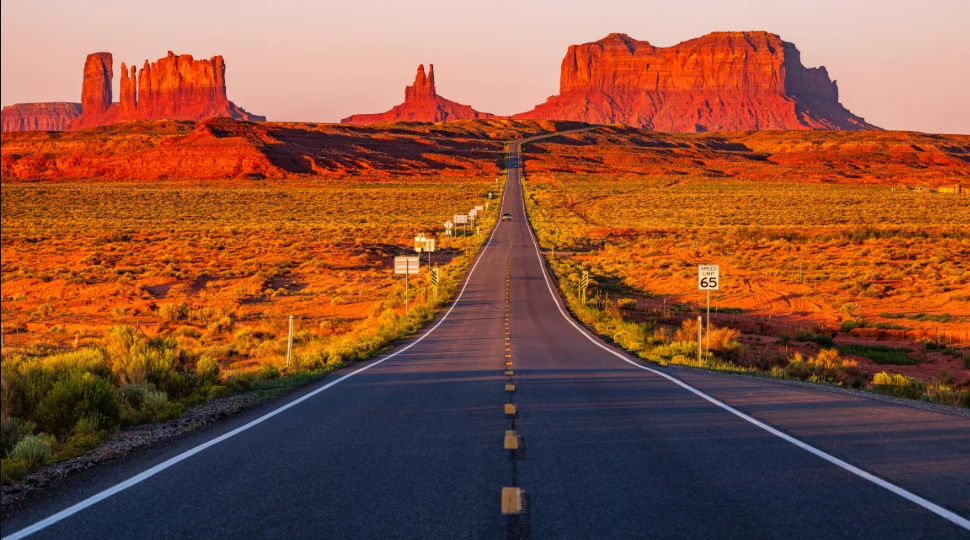
Red cliffs of Monument Valley in Utah, looking south on U.S. Route 163 north of the Utah–Arizona state line also known as Forrest Gump point early in the morning sunrise.
The scenery changes throughout the day as sunlight moves across the surrounding desert formations.
Sunrise vs. Sunset Photography
| Time | Lighting conditions | Best for |
|---|---|---|
| Sunrise | Soft early light, atmospheric shadows | Peaceful landscape photography |
| Midday | Bright light, stronger contrast | Clear visibility and sightseeing |
| Late afternoon | Warm sunlight and longer shadows | Dramatic desert scenery |
| Sunset | Colorful skies when conditions cooperate | Scenic photography |
Sunrise and late afternoon are generally attractive choices because of the softer light and longer shadows.
However, there is no guarantee of an empty highway. Traffic may appear unexpectedly, even when the surrounding landscape looks quiet.
What Is the Best Season?
Spring and fall often offer a comfortable balance of temperatures and daylight.
Summer can bring intense heat and thunderstorms. Winter may produce cold temperatures, wind, snow, or icy road conditions.
| Season | Advantages | Considerations |
|---|---|---|
| Spring | Moderate temperatures, pleasant scenery | Wind and changing weather |
| Summer | Long daylight hours | Extreme heat and afternoon storms |
| Fall | Often comfortable daytime conditions | Shorter daylight later in the season |
| Winter | Potentially quieter travel periods | Freezing temperatures and possible icy roads |
Check current forecasts and highway conditions before traveling, particularly during winter or periods of severe weather.
How Long Should You Spend There?
For travelers only interested in seeing the famous view, approximately 15–30 minutes is a reasonable planning allowance, provided there is a safe place to stop.
Photography enthusiasts may prefer additional time to observe changing light.
Avoid scheduling your visit so tightly that you feel pressured to stop in an unsafe location.
Photography, Road Safety, and Monument Valley

Monument Valley with U.S. Highway 163 at sunset, Utah, USA
Forrest Gump Point is famous for photographs featuring the long, straight road disappearing toward Monument Valley.
However, the most recognizable composition also creates the location’s biggest safety problem.
Can You Take Pictures in the Middle of the Road?
No. Visitors should never stand, sit, or pose in the roadway.
US-163 is an active highway carrying local traffic, tourists, and commercial vehicles.
Utah’s official tourism guidance specifically warns visitors not to photograph from the middle of the road because of the risk of serious injuries and fatalities. Photographs should be taken from a safe roadside shoulder. Forrest Gump Site in Utah
Follow these safety practices:
- Pull over only where parking is legally permitted and your vehicle is completely clear of traffic.
- Never stop in a travel lane for photographs.
- Do not cross the highway unnecessarily.
- Keep children and pets safely away from moving vehicles.
- Avoid standing on blind curves or near hill crests.
- Never attempt to recreate the movie scene by running in the road.
If safe stopping space is unavailable, continue driving rather than risking an accident.
Forrest Gump Point vs. Monument Valley Navajo Tribal Park
These destinations are closely connected geographically but provide different experiences.
| Feature | Forrest Gump Point | Monument Valley Tribal Park |
|---|---|---|
| Main experience | Famous highway panorama | Sandstone formations and scenic touring |
| Admission | Free roadside stop | Park entrance fees apply |
| Typical visit | Brief photography stop | Longer sightseeing experience |
| Road conditions | Paved US highway | Scenic loop includes unpaved sections |
| Facilities | Limited or none at viewpoint | Visitor facilities available |
| Guided tours | Not needed for roadside view | Available for park and restricted areas |
Is Monument Valley Worth Visiting Too?
Absolutely, particularly for travelers interested in desert landscapes and Southwestern cultural history.
Monument Valley Navajo Tribal Park is managed by the Navajo Nation and features dramatic sandstone buttes, scenic drives, and guided experiences.
The park’s 17-mile scenic loop provides closer views of the formations. Some routes and backcountry locations require authorized Navajo guides.
The loop includes rough, unpaved terrain, so visitors should consider vehicle capability and current conditions before entering.
Park admission fees, seasonal operating hours, and access restrictions can change. Check current Navajo Nation Parks information before visiting. Navajo Nation Parks & Recreation
Respect posted signs, designated visitor areas, and Navajo Nation regulations.
The ShiftAndCruise Safe Stop Road Trip Framework
Forrest Gump Point is an ideal example of a destination where preparation matters more than the length of the visit.
Use this simple Locate–Park–Explore Framework when planning roadside photography stops.
| Stage | What to do | Why it matters |
|---|---|---|
| Locate | Save GPS coordinates and review road conditions | Avoid unexpected navigation decisions |
| Park | Find a legal, safe pull-off away from traffic | Protect passengers and other drivers |
| Explore | Enjoy the scenery from a safe location | Prevent unnecessary roadway exposure |
What Should You Pack?
Although Forrest Gump Point requires no hiking, its remote desert setting makes preparation important.
Bring drinking water, sun protection, suitable footwear, a charged phone, and a basic roadside emergency kit.
Download navigation maps in advance because cellular reception can be inconsistent in remote areas.
Carry enough fuel for your planned route, especially when traveling between smaller communities.
Common Mistakes to Avoid
Visitors sometimes underestimate the location because it appears to be a simple roadside stop.
Three mistakes deserve particular attention:
Stopping suddenly: Drivers may notice the famous view unexpectedly and brake sharply. Plan your stop before reaching the viewpoint.
Ignoring weather conditions: Desert temperatures and road conditions can change quickly. Monitor forecasts rather than assuming clear conditions throughout the day.
Treating Navajo land as unrestricted public access: Stay in authorized visitor areas and respect local rules, landowners, communities, and cultural sites.
Final Takeaway: Is Forrest Gump Point Worth Visiting?
Forrest Gump Point is one of the most recognizable scenic highway locations in the United States.
Its combination of cinematic history, dramatic sandstone formations, and expansive desert scenery makes it a worthwhile stop for travelers exploring the American Southwest.
You don’t need expensive equipment, a hiking itinerary, or an elaborate travel plan to enjoy the view.
The key is planning your arrival, choosing a safe place to stop, and respecting the surrounding landscape and local community.
For the best overall experience, combine Forrest Gump Point with a visit to Monument Valley Navajo Tribal Park—but never sacrifice roadside safety for the perfect photograph.