
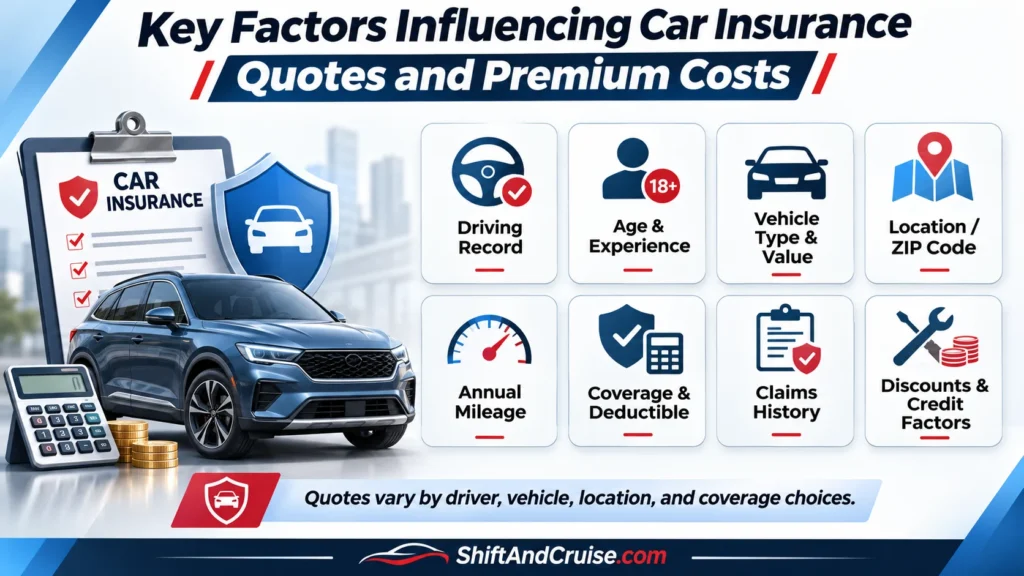
Car insurance quotes can vary significantly between drivers, vehicles, locations, and insurance companies. Two people driving similar cars may pay different premiums because insurers assess multiple factors to estimate the likelihood and potential cost of future claims.
Understanding these factors helps drivers compare coverage, avoid unnecessary expenses, and identify opportunities to reduce insurance costs without sacrificing important protection.
Understanding Car Insurance Quotes and Premiums
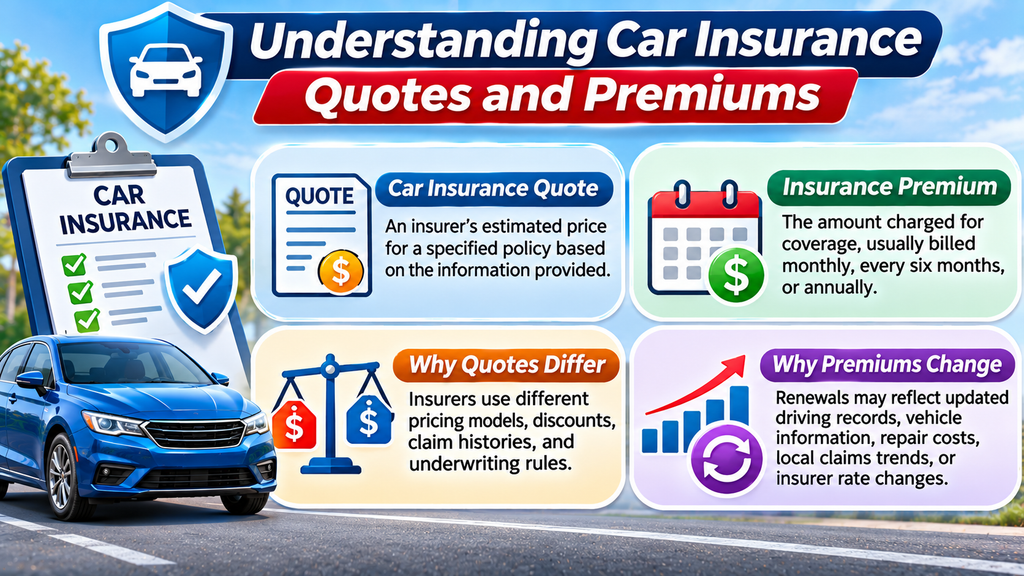
- Car insurance quote: An insurer’s estimated price for a specified policy based on the information provided.
- Insurance premium: The amount charged for coverage, usually billed monthly, every six months, or annually.
- Why quotes differ: Insurers use different pricing models, discounts, claim histories, and underwriting rules.
- Why premiums change: Renewals may reflect updated driving records, vehicle information, repair costs, local claims trends, or insurer rate changes.
Driver-Related Factors That Affect Insurance Costs
Driving Record and Claim History
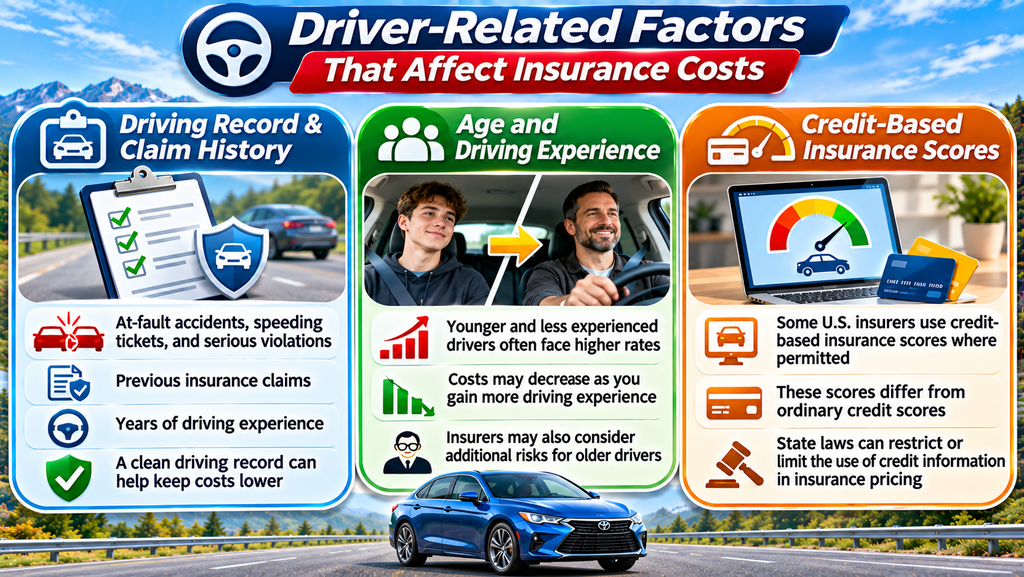
- At-fault accidents, speeding tickets, and serious traffic violations
- Previous insurance claims
- Years of driving experience
- The importance of maintaining a clean driving record
Age and Driving Experience
- Why younger and inexperienced drivers often face higher rates
- How insurance costs may change with experience
- Additional risks insurers may consider for older drivers
Credit-Based Insurance Scores
- How some U.S. insurers use credit-based insurance scores where permitted
- Why these scores differ from ordinary credit scores
- State restrictions on using credit information in insurance pricing
Vehicle-Related Factors Influencing Premiums
Car Make, Model, and Value
- Vehicle replacement cost and repair expenses
- Safety equipment and crash performance
- Theft frequency and historical insurance losses
- Differences between economy cars, luxury vehicles, and sports cars
Vehicle Age and Repair Costs
- How depreciation can affect comprehensive and collision coverage
- Expensive replacement parts and specialized repairs
- Why older vehicles are not always cheaper to insure
Vehicle Usage and Annual Mileage
- Daily commuting versus occasional driving
- Annual mileage and time spent on the road
- Personal versus business use
- Eligibility for low-mileage or usage-based insurance programs
Location and Environmental Factors
ZIP Code and Parking Location
- Urban versus rural accident frequency
- Local vehicle theft and vandalism rates
- Street parking versus secure garages
- Regional repair, medical, and legal expenses
Weather and Natural Disasters
- Hail, flooding, hurricanes, and wildfire exposure
- Regional claim frequency and severity
- Rising vehicle repair and replacement costs
Location, vehicle characteristics, driving history, and local claims experience are recognized insurance pricing factors, although their importance varies by insurer and state. NAIC+1
Coverage Choices That Influence Your Premium
Types of Car Insurance Coverage
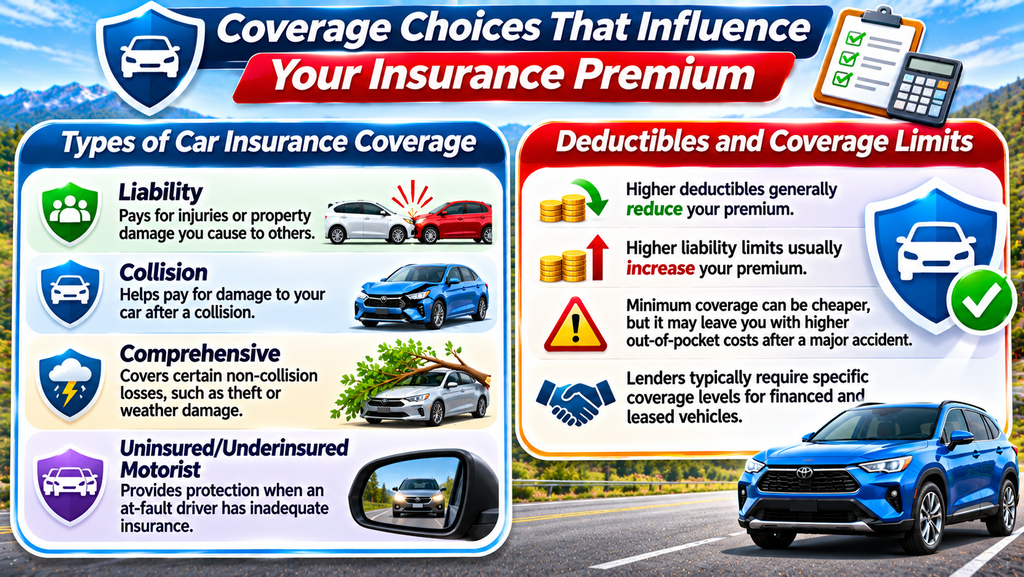
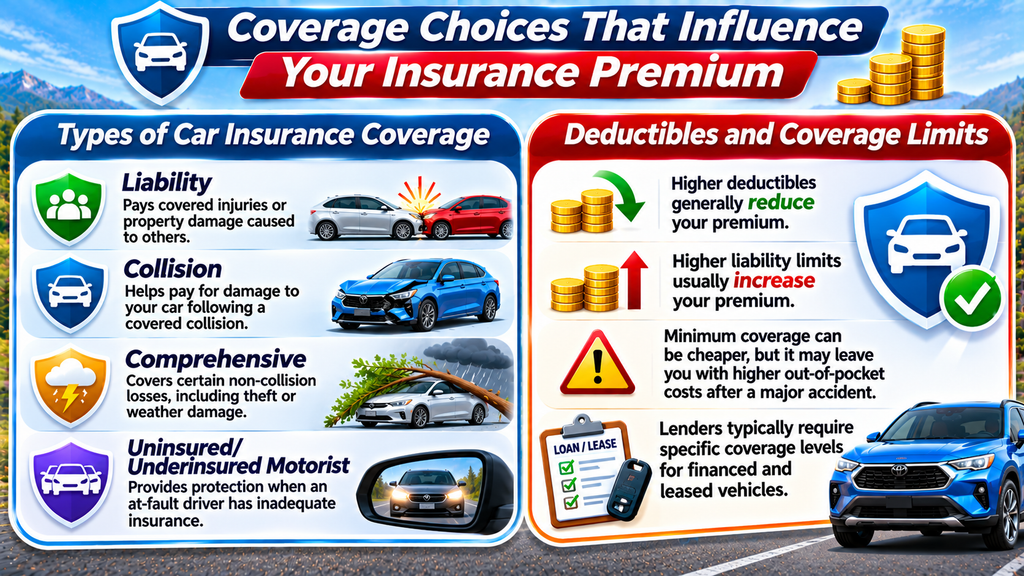
- Liability: Pays covered injuries or property damage caused to others.
- Collision: Helps pay for damage to your car following a covered collision.
- Comprehensive: Covers certain non-collision losses, including theft and weather damage.
- Uninsured/underinsured motorist: Provides protection when an at-fault driver has inadequate insurance, subject to the policy and state rules.
Deductibles and Coverage Limits
- Why higher deductibles generally reduce premiums
- Why higher liability limits usually increase coverage costs
- The financial risks of choosing only minimum coverage
- Lender requirements for financed and leased vehicles
Car Insurance Cost Comparison Matrix
The ShiftAndCruise Premium Impact Matrix summarizes common pricing factors.
| Factor | Potential premium impact | Driver’s control |
|---|---|---|
| Driving violations | Often increases cost | High |
| Previous claims | May increase cost | Partial |
| Vehicle model | Varies by repair and loss risk | High when buying |
| Annual mileage | Higher mileage may cost more | Partial |
| ZIP code | Varies by local risk | Limited |
| Driver experience | Often improves with time | Limited |
| Coverage limits | Higher limits usually cost more | High |
| Deductible | Higher deductible often lowers cost | High |
| Credit-based insurance score | Varies where permitted | Partial |
| Discounts | May reduce cost | Partial |
These are general tendencies, not guaranteed price changes. State insurance regulations and insurer rating models differ.
How to Reduce Car Insurance Premium Costs
Compare Insurance Quotes Correctly
- Get quotes from several insurance companies.
- Use identical liability limits and deductibles.
- Compare optional coverage, exclusions, and discounts.
- Review total six-month or annual costs, not just monthly installments.
- Check the insurer’s claim service and complaint history.
Ask About Available Discounts
- Safe-driver discounts
- Multi-car and policy-bundling discounts
- Low-mileage discounts
- Approved defensive-driving courses
- Anti-theft and safety-equipment discounts
- Usage-based insurance programs
Usage-based programs may assess driving behavior, mileage, and other telematics information. Review their privacy terms and potential pricing consequences before enrolling. NAIC Content+1
Frequently Asked Questions
What affects car insurance quotes the most?
Driving history, vehicle type, location, coverage selections, and annual mileage are important factors. Their relative influence differs among insurers.
Why are car insurance quotes different for the same driver?
Insurance companies use different rating formulas, historical claim information, discounts, and underwriting rules.
Does the car you drive affect insurance costs?
Yes. Repair expenses, replacement value, safety characteristics, and historical loss data can influence premiums.
Can car insurance rates increase without an accident?
Yes. Regional claim costs, repair inflation, insurer rate adjustments, or changes in other approved rating factors can increase premiums even without an individual claim. NAIC Content
Final Takeaway
Car insurance costs depend on the interaction of driver characteristics, vehicle information, location, coverage, and insurer pricing methods.
The most practical way to manage expenses is to maintain a good driving record, select appropriate coverage, compare equivalent quotes, and review available discounts.
The cheapest insurance quote isn’t necessarily the best value. Choose a policy that balances affordable premiums with adequate financial protection.
Car insurance quotes can vary significantly between drivers, vehicles, locations, and insurance companies. Two people driving similar cars may pay different premiums because insurers assess multiple factors to estimate the likelihood and potential cost of future claims.
Understanding these factors helps drivers compare coverage, avoid unnecessary expenses, and identify opportunities to reduce insurance costs without sacrificing important protection.
Understanding Car Insurance Quotes and Premiums
- Car insurance quote: An insurer’s estimated price for a specified policy based on the information provided.
- Insurance premium: The amount charged for coverage, usually billed monthly, every six months, or annually.
- Why quotes differ: Insurers use different pricing models, discounts, claim histories, and underwriting rules.
- Why premiums change: Renewals may reflect updated driving records, vehicle information, repair costs, local claims trends, or insurer rate changes.
Driver-Related Factors That Affect Insurance Costs
Driving Record and Claim History
- At-fault accidents, speeding tickets, and serious traffic violations
- Previous insurance claims
- Years of driving experience
- The importance of maintaining a clean driving record
Age and Driving Experience
- Why younger and inexperienced drivers often face higher rates
- How insurance costs may change with experience
- Additional risks insurers may consider for older drivers
Credit-Based Insurance Scores
- How some U.S. insurers use credit-based insurance scores where permitted
- Why these scores differ from ordinary credit scores
- State restrictions on using credit information in insurance pricing
Vehicle-Related Factors Influencing Premiums
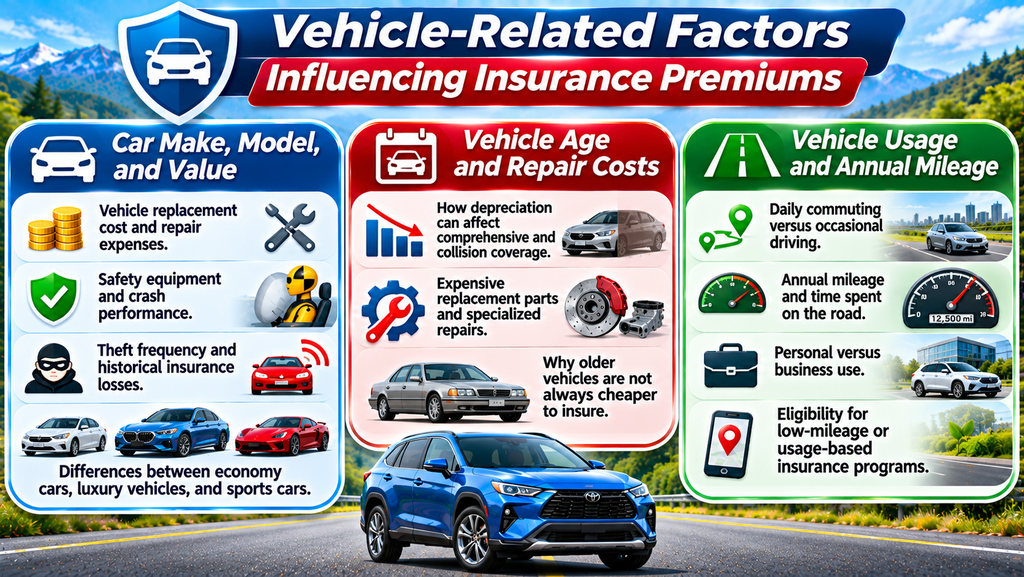
Car Make, Model, and Value
- Vehicle replacement cost and repair expenses
- Safety equipment and crash performance
- Theft frequency and historical insurance losses
- Differences between economy cars, luxury vehicles, and sports cars
Vehicle Age and Repair Costs
- How depreciation can affect comprehensive and collision coverage
- Expensive replacement parts and specialized repairs
- Why older vehicles are not always cheaper to insure
Vehicle Usage and Annual Mileage
- Daily commuting versus occasional driving
- Annual mileage and time spent on the road
- Personal versus business use
- Eligibility for low-mileage or usage-based insurance programs
Location and Environmental Factors
ZIP Code and Parking Location
- Urban versus rural accident frequency
- Local vehicle theft and vandalism rates
- Street parking versus secure garages
- Regional repair, medical, and legal expenses
Weather and Natural Disasters
- Hail, flooding, hurricanes, and wildfire exposure
- Regional claim frequency and severity
- Rising vehicle repair and replacement costs
Location, vehicle characteristics, driving history, and local claims experience are recognized insurance pricing factors, although their importance varies by insurer and state. NAIC+1
Coverage Choices That Influence Your Premium
Types of Car Insurance Coverage
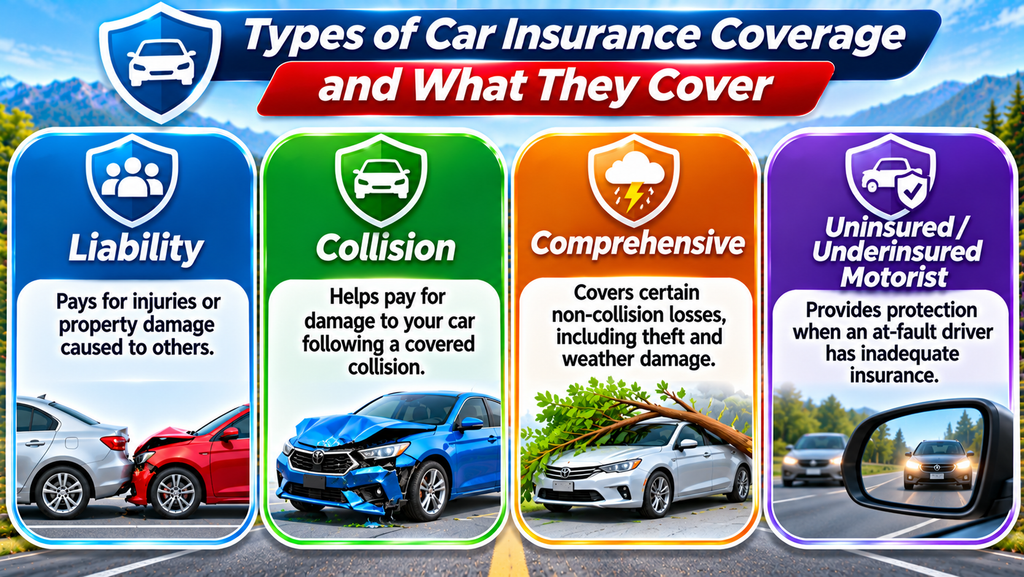
- Liability: Pays covered injuries or property damage caused to others.
- Collision: Helps pay for damage to your car following a covered collision.
- Comprehensive: Covers certain non-collision losses, including theft and weather damage.
- Uninsured/underinsured motorist: Provides protection when an at-fault driver has inadequate insurance, subject to the policy and state rules.
Deductibles and Coverage Limits
- Why higher deductibles generally reduce premiums
- Why higher liability limits usually increase coverage costs
- The financial risks of choosing only minimum coverage
- Lender requirements for financed and leased vehicles
Car Insurance Cost Comparison Matrix
The ShiftAndCruise Premium Impact Matrix summarizes common pricing factors.
| Factor | Potential premium impact | Driver’s control |
|---|---|---|
| Driving violations | Often increases cost | High |
| Previous claims | May increase cost | Partial |
| Vehicle model | Varies by repair and loss risk | High when buying |
| Annual mileage | Higher mileage may cost more | Partial |
| ZIP code | Varies by local risk | Limited |
| Driver experience | Often improves with time | Limited |
| Coverage limits | Higher limits usually cost more | High |
| Deductible | Higher deductible often lowers cost | High |
| Credit-based insurance score | Varies where permitted | Partial |
| Discounts | May reduce cost | Partial |
These are general tendencies, not guaranteed price changes. State insurance regulations and insurer rating models differ.
How to Reduce Car Insurance Premium Costs
Compare Insurance Quotes Correctly
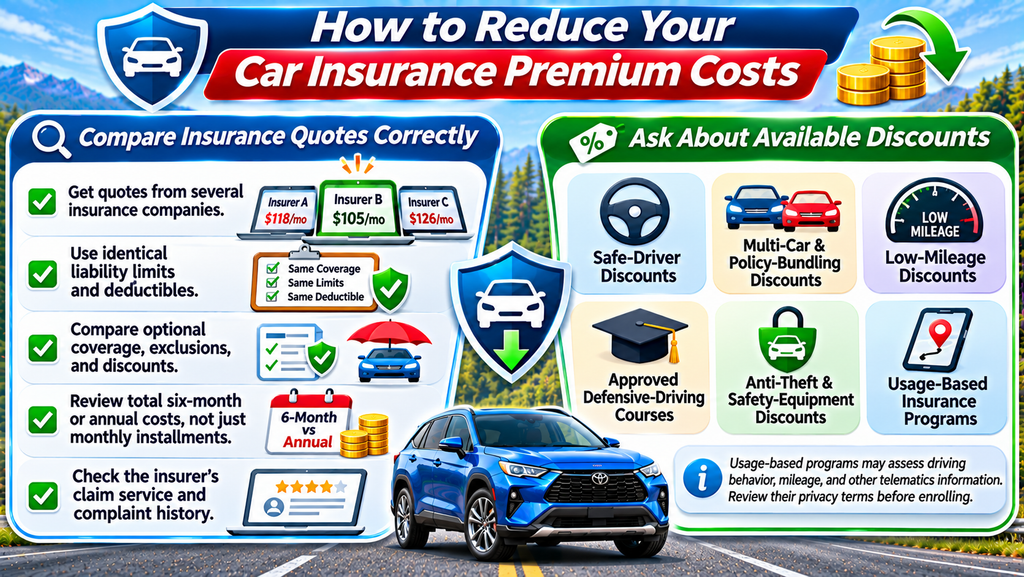
- Get quotes from several insurance companies.
- Use identical liability limits and deductibles.
- Compare optional coverage, exclusions, and discounts.
- Review total six-month or annual costs, not just monthly installments.
- Check the insurer’s claim service and complaint history.
Ask About Available Discounts
- Safe-driver discounts
- Multi-car and policy-bundling discounts
- Low-mileage discounts
- Approved defensive-driving courses
- Anti-theft and safety-equipment discounts
- Usage-based insurance programs
Usage-based programs may assess driving behavior, mileage, and other telematics information. Review their privacy terms and potential pricing consequences before enrolling. NAIC Content+1
Frequently Asked Questions
What affects car insurance quotes the most?
Driving history, vehicle type, location, coverage selections, and annual mileage are important factors. Their relative influence differs among insurers.
Why are car insurance quotes different for the same driver?
Insurance companies use different rating formulas, historical claim information, discounts, and underwriting rules.
Does the car you drive affect insurance costs?
Yes. Repair expenses, replacement value, safety characteristics, and historical loss data can influence premiums.
Can car insurance rates increase without an accident?
Yes. Regional claim costs, repair inflation, insurer rate adjustments, or changes in other approved rating factors can increase premiums even without an individual claim. NAIC Content
Final Takeaway
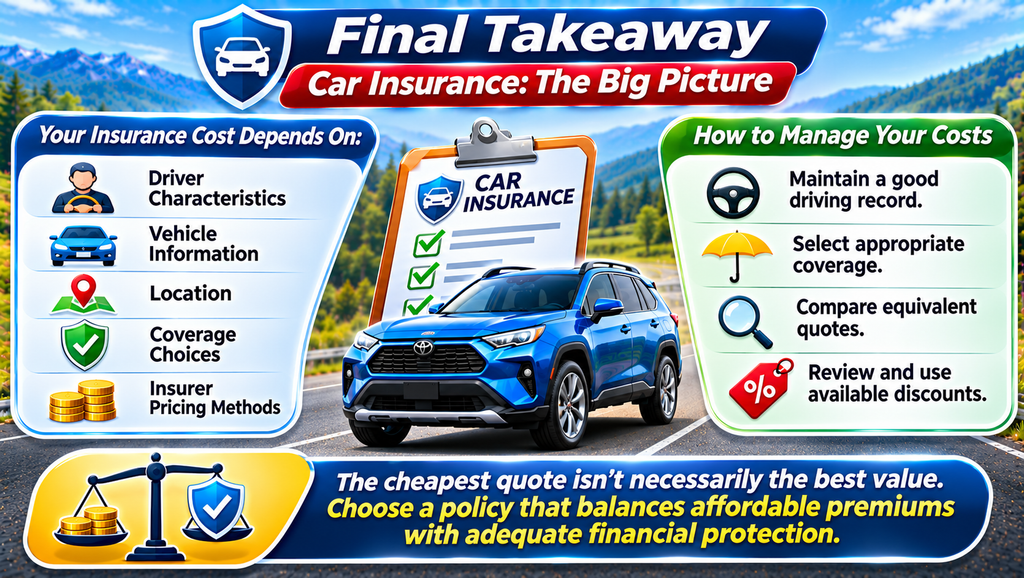
Car insurance costs depend on the interaction of driver characteristics, vehicle information, location, coverage, and insurer pricing methods.
The most practical way to manage expenses is to maintain a good driving record, select appropriate coverage, compare equivalent quotes, and review available discounts.
The cheapest insurance quote isn’t necessarily the best value. Choose a policy that balances affordable premiums with adequate financial protection.