
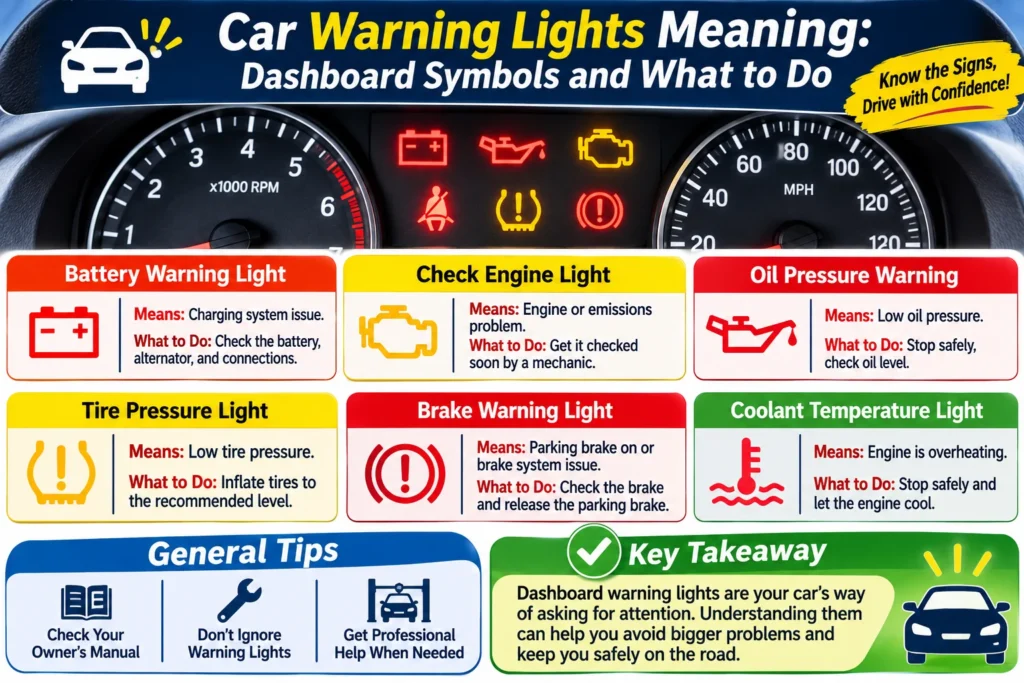
Your car’s dashboard warning lights are designed to alert you when something needs attention. Some indicate minor maintenance requirements, while others warn about serious problems involving the engine, brakes, or electrical system.
Understanding car warning lights meaning can help you recognize potential problems before they lead to expensive repairs or unsafe driving conditions.
Quick Answer: Red dashboard lights generally indicate urgent problems requiring immediate attention. Yellow or amber lights typically signal faults that need inspection, while green, blue, and white indicators usually show that a vehicle feature is operating.
At ShiftAndCruise, we recommend the Stop–Check–Go Framework to help drivers understand warning symbols, assess their urgency, and respond safely.
However, dashboard symbols vary between manufacturers. Always consult your vehicle’s owner’s manual for model-specific instructions.
What Do Dashboard Warning Light Colors Mean?
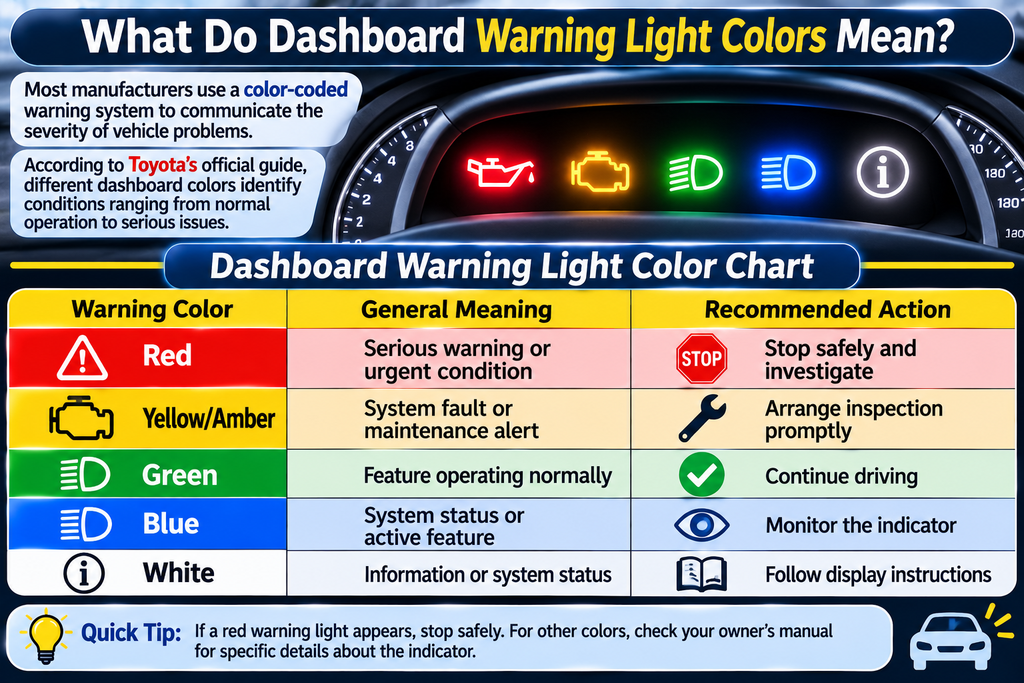
Most manufacturers use a color-coded warning system to communicate the severity of vehicle problems.
According to Toyota’s official warning light guide, different dashboard colors identify conditions ranging from normal system operation to problems requiring immediate attention.
Dashboard Warning Light Color Chart
| Warning color | General meaning | Recommended action |
|---|---|---|
| Red | Serious warning or urgent condition | Stop safely and investigate |
| Yellow/Amber | System fault or maintenance alert | Arrange inspection promptly |
| Green | Feature operating normally | Continue driving |
| Blue | System status or active feature | Monitor the indicator |
| White | Information or system status | Follow display instructions |
Why Do Warning Lights Appear When Starting a Car?
Many dashboard indicators illuminate briefly when the ignition is switched on.
This is a normal system check that helps confirm warning indicators are functioning.
Most lights should disappear after the engine starts or the relevant systems finish their checks.
If a warning remains illuminated, flashes unexpectedly, or appears while driving, investigate its meaning.
Important: Color alone does not establish severity. A flashing warning, unusual vehicle behavior, or multiple illuminated symbols can indicate a more serious situation.
Red Car Warning Lights You Should Never Ignore

Red warning lights deserve immediate attention because they may involve essential vehicle systems.
Engine Oil Pressure Warning Light
Symbol: An oil can with a droplet.
This indicates that engine oil pressure may be dangerously low.
Insufficient oil pressure can cause severe engine damage within a short period.
What to do: Pull over safely, switch off the engine, and follow the owner’s manual. If the warning persists, arrange professional assistance rather than continuing to drive.
Engine Temperature Warning Light
Symbol: A thermometer above waves.
This warning indicates that the engine may be overheating.
Possible causes include coolant leaks, cooling-system failures, or other mechanical problems.
What to do: Stop safely and switch off the engine. Never remove a hot radiator or pressurized coolant cap.
Brake System Warning Light
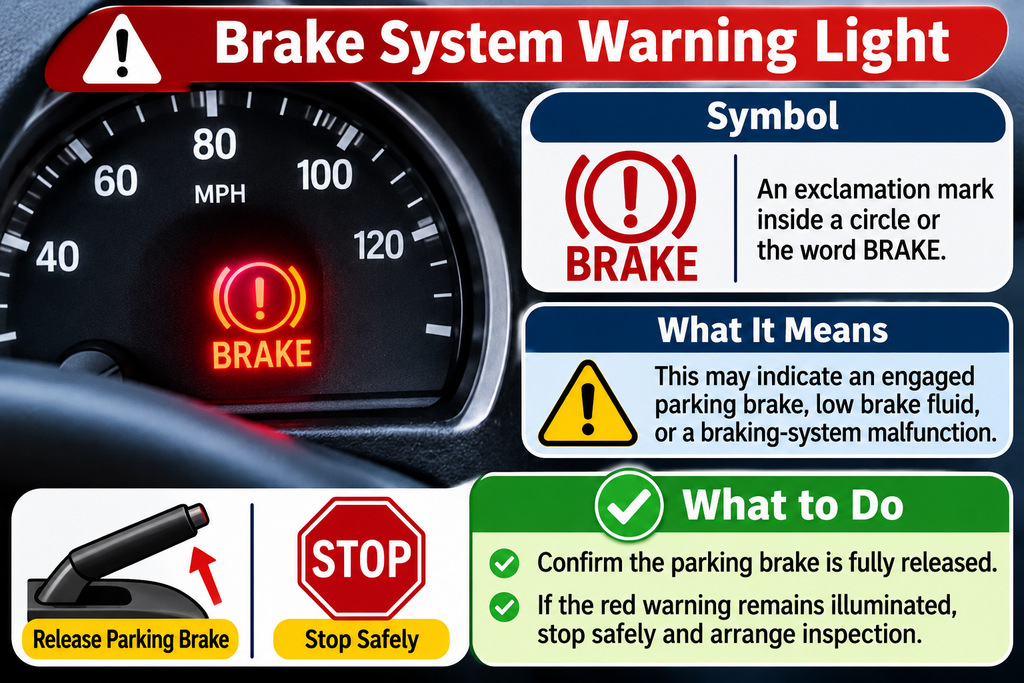
Symbol: An exclamation mark inside a circle or the word BRAKE.
This may indicate an engaged parking brake, low brake fluid, or a braking-system malfunction.
What to do: Confirm the parking brake is fully released. If the red warning remains illuminated, stop safely and arrange inspection.
Battery Charging Warning Light
Symbol: A rectangular battery with positive and negative terminals.
This indicates a possible charging-system malfunction involving the alternator, wiring, or related components.
What to do: Pull over safely and arrange assistance. The vehicle could lose electrical power.
Power Steering Warning Light
Symbol: A steering wheel with an exclamation mark.
This can indicate a problem with the power-assisted steering system.
Steering may become significantly harder, particularly at low speeds.
What to do: Stop safely if steering assistance is affected and seek professional diagnosis.
The AAA warning lights guide emphasizes that oil-pressure and overheating warnings require prompt action to prevent serious vehicle damage.
Yellow and Amber Dashboard Warning Lights Explained
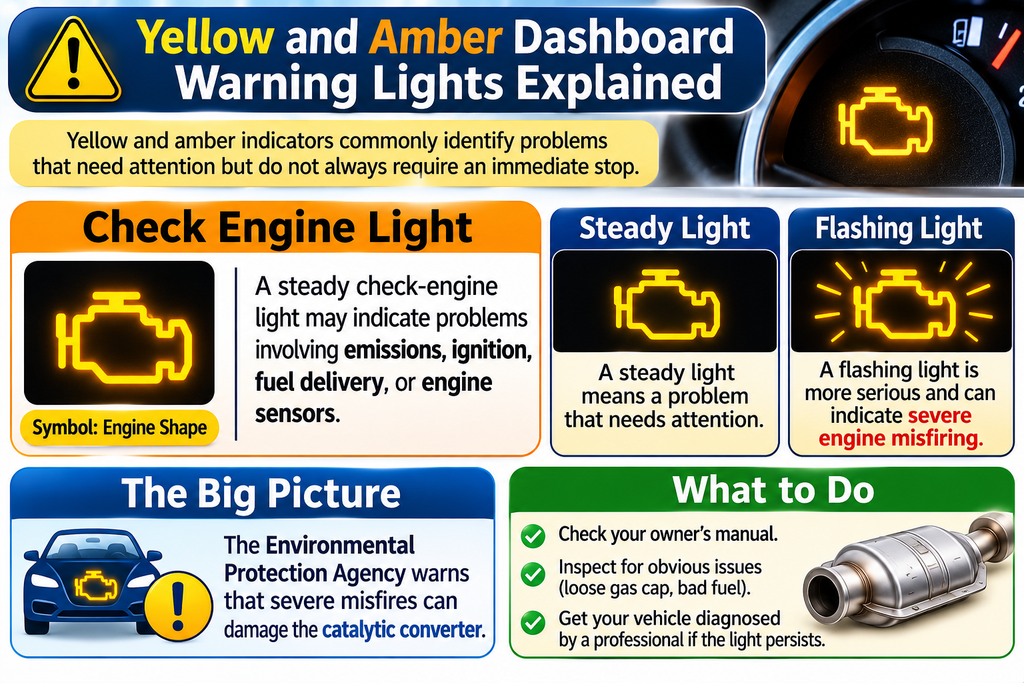
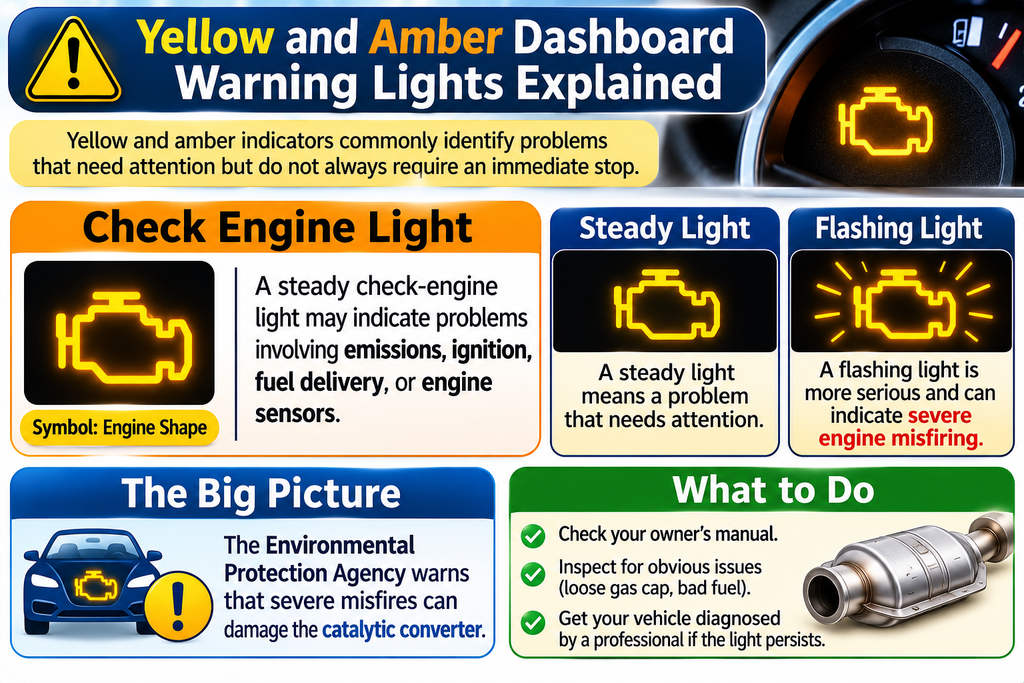
Yellow and amber indicators commonly identify problems that need attention but do not always require an immediate stop.
Check Engine Light
Symbol: An engine-shaped icon.
A steady check-engine light may indicate problems involving emissions, ignition, fuel delivery, or engine sensors.
A flashing check-engine light is more serious and can indicate severe engine misfiring.
The Environmental Protection Agency warns that severe misfires can damage the catalytic converter.
What to do: Arrange diagnosis promptly for a steady light. If it flashes, reduce engine load, stop safely, and seek urgent assistance.
Tire Pressure Warning Light
Symbol: A horseshoe-shaped tire with an exclamation mark.
This usually means one or more tires are significantly underinflated.
Check pressure using the vehicle manufacturer’s recommended cold tire pressure.
According to NHTSA, a TPMS light that flashes for approximately 60–90 seconds before remaining illuminated can indicate a monitoring-system malfunction.
ABS Warning Light
Symbol: The letters ABS inside a circle.
This indicates a possible malfunction in the anti-lock braking system.
Normal braking may remain available, but anti-lock protection may not function correctly.
Arrange professional inspection promptly. If additional brake warnings appear or braking feels abnormal, stop safely.
Traction Control Warning Light
Symbol: A car with curved skid marks.
A flashing indicator may show that traction or stability control is actively responding to slippery conditions.
A continuously illuminated warning may indicate a system fault or that the feature has been switched off.
Consult the vehicle display and owner’s manual.
Airbag Warning Light
Symbol: A seated person with a circular airbag.
This may indicate a malfunction in the airbag or supplemental restraint system.
Because crash protection may be compromised, arrange urgent professional inspection.
Service Reminder Light
Symbol: A wrench or maintenance message.
This generally indicates scheduled maintenance is due.
Check the manufacturer’s service schedule rather than assuming every reminder indicates a mechanical failure.
What Should You Do When a Dashboard Warning Light Appears?
Knowing car warning lights meaning is useful only when you respond appropriately.
ShiftAndCruise’s Stop–Check–Go Framework provides a practical decision-making process.
Stop: Identify Immediate Safety Risks
Stop driving as soon as safely possible if you notice:
- Red oil-pressure or overheating warnings.
- Serious braking or steering problems.
- A flashing check-engine light with severe engine symptoms.
- Smoke, unusual burning smells, or significant power loss.
Move away from traffic when possible and contact roadside assistance if the vehicle cannot be driven safely.
Check: Investigate the Warning
When the vehicle is safely parked:
- Identify the illuminated symbol.
- Read any accompanying dashboard messages.
- Consult the owner’s manual.
- Note whether the light is steady or flashing.
- Check for unusual sounds, leaks, or vehicle behavior.
A diagnostic scan can identify stored fault codes, but the code alone does not confirm which component needs replacement.
Go: Continue Only When Safe
A normal green indicator generally requires no corrective action.
Some amber warnings may permit cautious driving to a repair facility, depending on the manufacturer’s instructions and vehicle condition.
Never continue driving simply because the vehicle still starts or accelerates normally.
Warning Light Decision Matrix
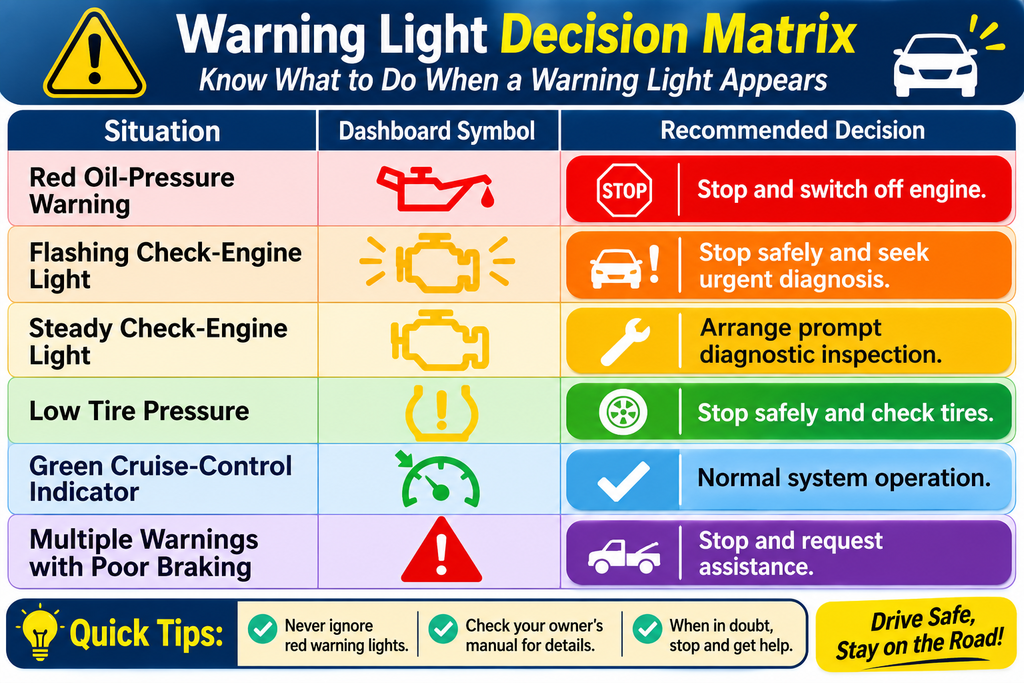
| Situation | Recommended decision |
|---|---|
| Red oil-pressure warning | Stop and switch off engine |
| Flashing check-engine light | Stop safely and seek urgent diagnosis |
| Steady check-engine light | Arrange prompt diagnostic inspection |
| Low tire pressure | Stop safely and check tires |
| Green cruise-control indicator | Normal system operation |
| Multiple warnings with poor braking | Stop and request assistance |
Final Takeaway

Dashboard warning lights help drivers identify problems before they become more serious.
Red warnings usually require urgent attention, amber warnings commonly indicate faults or maintenance needs, and green or blue indicators generally communicate normal system status.
Understanding the difference between warning colors, steady indicators, and flashing lights can help you make safer decisions.
The most important rule: Never ignore a persistent warning light. Identify the symbol, follow your owner’s manual, and seek professional assistance whenever vehicle safety or mechanical condition is uncertain.