
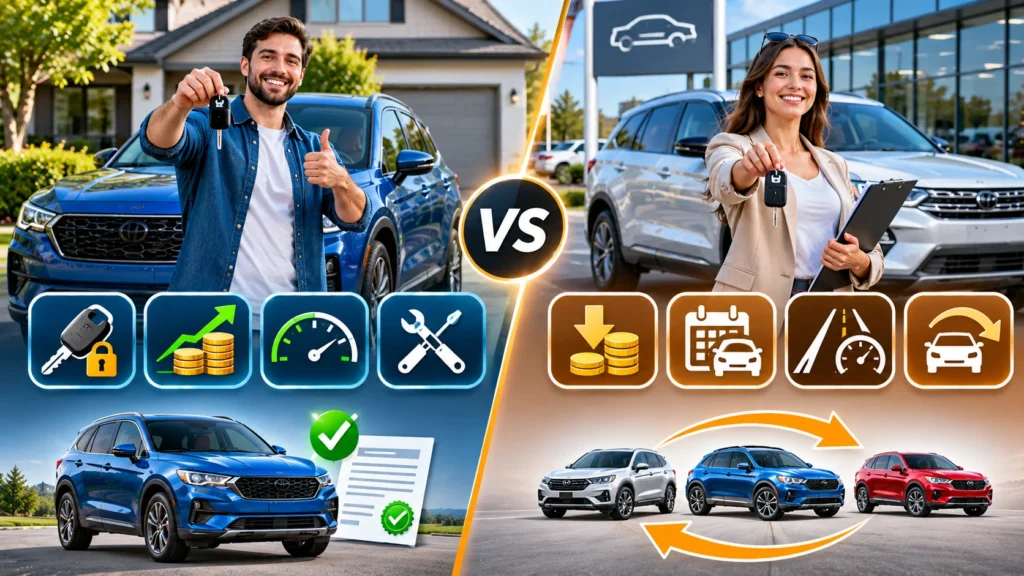
Choosing between a car loan vs lease is an important financial decision when getting a new vehicle. Both options allow you to drive a car through monthly payments, but they differ in ownership, long-term costs, mileage restrictions, and flexibility.
A car loan helps you purchase a vehicle and eventually own it outright. Leasing allows you to drive a vehicle for an agreed period, typically with lower monthly payments, before returning it or purchasing it if your contract permits.
The better option depends on how much you drive, how long you intend to keep the vehicle, and what you can comfortably afford.
How Does a Car Loan Work Compared to Leasing?
What Is a Car Loan?
An auto loan lets you borrow money from a bank, credit union, or financing company to purchase a vehicle.
You repay the borrowed amount plus interest through monthly installments. Once the loan is fully paid, you own the vehicle free of the lender’s lien.
Key benefits:
- Build equity as your loan balance decreases.
- Drive without contractual mileage limits.
- Sell or trade your vehicle when needed.
- Keep the car after completing payments.
However, monthly payments may be higher than comparable lease payments. You also bear depreciation, maintenance, and repair costs.
What Is Car Leasing?
A car lease is an agreement allowing you to use a vehicle for a specified period, commonly 24–48 months.
Monthly payments generally cover expected depreciation, financing charges, taxes, and applicable fees rather than the entire purchase price.
Key benefits:
- Usually lower monthly payments.
- Opportunity to drive newer vehicles regularly.
- Potentially fewer major repair expenses during warranty coverage.
- No need to arrange a traditional resale when returning the vehicle.
However, lease agreements commonly restrict annual mileage and impose charges for excessive wear, damage, or early termination.
Car Loan vs Lease: Key Differences
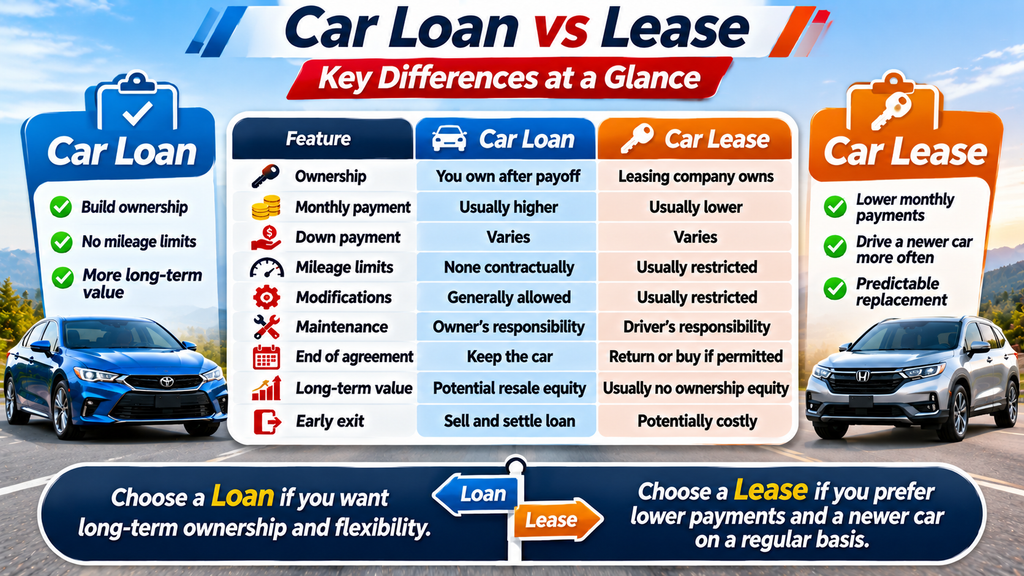
The ShiftAndCruise Ownership Comparison Matrix highlights the practical differences.
| Feature | Car loan | Car lease |
|---|---|---|
| Ownership | You own after payoff | Leasing company owns |
| Monthly payment | Usually higher | Usually lower |
| Down payment | Varies | Varies |
| Mileage limits | None contractually | Usually restricted |
| Modifications | Generally allowed | Usually restricted |
| Maintenance | Owner’s responsibility | Driver’s responsibility |
| End of agreement | Keep the car | Return or buy if permitted |
| Long-term value | Potential resale equity | Usually no ownership equity |
| Early exit | Sell and settle loan | Potentially costly |
A financed car can become more economical when kept for several years after the loan ends. Leasing may appeal to drivers who prioritize predictable vehicle replacement and lower monthly commitments.
How Much Does Financing or Leasing a Car Cost?
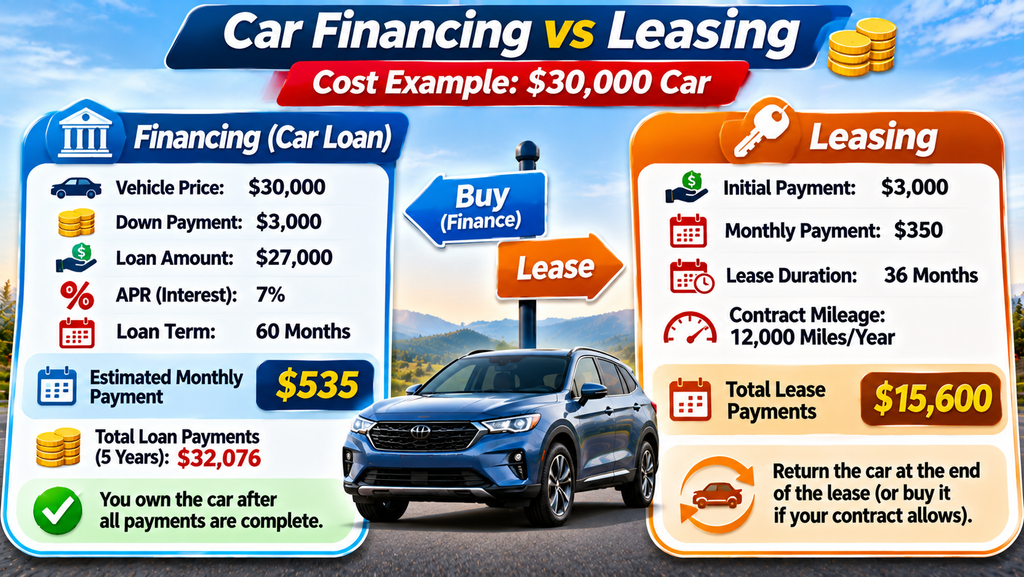
Understanding the actual financial difference requires looking beyond advertised monthly payments.
Example: Financing a $30,000 Car
Assume the following hypothetical financing terms:
- Vehicle price: $30,000
- Down payment: $3,000
- Loan amount: $27,000
- APR: 7%
- Loan term: 60 months
Estimated monthly loan payment
$535
Approximately $32,076 in loan payments over five years, plus the $3,000 down payment. Excludes taxes and other fees.
After repayment, you retain a vehicle that may have resale value.
Example: Leasing the Same Vehicle
Consider a hypothetical 36-month lease:
- Initial payment: $3,000
- Monthly payment: $350
- Lease duration: 36 months
- Contract mileage: 12,000 miles annually
Total illustrative lease payments
$15,600
Includes $3,000 upfront and 36 payments of $350, assuming the upfront amount is separate. Excludes taxes, fees, and potential return charges.
These examples use different contract lengths and are not a direct total-cost comparison. After 36 months, the borrower still has payments remaining, while the lessee must return, replace, or potentially buy the vehicle.
Which Option Is Better for Your Driving Habits?
Your annual mileage and ownership preferences can strongly influence the car loan vs lease decision.
If You Drive Long Distances
Buying generally provides greater flexibility for frequent road trips, commuting, and interstate driving.
Many leases limit annual mileage to approximately 10,000–15,000 miles, depending on the agreement.
For example, driving 18,000 miles annually under a 12,000-mile allowance creates 6,000 excess miles.
At an illustrative excess-mile charge of $0.25, that represents $1,500 in additional charges per year of excess driving, assessed according to the contract.
If You Prefer New Cars
Leasing may suit drivers who enjoy changing vehicles every few years, drive predictable distances, and can maintain the vehicle within return-condition requirements.
If You Want Long-Term Savings
Buying may offer better long-term value because you can continue driving after your loan is paid.
However, consider depreciation, future repairs, insurance, and resale value before assuming ownership will always cost less.
The ShiftAndCruise Four-Check Decision Framework
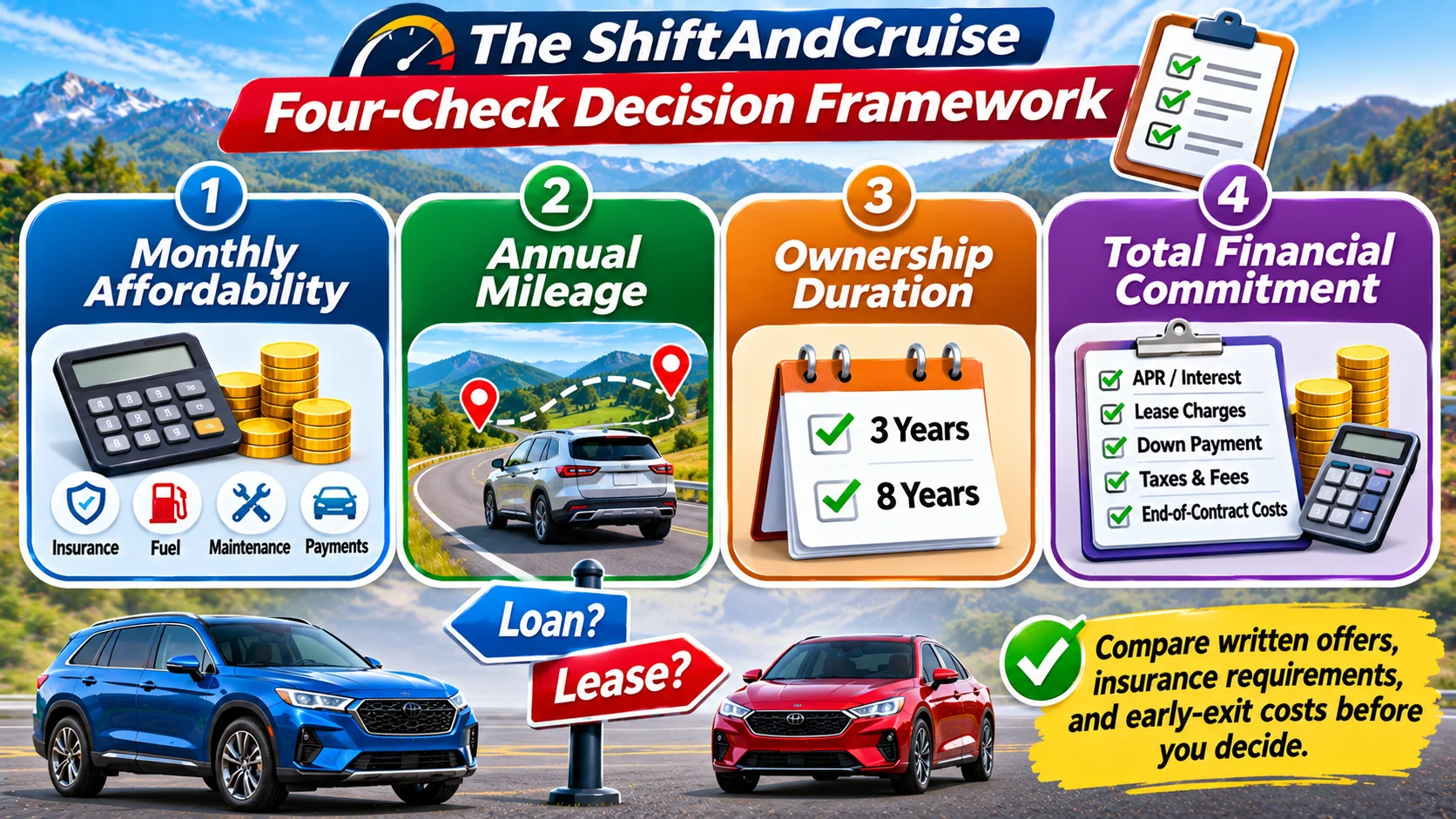
Before signing a financing or leasing agreement, evaluate these factors.
Monthly affordability: Compare total monthly transportation costs, including insurance, fuel, maintenance, and payments.
Annual mileage: Estimate your commuting, errands, vacations, and road-trip distances.
Ownership duration: Consider whether you want the vehicle for three years or potentially eight years.
Total financial commitment: Review APR, loan interest, lease financing charges, down payments, taxes, fees, and end-of-contract obligations.
Ask dealers for written offers and compare the same vehicle with similar equipment. Review insurance requirements and potential early-exit costs carefully.
Frequently Asked Questions
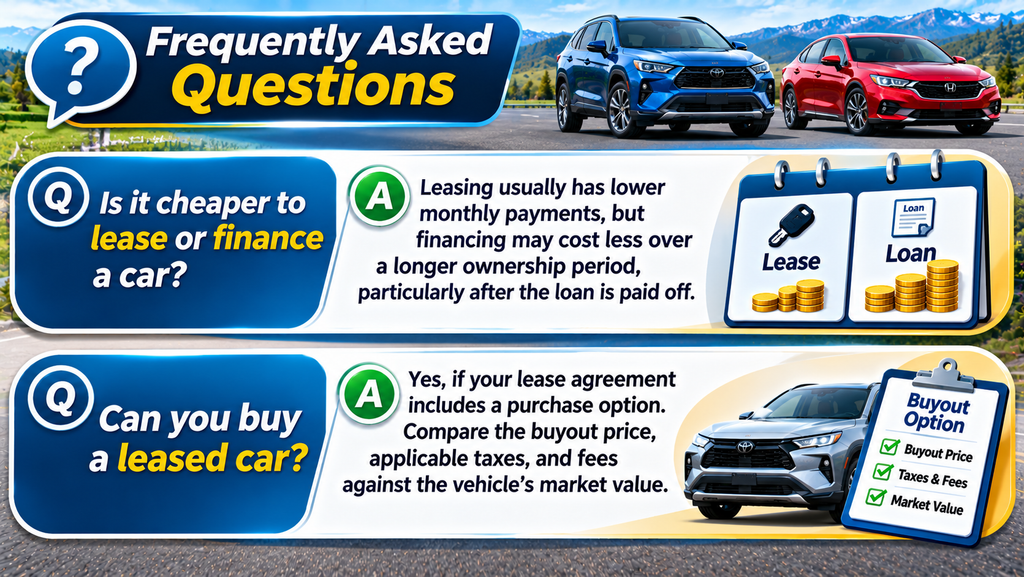
Is it cheaper to lease or finance a car?
Leasing usually has lower monthly payments, but financing may cost less over a longer ownership period, particularly after the loan is paid off.
Can you buy a leased car?
Yes, if your lease agreement includes a purchase option. Compare the buyout price, applicable taxes, and fees against the vehicle’s market value.
Does leasing or financing affect credit?
Both can affect your credit because lenders commonly review credit history, and payment activity may be reported to credit bureaus.
Final Takeaway
The car loan vs lease choice depends on more than monthly payments.
Financing generally makes sense for drivers seeking ownership, unlimited contractual mileage, and potential long-term value. Leasing may suit drivers who want lower payments, newer vehicles, and predictable mileage.
Before deciding, compare complete contract costs, realistic driving distances, and future vehicle needs.
Choose the option that supports your budget and lifestyle—not simply the one advertising the lowest monthly payment.