
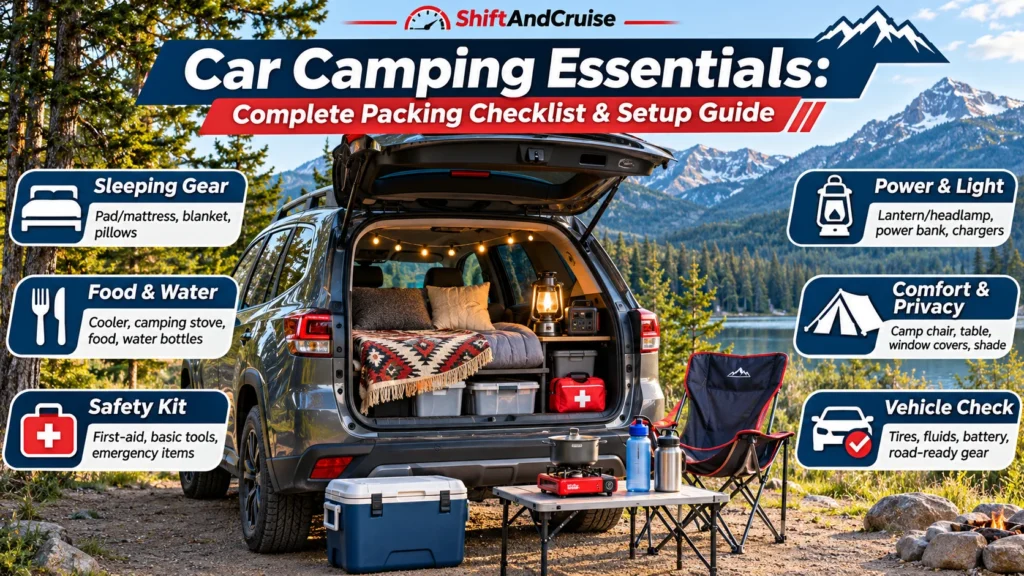
Car camping offers an affordable way to explore national parks, enjoy weekend getaways, and experience the outdoors without expensive accommodation. However, a comfortable trip requires more than parking your vehicle and bringing a blanket.
The right car camping essentials help you sleep comfortably, organize supplies, prepare meals, maintain your vehicle, and handle unexpected situations.
Whether you’re sleeping inside an SUV, using a tent beside your car, or camping in a designated campground, this guide explains what to pack, how to arrange your vehicle, and how to stay safe throughout your adventure.
What Do You Need for Car Camping?
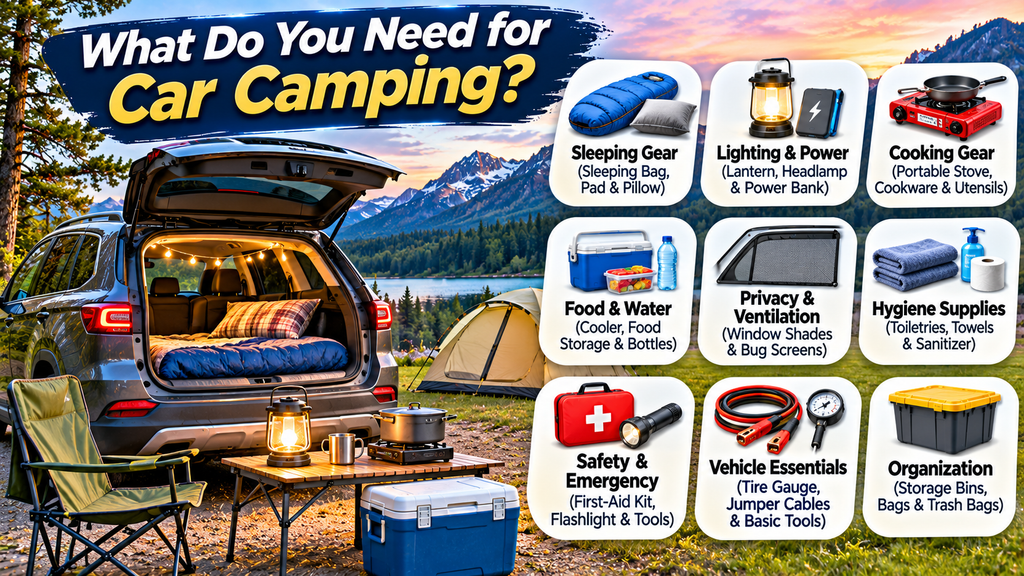
Your camping equipment depends on your vehicle size, sleeping arrangements, weather conditions, and trip duration.
Sleeping Gear and Comfort Essentials
A comfortable sleeping setup should be your first priority.
- Sleeping bag: Choose one rated for expected overnight temperatures.
- Sleeping pad or mattress: Provides cushioning and insulation from cold surfaces.
- Camping pillow: Supports comfortable sleeping.
- Window shades: Improve privacy and reduce incoming light.
- Window bug screens: Allow ventilation while helping keep insects outside.
- Blankets: Provide additional warmth when temperatures drop.
If you’re sleeping inside your vehicle, measure the available cargo space before purchasing a mattress.
An SUV with folding rear seats may accommodate a sleeping platform, while smaller sedans usually provide less suitable sleeping space.
Lighting and Power Equipment
Reliable lighting and charging equipment are important when camping away from electrical outlets.
Pack a rechargeable lantern, headlamp, USB charging cables, and a portable power bank.
A portable power station can power compatible small electronics, but it isn’t essential for every camping trip.
Avoid draining your vehicle’s starting battery through overnight accessory use.
How to Set Up Your Car for Camping
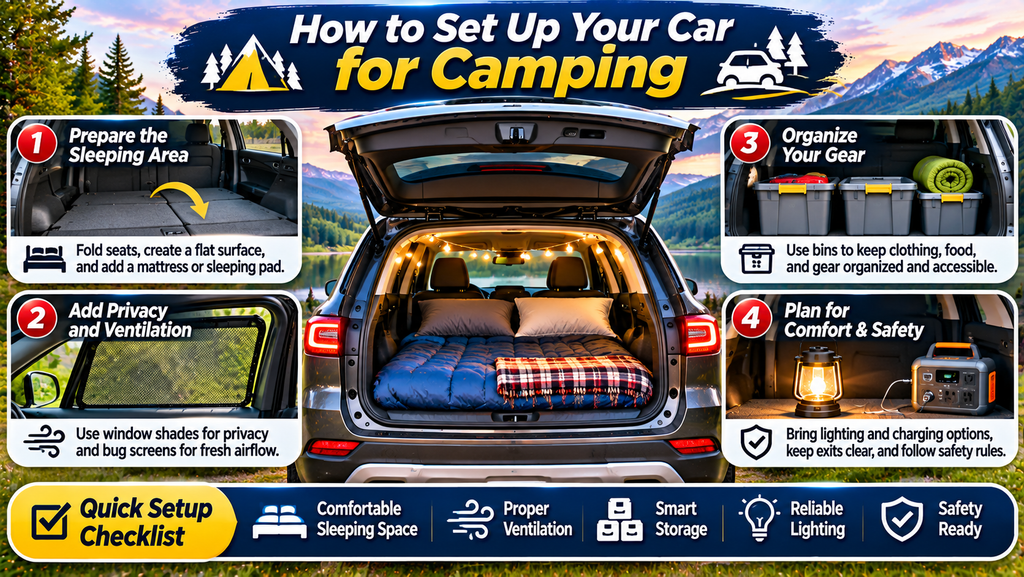
A practical arrangement keeps sleeping equipment accessible without making the vehicle difficult to use.
Prepare the Sleeping Area
Move unnecessary luggage into secured storage containers and create a flat sleeping surface where possible.
Use a properly fitted mattress or sleeping pad. Keep door handles, emergency exits, and essential controls accessible.
Do not sleep in the driver’s seat with the engine running.
Ventilation and Temperature Control
Fresh airflow helps reduce condensation and discomfort inside a parked vehicle.
Open windows slightly when weather and security conditions permit, and use properly fitted insect screens.
Never run the engine overnight for heating or air conditioning. Carbon monoxide is odorless and potentially deadly. Never operate fuel-burning stoves, charcoal grills, or heaters inside the vehicle. CDC
In extreme heat or cold, choose accommodation with appropriate climate protection rather than relying on a parked car.
Organize Your Storage
Use separate containers for clothing, food, cooking supplies, and emergency equipment.
Keep frequently needed items near an accessible door.
Secure loose equipment before driving because unsecured cargo can become dangerous during sudden braking.
Food, Water, Hygiene, and Safety Supplies

A complete list of car camping essentials must include more than sleeping equipment.
Cooking and Food Storage
Useful items include:
- Portable camping stove for outdoor use
- Cooler with ice or appropriate cold packs
- Reusable water bottles
- Cooking utensils and plates
- Food storage containers
- Trash bags and cleaning supplies
Cook outdoors in a permitted, well-ventilated area away from vehicles and combustible materials.
Keep perishable food properly chilled. In bear country, follow local food-storage requirements, which may prohibit storing food inside vehicles at certain sites.
Water and Personal Hygiene
Carry enough drinking water for your trip, plus an emergency reserve.
Pack hand sanitizer, toilet paper, toothbrushes, biodegradable soap, towels, sunscreen, and insect repellent.
Use designated restrooms where available and follow campground waste-disposal rules.
Emergency and Vehicle Supplies
Before departure, prepare a roadside kit containing a first-aid kit, flashlight, tire-pressure gauge, jumper cables or a suitable jump starter, and basic emergency tools.
Inspect your vehicle’s tires, fluids, brakes, lights, and battery. Know where the spare tire or approved tire-repair equipment is located.
ShiftAndCruise Car Camping Packing Matrix
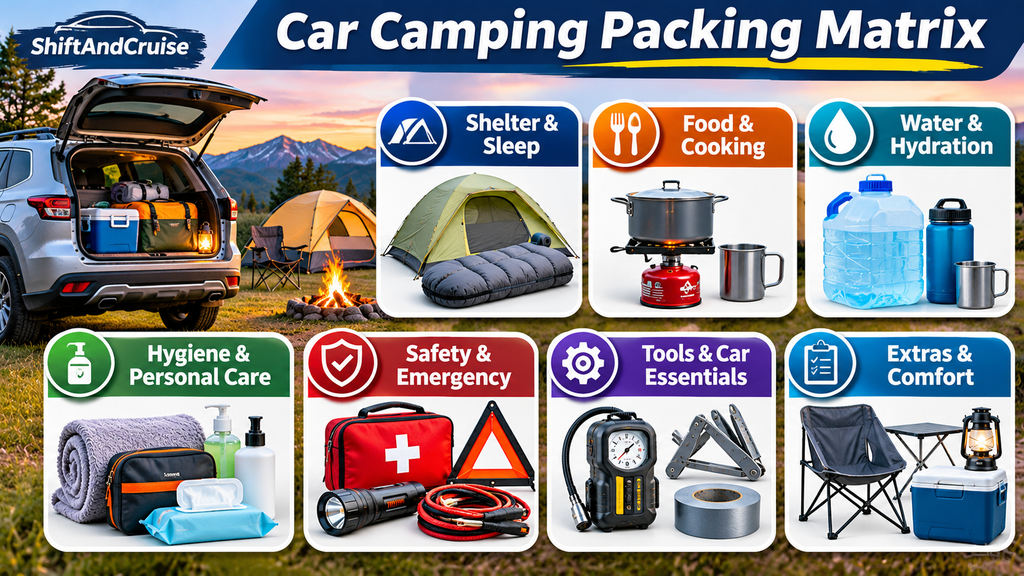
The following framework separates essential equipment from optional comfort upgrades.
| Category | Essential items | Optional upgrades |
|---|---|---|
| Sleeping | Sleeping bag, pad, pillow | Custom sleeping platform |
| Privacy | Window covers | Magnetic privacy curtains |
| Ventilation | Safe airflow, insect screens | Battery-powered fan |
| Power | Phone charger, power bank | Portable power station |
| Cooking | Water, food, utensils | Camping kitchen setup |
| Organization | Storage bags, trash bags | Trunk organizer |
| Safety | First-aid kit, flashlight | Additional emergency equipment |
| Vehicle care | Tire gauge, roadside tools | Portable tire inflator |
This is a practical editorial checklist, not a product-testing ranking.
What Should You Pack for Different Trip Lengths?
1 night
Basic setup
Sleeping gear, food, water, lighting, weather-appropriate clothing, and emergency supplies.
2–3 days
Expanded setup
Add extra clothing, organized food storage, cooking equipment, and charging capacity.
4+ days
Extended setup
Plan food and water replenishment, laundry, battery charging, waste disposal, and vehicle maintenance checks.
How to Choose a Safe Car Camping Location
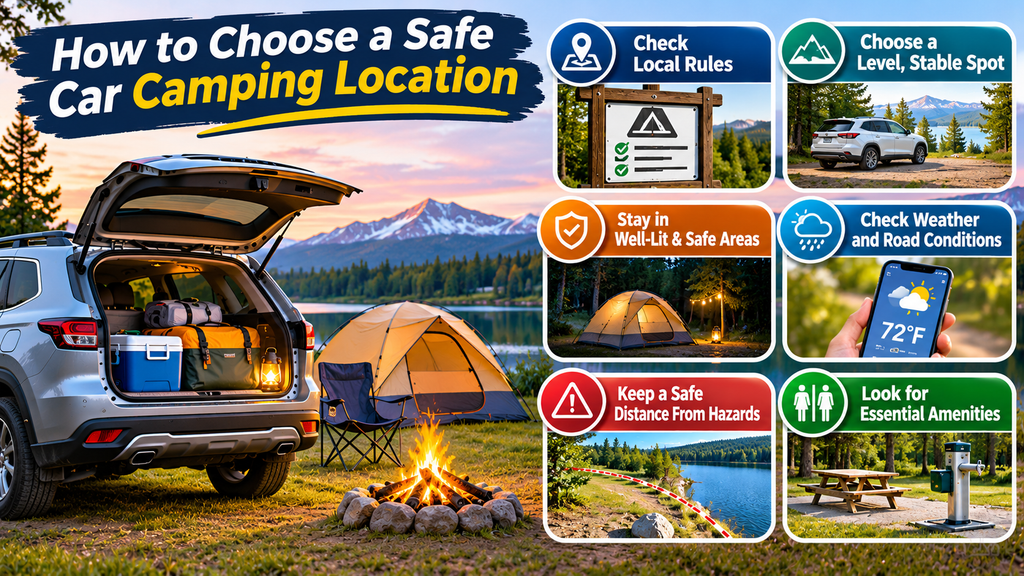
Not every parking lot or roadside pull-off permits overnight vehicle camping.
Before arriving, check campground reservations, overnight parking regulations, weather forecasts, and available facilities.
Designated campgrounds are often easier for beginners because they may provide restrooms, drinking water, picnic areas, and established campsites.
Avoid flood-prone areas, unstable ground, and locations where vehicles are prohibited.
Can You Sleep in Any Car?
Many cars can accommodate brief rest, but not every vehicle is suitable for overnight sleeping.
SUVs, minivans, and wagons generally provide greater sleeping flexibility than compact sedans.
Prioritize a flat sleeping arrangement, adequate ventilation, weather protection, safe exits, and legal parking.
Frequently Asked Questions
What are the most important car camping supplies?
Sleeping equipment, drinking water, food, lighting, first-aid supplies, ventilation accessories, and vehicle emergency tools are the main priorities.
Do you need a tent for car camping?
Not necessarily. You can sleep inside a suitable vehicle or use a tent beside it, depending on campground rules and your preferred setup.
How can beginners camp comfortably in a car?
Start with a nearby established campground, use a comfortable mattress, organize equipment, and test your sleeping arrangement before departure.
Final Takeaway
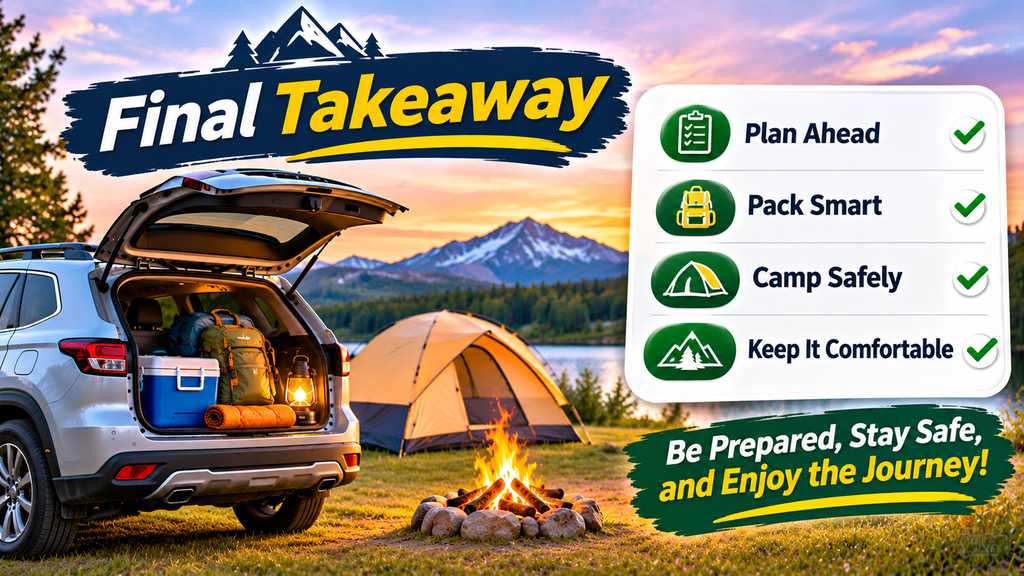
Choosing the right car camping essentials makes outdoor travel more comfortable, organized, and manageable.
Start with safe sleeping arrangements, reliable lighting, sufficient water, food storage, and roadside emergency supplies. Add optional accessories only when they improve your actual camping experience.
The best car camping setup isn’t the most expensive one. It’s a practical, safe, and well-organized arrangement that suits your vehicle, destination, and travel needs.