
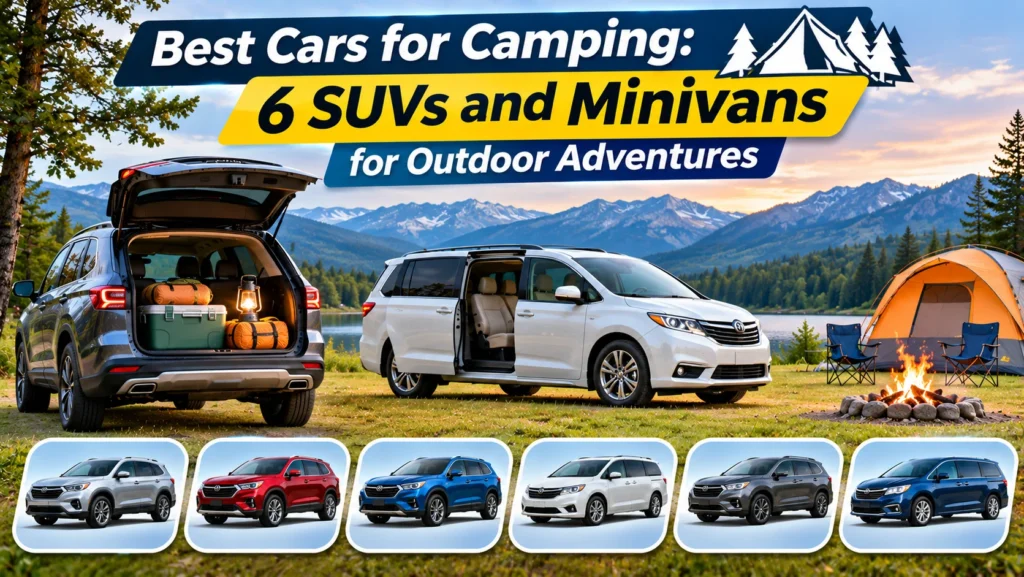
The best cars for camping combine spacious interiors, comfortable sleeping arrangements, practical cargo storage, and dependable performance on different road surfaces. Whether you’re planning a weekend getaway, sleeping inside your vehicle, or exploring national parks, choosing the right car can make camping easier and more enjoyable.
However, not every SUV is suitable for overnight camping. Some vehicles offer spacious cargo areas but uneven sleeping surfaces, while others provide excellent ground clearance but limited interior space.
This guide compares six camping-friendly vehicles, including their cargo capacity, sleeping practicality, fuel efficiency, and suitability for different outdoor adventures.
Best SUVs for Camping and Sleeping Inside
Subaru Outback — Best Overall Camping Vehicle
The Subaru Outback combines wagon-like cargo space with SUV capability, making it a practical choice for outdoor enthusiasts.
The 2026 Outback provides up to 80.5 cubic feet of cargo capacity with the rear seats folded. Standard models offer 8.7 inches of ground clearance, while the Wilderness version provides 9.5 inches. subaru.com
Camping advantages:
- Spacious rear cargo area
- Standard all-wheel drive
- Useful ground clearance
- Roof rails for additional equipment
Best for: Solo campers, couples, and mountain adventures.
Consideration: Measure the folded-seat sleeping area before purchasing a mattress.
Honda CR-V — Best for Everyday Driving and Weekend Camping
The Honda CR-V offers a balance between everyday practicality and occasional outdoor adventures.
The 2026 model provides up to 76.5 cubic feet of cargo space, depending on configuration. Its split-folding rear seats make carrying equipment easier. Compact SUV Crossover
Camping advantages:
- Practical cargo storage
- Comfortable highway driving
- Available hybrid powertrain
- Easy loading through the rear hatch
Best for: Weekend campers who also need a daily family vehicle.
Consideration: Verify sleeping-floor dimensions and seat-folding angles before planning to sleep inside.
Honda Passport TrailSport — Best for Adventure Camping
The Honda Passport TrailSport is designed for drivers traveling beyond paved highways.
The 2026 Passport offers 8.3 inches of ground clearance and approximately 83.8 cubic feet of standard cargo space behind the front seats. Its AWD system and all-terrain-oriented equipment support outdoor travel. 2026 Honda Passport+1
Best for: Campers visiting remote campgrounds and traveling on maintained unpaved roads.
Consideration: Fuel expenses may be higher than those of smaller hybrid vehicles.
Best Spacious Cars for Family Camping
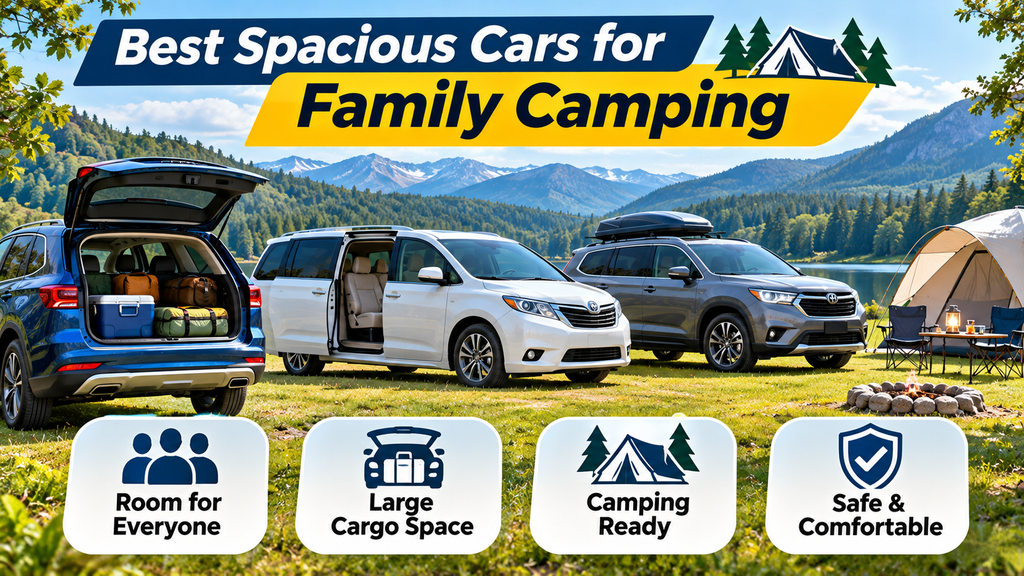
Toyota Sienna Hybrid — Best for Comfortable Family Camping
The Toyota Sienna offers substantial interior space, sliding doors, and flexible passenger arrangements.
The 2026 front-wheel-drive Sienna achieves a manufacturer-estimated 36 MPG combined, while AWD configurations achieve approximately 35 MPG. Toyota USA Newsroom
Camping advantages:
- Spacious passenger cabin
- Convenient sliding doors
- Excellent minivan fuel efficiency
- Available AWD and camping-friendly accessories
Best for: Families using designated campgrounds and travelers carrying significant camping equipment.
Consideration: Second-row seats are not designed for simple removal. Verify the usable sleeping layout before investing in a conversion.
Ford Bronco Sport — Best Compact Adventure SUV
The Ford Bronco Sport combines compact dimensions with outdoor-oriented capability.
The 2026 Big Bend provides standard 4×4, 7.8 inches of ground clearance, and EPA-estimated fuel economy of 25 MPG city and 30 MPG highway. https://www.ford.com/
Best for: Solo travelers, weekend camping, and outdoor adventures.
Consideration: Its relatively compact cargo compartment may feel restrictive for taller campers sleeping inside.
Toyota RAV4 Hybrid — Best for Fuel-Efficient Camping Trips
The Toyota RAV4 Hybrid offers fuel-efficient driving and versatile cargo storage.
Its practical SUV design accommodates tents, coolers, luggage, and other camping supplies.
Available all-wheel drive provides additional traction on suitable surfaces.
Best for: Campers prioritizing economical road trips and everyday vehicle practicality.
Consideration: Test the folded-seat arrangement before choosing it for overnight vehicle sleeping.
Best Cars for Camping: Vehicle Comparison Matrix
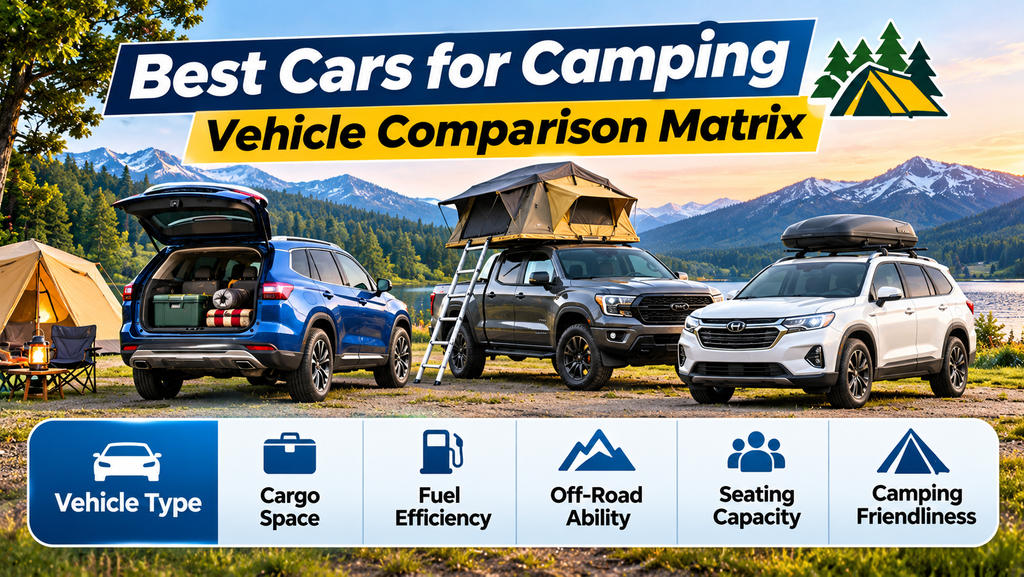
The ShiftAndCruise Camping Vehicle Match Matrix compares vehicles based on practical camping requirements.
| Vehicle | Main advantage | Best camping style |
|---|---|---|
| Subaru Outback | Cargo space and AWD | Sleeping inside |
| Honda CR-V | Everyday practicality | Weekend camping |
| Honda Passport | Rugged-road capability | Adventure camping |
| Toyota Sienna | Spacious interior | Family camping |
| Ford Bronco Sport | Compact 4×4 capability | Short adventures |
| Toyota RAV4 Hybrid | Fuel efficiency | Budget-conscious trips |
These are editorial recommendations based on published vehicle characteristics, not independent camping tests.
How to Choose the Right Car for Camping
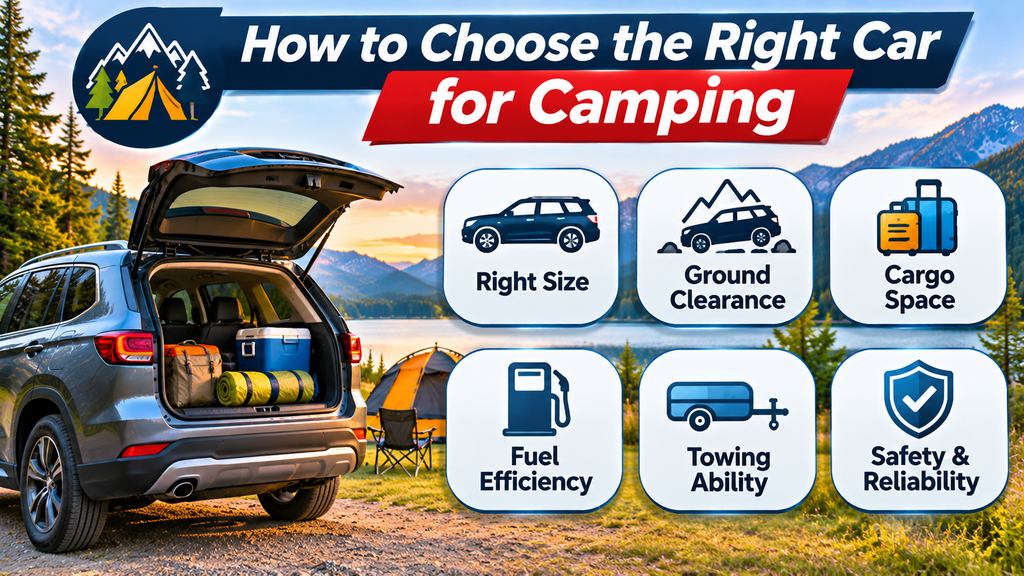
Choosing among the best cars for camping requires looking beyond engine performance and exterior appearance.
Check Sleeping Space
Measure the usable length and width with the rear seats folded.
A comfortable sleeping arrangement should accommodate your height, mattress, and essential belongings without blocking exits.
Cargo volume alone does not guarantee adequate sleeping length.
Consider Ground Clearance and Traction
Ground clearance matters when traveling along uneven campground access roads.
AWD can improve traction, but it cannot compensate for unsuitable tires, excessive speed, or unsafe terrain.
Calculate Camping Fuel Expenses
Use this formula:
Fuel cost = Trip distance ÷ Vehicle MPG × Gas price
For an illustrative 600-mile journey at $3.50 per gallon:
| Vehicle efficiency | Estimated fuel expense |
|---|---|
| 25 MPG | $84 |
| 30 MPG | $70 |
| 35 MPG | $60 |
| 40 MPG | $52.50 |
These calculations are hypothetical and do not represent individual model fuel ratings.
Essential Equipment and Safe Car Camping Practices
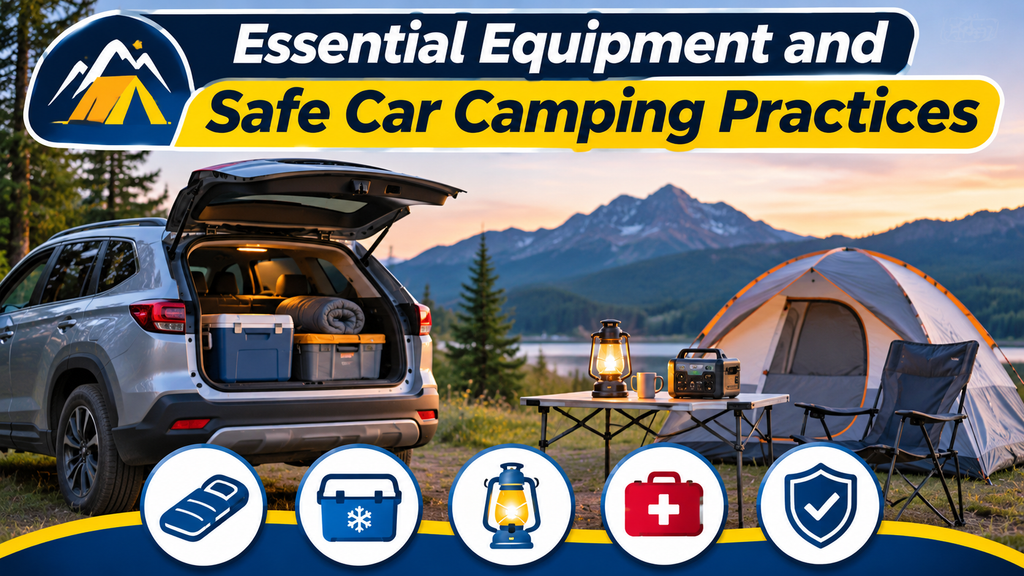
Prepare your vehicle with a sleeping pad, weather-appropriate sleeping bag, privacy screens, insect screens, lighting, drinking water, and emergency supplies.
Always check overnight parking regulations. Some national parks permit vehicle sleeping only at designated campsites. National Park Service
Never sleep with the engine running or operate fuel-burning camping equipment inside the vehicle. Avoid enclosed or poorly ventilated locations because exhaust fumes can cause fatal carbon monoxide poisoning.
Follow campground-specific food-storage requirements, particularly in bear country. National Park Service
Final Takeaway
The best cars for camping depend on your sleeping preferences, passenger requirements, travel distance, and preferred destinations.
The Subaru Outback offers a useful balance of sleeping space and outdoor capability. The Honda CR-V and Toyota RAV4 suit everyday drivers, while the Honda Passport and Bronco Sport appeal to adventure-oriented campers. Families may prefer the spacious Toyota Sienna.
Choose a vehicle that provides sufficient sleeping room, practical cargo storage, reasonable fuel expenses, and safe access to your intended campsite.