

Are Mini Coopers reliable? Yes, newer MINI Coopers can be dependable vehicles, but reliability depends heavily on the model year, engine, maintenance history, and overall condition.
MINI Coopers are popular for their distinctive styling, responsive handling, and compact dimensions. However, their reputation for expensive repairs makes some used-car shoppers hesitant.
The good news is that modern MINI models have improved considerably compared with certain older generations. Still, buying the wrong example can lead to unexpected expenses.
This guide examines MINI Cooper reliability, common problems, maintenance costs, and the model years worth considering before making a purchase.
How Reliable Are Mini Coopers?

MINI Cooper reliability has improved, although different research organizations report different results.
RepairPal assigns the MINI Cooper a 3.0 out of 5.0 reliability rating, with average annual repair and maintenance expenses of approximately $846.
That is considerably higher than its $456 average for subcompact cars.
Meanwhile, Consumer Reports rates the 2025 MINI Cooper as more reliable than other vehicles from the same model year and expects the 2026 model to perform better than the average new car.
These findings aren’t necessarily contradictory. RepairPal considers repair experience across older vehicles, while Consumer Reports evaluates newer models separately.
The takeaway: A newer MINI with documented maintenance can be a reasonable purchase, but long-term ownership costs deserve careful attention.
Are Newer Mini Coopers More Reliable?
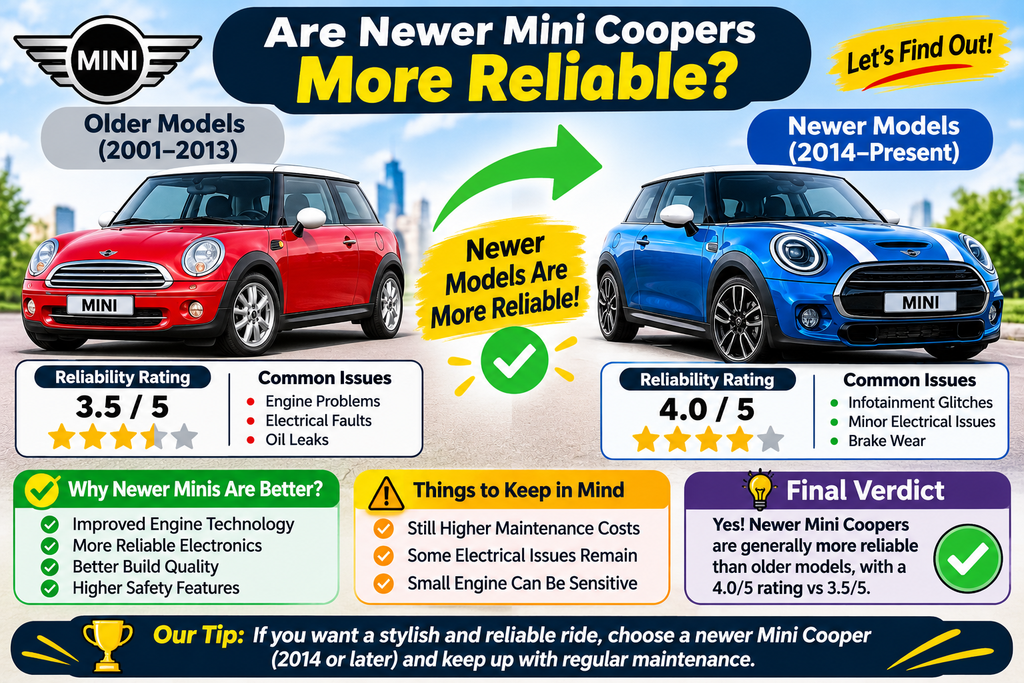
Yes. MINI’s third-generation hatchbacks introduced BMW-developed engines that generally addressed several weaknesses associated with earlier models.
The difference becomes clearer when comparing generations.
| MINI generation | Approximate US model years | Reliability considerations |
|---|---|---|
| First generation | 2002–2006 | Age-related wear and maintenance concerns |
| Second generation | 2007–2013 | Certain engines have known timing-chain and oil-related issues |
| Third generation | 2014/2015–2024 | Generally improved engines; inspect cooling systems and service records |
| New generation | 2025 onward | Encouraging early reliability results; limited long-term history |
Model-year transitions vary by body style, so confirm the specific vehicle’s generation and engine.
Newer cars aren’t automatically problem-free. Vehicle condition, previous repairs, and maintenance remain important.
Which Mini Cooper Years Are Most Reliable?
For buyers searching for a used MINI, later third-generation models are sensible starting points.
MINI Cooper Years Worth Considering
2018–2023 MINI Cooper Hardtop: These models benefit from the more established third-generation platform and BMW-developed engines.
2024 MINI Cooper Hardtop: A late example of the outgoing generation, making it worth comparing with earlier models based on price and service history.
2025–2026 MINI Cooper: Newer designs have encouraging early reliability assessments, although there isn’t enough long-term ownership history to judge their durability over many years.
These are shopping recommendations, not guarantees that every vehicle from these years is reliable.
Mini Cooper Years to Approach Carefully
Certain 2007–2010 Cooper S and John Cooper Works models equipped with the N14 turbocharged engine deserve particular attention.
Reported problems include timing-chain wear, oil consumption, and cooling-system issues. MINI issued service guidance concerning timing-chain components on certain N14-equipped vehicles.
A well-maintained older MINI may still be worth buying, but missing repair records should raise questions.
Common Mini Cooper Problems to Watch For
Knowing the typical problems can help buyers identify expensive repairs before purchasing.
Timing Chain Problems
Some older turbocharged MINI engines developed timing-chain and tensioner issues.
A rattling noise during a cold start may indicate trouble. Ignoring the problem can lead to serious engine damage.
Have a qualified mechanic investigate unusual engine noises rather than assuming every rattle is harmless.
Oil Leaks and Oil Consumption
Older vehicles may experience leaks around engine seals, gaskets, or other components.
Check for visible leaks, low oil levels, burning-oil smells, and unexplained oil consumption.
Cooling System Problems
Water pumps, thermostats, hoses, and plastic cooling components can deteriorate with age.
Inspect for coolant leaks, overheating warnings, and evidence of previous repairs.
Never open a hot cooling system.
Transmission and Clutch Wear
Manual MINI Coopers may develop clutch problems, particularly after extensive city driving or aggressive use.
During a test drive, check for slipping, unusual noises, hesitation, and rough shifts.
Electrical Problems
Some owners experience issues with door locks, sensors, or interior electronics.
Test every major electrical feature before purchasing, including windows, infotainment, air conditioning, and warning lights.
Are Mini Coopers Expensive to Maintain?

MINI Coopers generally cost more to maintain than typical economy hatchbacks.
RepairPal’s estimated average annual repair and maintenance cost is $846, compared with $456 for subcompact vehicles.
However, this is a historical average—not a fixed yearly bill or a forecast for a particular car.
Actual expenses depend on mileage, age, driving conditions, repair location, and maintenance quality.
Before purchasing, obtain estimates from an independent shop experienced with MINI or BMW vehicles.
A low purchase price can become less attractive when major repairs are approaching.
How Long Do Mini Coopers Last?
A properly maintained MINI Cooper may reach 150,000 miles or more, but no mileage figure guarantees a vehicle’s lifespan.
Driving habits, maintenance intervals, previous repairs, and climate all influence durability.
A MINI with 110,000 miles and detailed service records may be a better purchase than one showing 60,000 miles with neglected maintenance.
Focus on mechanical condition instead of the odometer alone.
Mini Cooper Reliability vs Other Small Cars
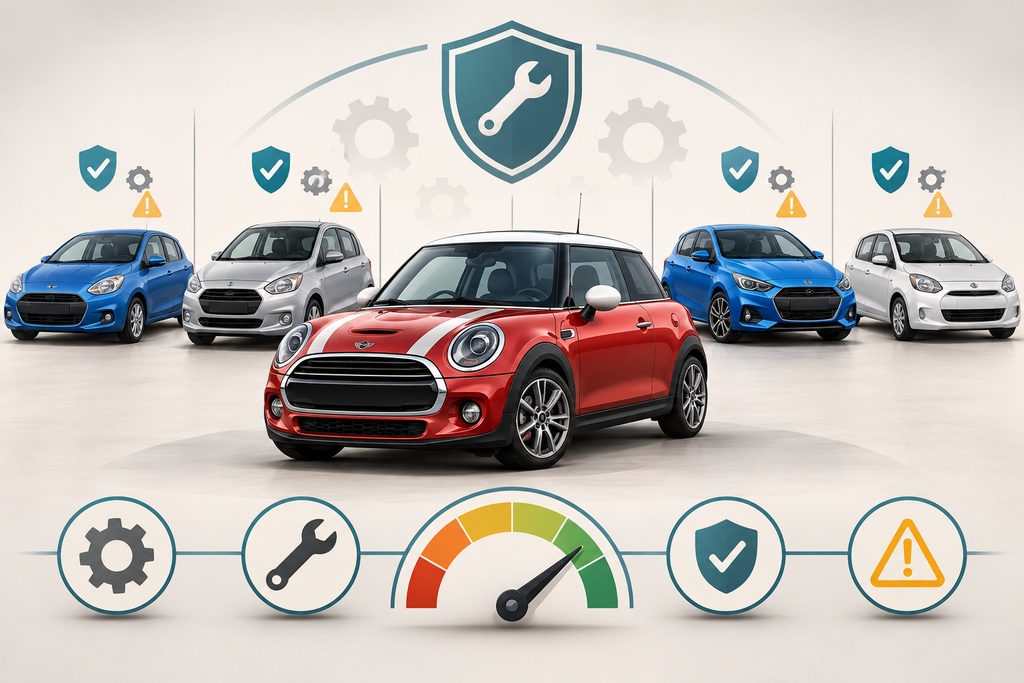
| Vehicle | Main buying consideration |
|---|---|
| MINI Cooper | Engaging handling; potentially higher maintenance expenses |
| Honda Civic | Practical transportation and broad service availability |
| Toyota Corolla | Strong reputation for economical ownership |
| Mazda3 | Sporty handling with practical everyday usability |
The Civic and Corolla are reasonable alternatives for shoppers prioritizing predictable ownership expenses.
MINI appeals more to drivers who value distinctive styling and a lively driving experience.
Individual model years should still be compared before making a final decision.
Used Mini Cooper Reliability Scorecard
Use this five-point checklist when inspecting a used MINI.
| Inspection factor | What to verify |
|---|---|
| Model year and engine | Identify generation and known engine concerns |
| Maintenance history | Confirm regular servicing and documented repairs |
| Engine condition | Check leaks, cold-start noises, and overheating signs |
| Repair costs | Obtain estimates for existing problems |
| Independent inspection | Have a MINI-experienced mechanic inspect the car |
Buying rule: If the vehicle fails a major inspection item, investigate the problem and repair cost before proceeding. A low asking price does not justify unresolved mechanical or safety concerns.
Also check the vehicle’s VIN for outstanding safety recalls.
Should You Buy a Used Mini Cooper?
A used MINI Cooper can be a good choice if you want a compact, enjoyable car and can budget for potentially higher maintenance costs.
Prioritize newer generations, complete service records, and a professional pre-purchase inspection.
Avoid vehicles with unexplained warning lights, overheating, significant oil leaks, or uncertain repair histories.
The right MINI should fit both your driving preferences and your long-term ownership budget.
Frequently Asked Questions
Are Mini Coopers Reliable After 100,000 Miles?
They can be, provided major maintenance has been completed and the engine, transmission, and cooling system remain in good condition.
Are Mini Coopers More Expensive to Fix Than Honda or Toyota?
They often are, especially compared with mainstream economy models, although individual repair costs vary.
Are Mini Cooper S Models Reliable?
Newer Cooper S models can offer good reliability. Older N14-equipped versions require additional scrutiny.
Is a Used Mini Cooper Worth Buying?
Yes, when its condition, maintenance records, inspection results, and ownership costs justify the asking price.
Final Verdict
Are Mini Coopers reliable? Newer models can be, and recent reliability assessments are encouraging. However, older generations have known mechanical weaknesses, and maintenance costs are often above the subcompact-car average.
For most used-car shoppers, a well-maintained third-generation MINI is a sensible place to begin.
Choose based on documented condition rather than appearance, mileage, or price alone.