
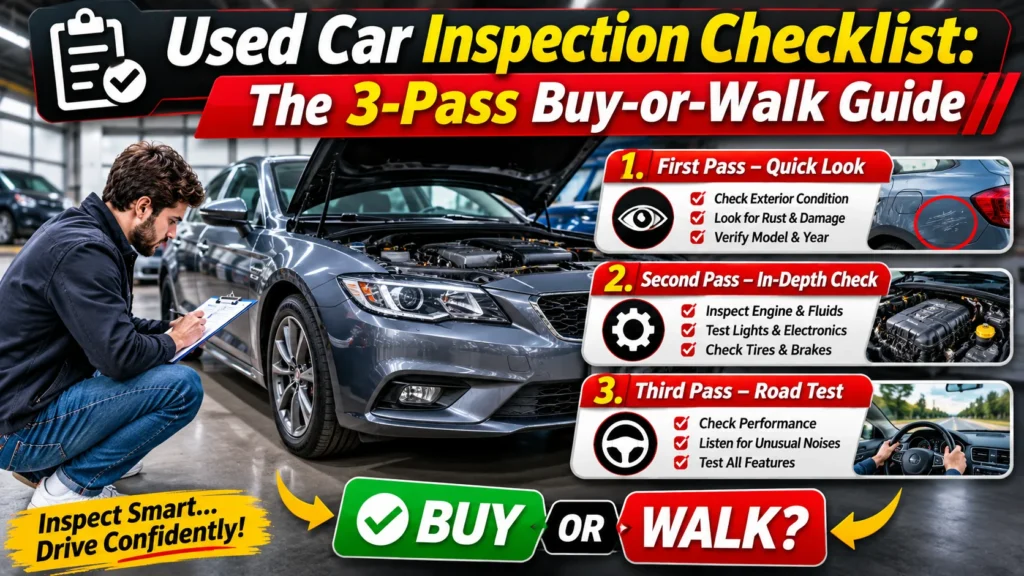
Buying a used car can save thousands of dollars, but a low asking price means little if the vehicle needs expensive repairs. Hidden accident damage, transmission problems, worn tires, and incomplete maintenance records can turn a promising deal into a financial headache.
This used car inspection checklist helps buyers evaluate a vehicle before making a purchase.
The ShiftAndCruise 3-Pass Inspection Framework separates the process into vehicle history, physical condition, and professional verification. It helps you identify warning signs, estimate potential costs, and decide whether to buy, negotiate, or walk away.
1. Before Visiting: Check Vehicle History and Ownership
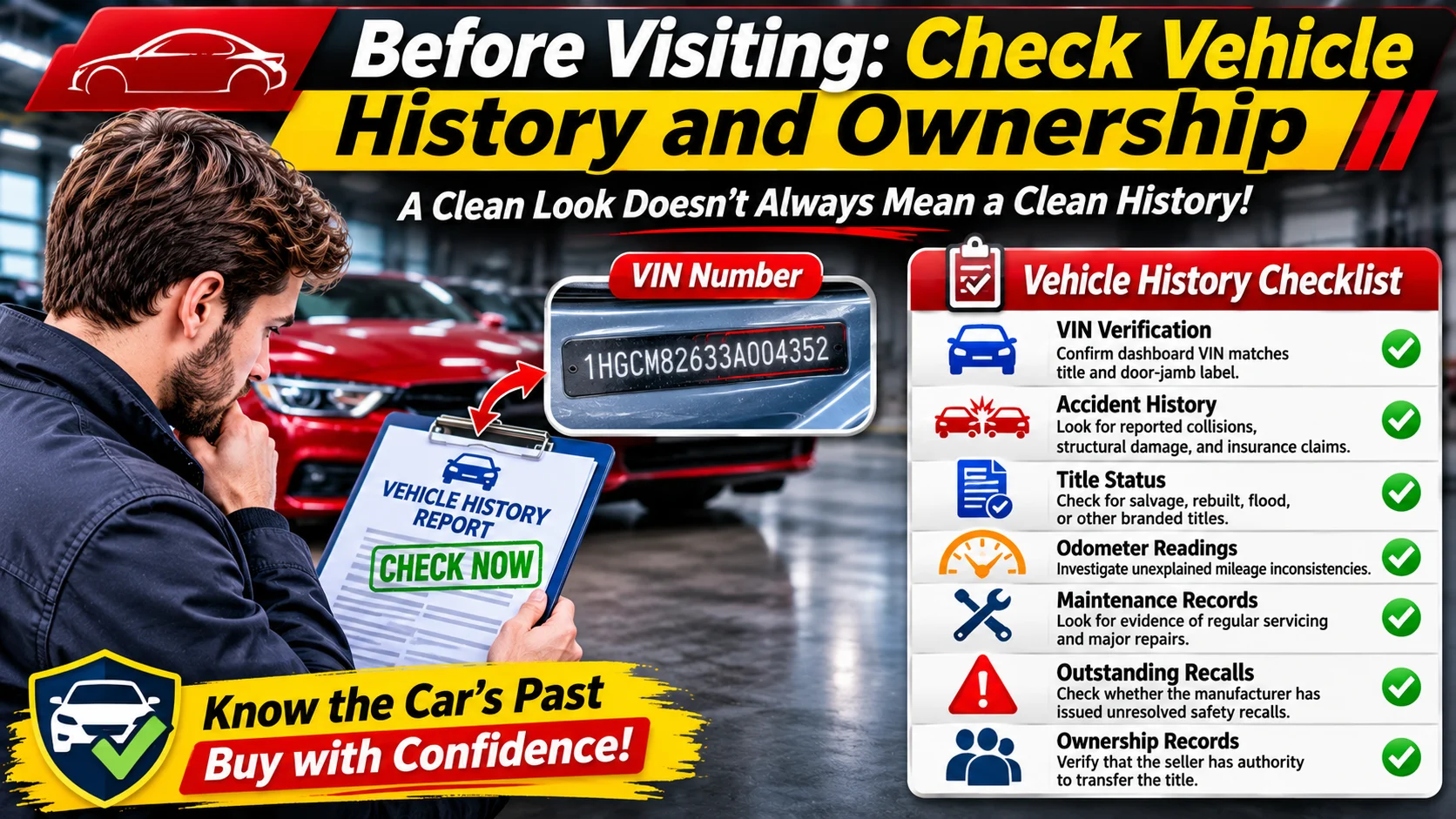
Before inspecting the engine or taking a test drive, investigate the vehicle’s background. A clean appearance does not guarantee a clean history.
Start by requesting the Vehicle Identification Number (VIN). Compare it against the vehicle’s title, registration, and available history records.
Vehicle History Checklist
- VIN verification: Confirm that the dashboard VIN matches the title and door-jamb label.
- Accident history: Look for reported collisions, structural damage, and insurance claims.
- Title status: Check for salvage, rebuilt, flood, or other branded titles.
- Odometer readings: Investigate unexplained mileage inconsistencies.
- Maintenance records: Look for evidence of regular servicing and major repairs.
- Outstanding recalls: Check whether the manufacturer has issued unresolved safety recalls.
- Ownership records: Verify that the seller has authority to transfer the title.
The US Department of Justice’s NMVTIS program provides access to approved vehicle-history report providers. These reports can reveal important title and salvage information. VehicleHistory+1
You can also search for open safety recalls through NHTSA’s official recall checker.
Original Framework: The Three-Pass Inspection
| Pass | Main question | Decision |
|---|---|---|
| 1. History | Is the ownership and vehicle history acceptable? | Proceed or reject |
| 2. Physical | Are visible components in reasonable condition? | Inspect further |
| 3. Professional | Are repair risks and costs acceptable? | Buy, negotiate, or walk away |
Buyer insight: Complete the first pass before traveling to see the car. Serious documentation problems can eliminate an unsuitable vehicle immediately.
2. Physical Inspection: What to Check on a Used Car
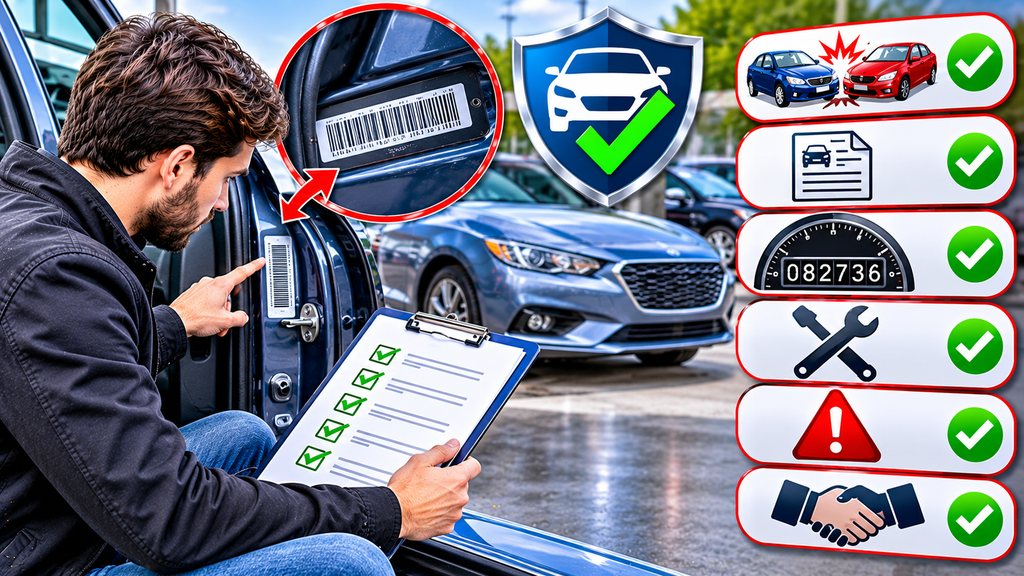
Inspect the vehicle outdoors in daylight, preferably on a dry day. Bring a flashlight, notebook, and tire tread-depth gauge.
According to Consumer Reports, buyers should inspect vehicles carefully and arrange an independent mechanical assessment before purchasing. Consumer Reports
Exterior and Body
Check the following:
- Uneven panel gaps around doors, hood, and trunk.
- Paint differences suggesting previous body repairs.
- Rust around wheel arches, door edges, and underneath.
- Windshield cracks, broken lights, or damaged mirrors.
- Tire wear patterns, sidewall cracking, and wheel damage.
Uneven tire wear can indicate alignment, suspension, or inflation problems. NHTSA recommends replacing tires when tread reaches 2/32 inch, although more tread may be needed for good wet-weather performance. NHTSA
Engine and Mechanical Components
Inspect the engine compartment before starting the vehicle.
- Check accessible fluid levels according to manufacturer instructions.
- Look for visible oil and coolant leaks.
- Inspect hoses and belts for damage.
- Listen for knocking, rattling, or unusual startup noises.
- Watch for persistent abnormal exhaust smoke.
- Check for overheating after the engine reaches operating temperature.
Never open a hot pressurized cooling system. Fluid appearance alone cannot establish engine condition.
Interior and Electronics
Evaluate the cabin for excessive wear, water damage, or malfunctioning features.
- Test air conditioning and heating.
- Check power windows, mirrors, and locks.
- Inspect seat belts and dashboard warning lights.
- Test the infotainment system and backup camera.
- Look for moisture, staining, or musty odors.
For hybrids and electric vehicles, ask a qualified technician to evaluate battery-health information and charging-system condition.
Original Framework: The Red-Flag Decision Table
| Observation | Risk level | Recommended response |
|---|---|---|
| Minor cosmetic scratches | Low | Negotiate if appropriate |
| Uneven tire wear | Moderate | Inspect alignment and suspension |
| Active fluid leaks | Moderate–high | Obtain repair estimate |
| Transmission slipping | High | Require professional diagnosis |
| Suspected structural damage | High | Consider rejecting the vehicle |
| VIN or title mismatch | Critical | Stop until independently resolved |
These categories are a practical screening framework, not a substitute for a professional diagnosis.
3. Test Drive, Professional Inspection, and Final Buying Decision
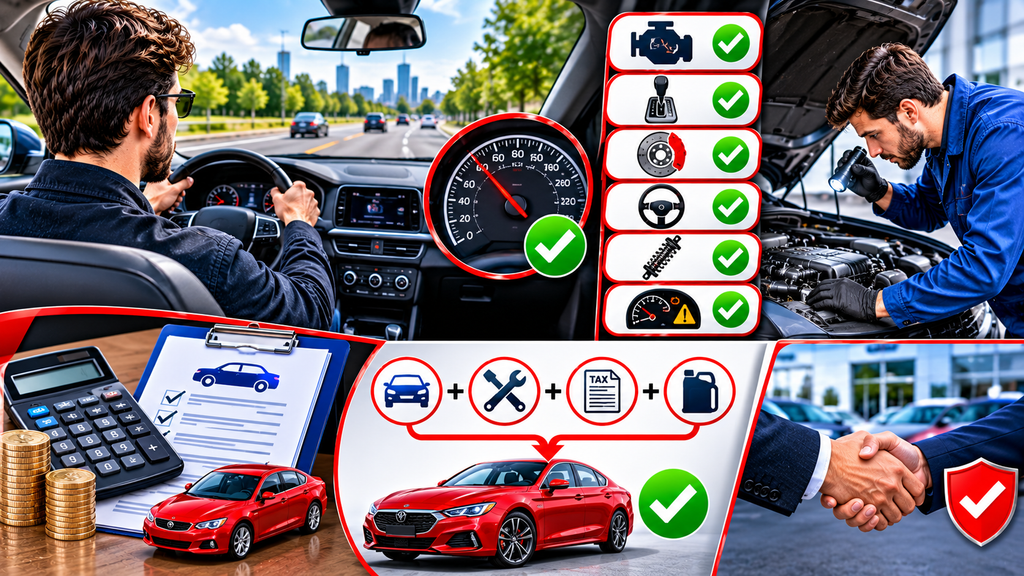
A test drive reveals problems that may not be apparent while the vehicle is parked.
Ask for a route that includes ordinary city streets and suitable higher-speed roads. Never drive a vehicle showing serious safety defects.
Test Drive Checklist
Engine performance: Acceleration should feel consistent, without unusual hesitation, severe vibration, or unexpected power loss.
Transmission: Automatic shifts should operate normally for the model. Manual transmissions should engage without abnormal grinding or slipping.
Brakes: Check for excessive vibration, unusual noises, and pulling during normal braking.
Steering: Look for excessive looseness, persistent pulling, or unusual steering noises.
Suspension: Listen for repeated knocks over ordinary road imperfections.
Dashboard: Confirm that important warning lights illuminate during the initial self-check and behave normally afterward.
If the vehicle passes these checks, arrange an independent pre-purchase inspection.
The Federal Trade Commission recommends professional inspections even when dealers describe vehicles as certified. A history report cannot reliably identify every mechanical problem. Consumer Advice
Original Framework: Calculate the Real Purchase Cost
Before negotiating, use this formula:
True Purchase Cost = Asking Price + Immediate Repairs + Taxes and Fees + Necessary Maintenance
For example:
| Expense | Illustrative cost |
|---|---|
| Used vehicle | $12,000 |
| New tires | $600 |
| Brake repairs | $350 |
| Overdue maintenance | $250 |
| Taxes and registration | $900 |
| Estimated total | $14,100 |
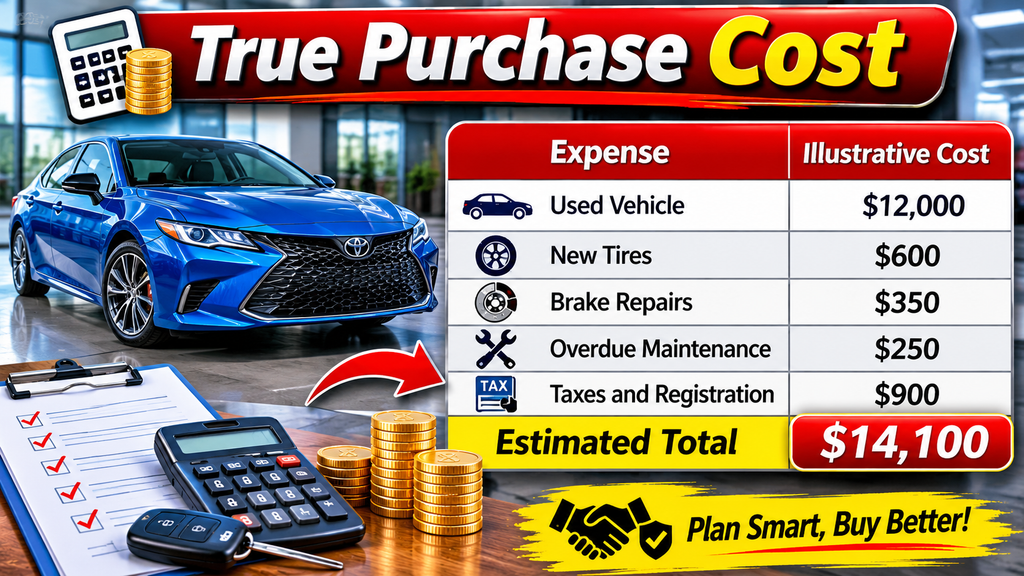
These figures are hypothetical, not market averages. Actual costs depend on location and vehicle condition.
A cheaper car may become more expensive than a better-maintained alternative.
Request written repair estimates and compare the adjusted total with similar vehicles. Review the dealer’s Buyers Guide, warranty terms, and final out-the-door price before signing.
Final Takeaway: Inspect First, Buy With Confidence
A reliable used vehicle is not necessarily the newest or cheapest option. Its value depends on documented history, mechanical condition, safety, and realistic ownership costs.
Use the three-pass framework to screen vehicles consistently, document concerns, and avoid emotionally driven purchases.
The most important rule: Never let an attractive price replace an independent inspection. A vehicle that passes the paperwork review, physical evaluation, and professional assessment is a more informed purchasing decision.