
A road trip is a great way to explore new destinations, spend time with family, and enjoy the freedom of traveling at your own pace. However, vehicle breakdowns, driver fatigue, unpredictable weather, and unfamiliar roads can quickly turn an enjoyable journey into a stressful experience. Following essential road trip safety tips can help prevent common travel problems, reduce driving risks, and keep everyone safe throughout the journey.
Whether you are planning a weekend getaway or a cross-country adventure, this guide covers everything you need to know before and during your trip.
How to Prepare Your Car for a Road Trip
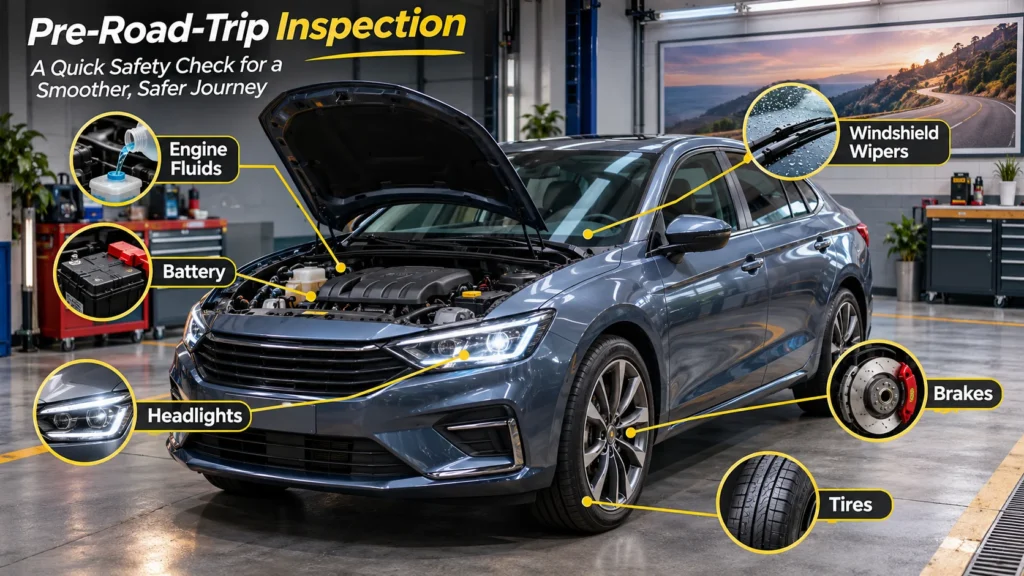
Preparing your vehicle before departure reduces the risk of unexpected mechanical problems. Ideally, complete your inspection several days before leaving so you have enough time to arrange repairs.
Use this car preparation checklist:
| Vehicle Component | What to Check |
|---|---|
| Tires | Pressure, tread depth, and visible damage |
| Engine oil | Oil level and service interval |
| Brakes | Unusual noises and braking performance |
| Battery | Condition and terminal connections |
| Coolant | Fluid level when the engine is cold |
| Headlights | Headlights, brake lights, and indicators |
| Windshield wipers | Visibility and blade condition |
| Air conditioning | Heating and cooling performance |
| Spare tire | Condition, pressure, and required tools |
Check tire pressure using the manufacturer’s recommended PSI, usually found inside the driver’s doorframe. If your vehicle has unusual vibrations, fluid leaks, warning lights, or braking problems, have it professionally inspected before departure.
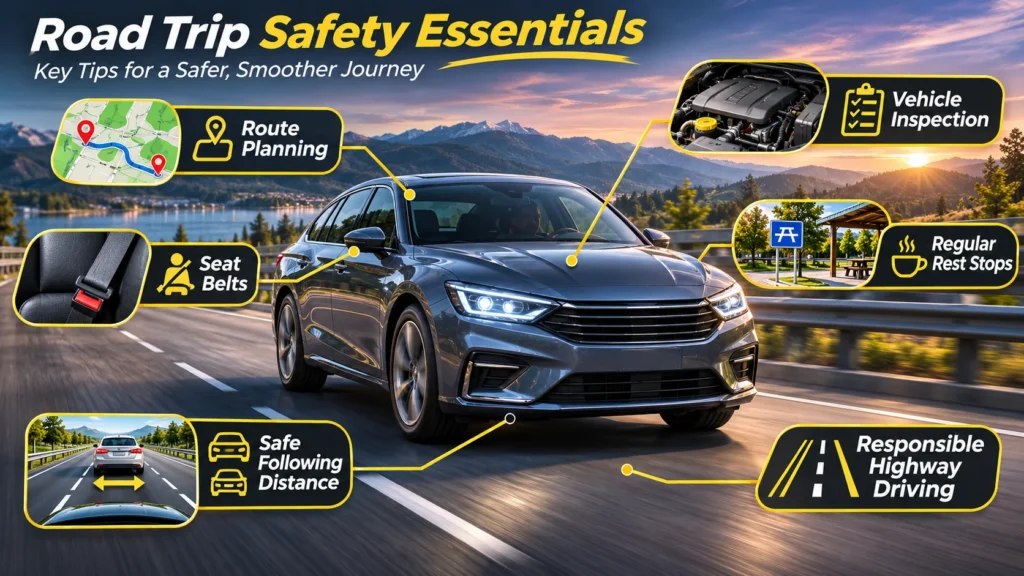
15 Essential Road Trip Safety Tips
1. Plan Your Route in Advance
Review your route before leaving home. Identify fuel stations, rest areas, construction zones, and alternative roads. Download offline maps, especially when traveling through rural areas with limited cellular coverage. Share your itinerary with someone you trust.
2. Check Your Vehicle Before Departure
Inspect your tires, brakes, lights, battery, and essential fluids. Review your maintenance schedule and check for unresolved vehicle safety recalls. Avoid beginning a long journey with unexplained mechanical problems.
3. Get Enough Sleep Before Driving
Driving while tired reduces concentration, reaction time, and decision-making ability. Most adults should aim for seven to nine hours of sleep before a long journey. Avoid starting a road trip immediately after a demanding workday.
4. Wear Seat Belts at All Times
Every passenger should wear a seat belt, including those sitting in the rear seats. Children should travel in properly installed car seats or booster seats appropriate for their age, height, and weight.
5. Carry a Roadside Emergency Kit
Even a reliable vehicle can develop unexpected problems. Pack emergency supplies that can help you manage a flat tire, dead battery, minor injury, or extended roadside delay.
6. Take Regular Driving Breaks
Plan a rest stop approximately every two hours, or sooner if you feel tired. Use breaks to stretch, drink water, eat a light snack, and refresh your concentration. Share driving responsibilities with another qualified driver whenever possible.
7. Avoid Distracted Driving
Set your navigation, music, and climate controls before moving. Avoid texting, eating, or handling your phone while driving. Ask a passenger to manage navigation or pull over somewhere safe when necessary.
8. Maintain a Safe Following Distance
Under normal driving conditions, maintain at least a three-second gap between your vehicle and the vehicle ahead. Increase that distance during rain, fog, snow, or other conditions that reduce traction and visibility.
9. Adjust Your Driving to Weather Conditions
Check the weather forecast before departure and during extended stops. Reduce your speed when visibility or road grip decreases. If conditions become dangerous, stop at a safe location and wait for improvement. Never attempt to drive through a flooded roadway.
10. Monitor Your Fuel or Battery Level
Avoid waiting until your fuel tank is nearly empty before refueling. When traveling through remote areas, identify fuel stations in advance. Electric vehicle drivers should plan charging stops and allow for changes in driving range caused by weather or terrain.
11. Secure Luggage and Equipment
Loose luggage can become dangerous during sudden braking or a collision. Place heavier items low in the cargo area and secure bags, coolers, and equipment. Avoid blocking rear visibility or exceeding the vehicle’s load capacity.
12. Follow Speed Limits and Traffic Laws
Stay within posted speed limits and adjust your speed according to road conditions. Avoid aggressive driving, unsafe overtaking, sudden lane changes, and unnecessary speeding. Never drive under the influence of alcohol, drugs, or medication that impairs your ability to drive.
13. Be Extra Careful When Driving at Night
Night driving reduces visibility and can increase fatigue. Keep your windshield clean, use headlights correctly, and reduce your speed when needed. Avoid overnight driving if you are struggling to stay alert.
14. Protect Children and Pets
Use appropriate child restraints and secure pets using suitable vehicle restraints or carriers. Carry enough water, food, and necessary medications. Never leave children or pets unattended inside a parked vehicle, even for a short time.
15. Know What to Do During a Breakdown
If your vehicle develops a problem, move away from active traffic when possible and switch on your hazard lights. Contact roadside assistance and avoid attempting repairs in dangerous locations. If you cannot reach a safe area or face immediate danger, call emergency services.
Essential Road Trip Emergency Kit Checklist
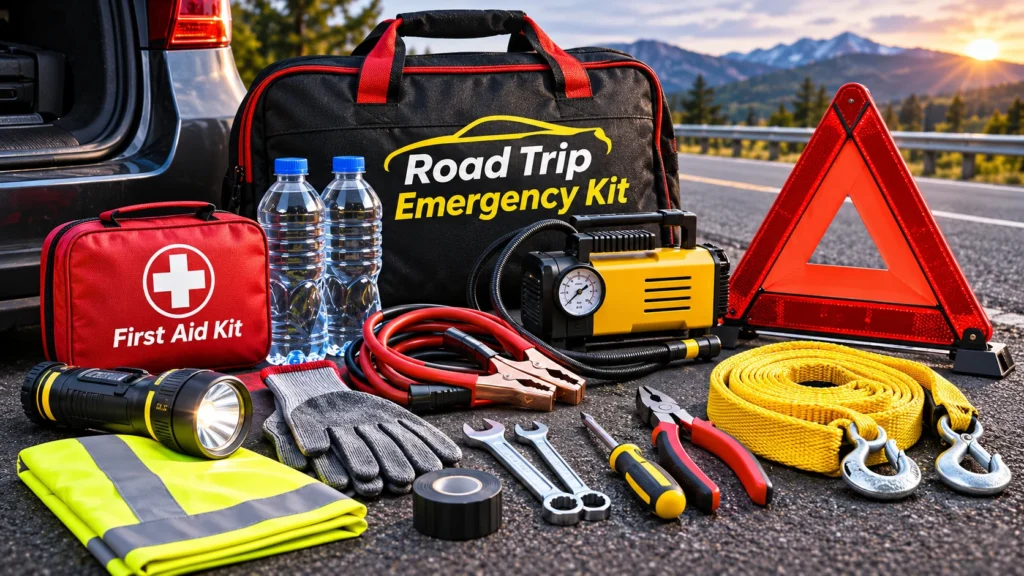
A well-prepared emergency kit is one of the most valuable road trip safety essentials. Keep your supplies somewhere accessible rather than underneath heavy luggage.
| Emergency Item | Purpose |
|---|---|
| First aid kit | Managing minor injuries |
| Jumper cables or jump starter | Assistance with a dead battery |
| Flashlight and batteries | Visibility during nighttime emergencies |
| Tire inflator and pressure gauge | Checking and restoring tire pressure |
| Spare tire and jack | Replacing a damaged tire when safe |
| Reflective warning equipment | Improving roadside visibility when safely deployed |
| Drinking water and snacks | Managing unexpected delays |
| Phone charger and power bank | Maintaining communication |
| Blanket and suitable clothing | Protection from cold conditions |
| Offline maps | Navigation without internet access |
Also carry your driver’s license, vehicle registration, insurance information, and roadside assistance contact details.
How to Stay Safe in Different Driving Conditions
Road conditions can change quickly during long-distance travel. Adjusting your driving habits to match the environment helps you maintain better vehicle control.
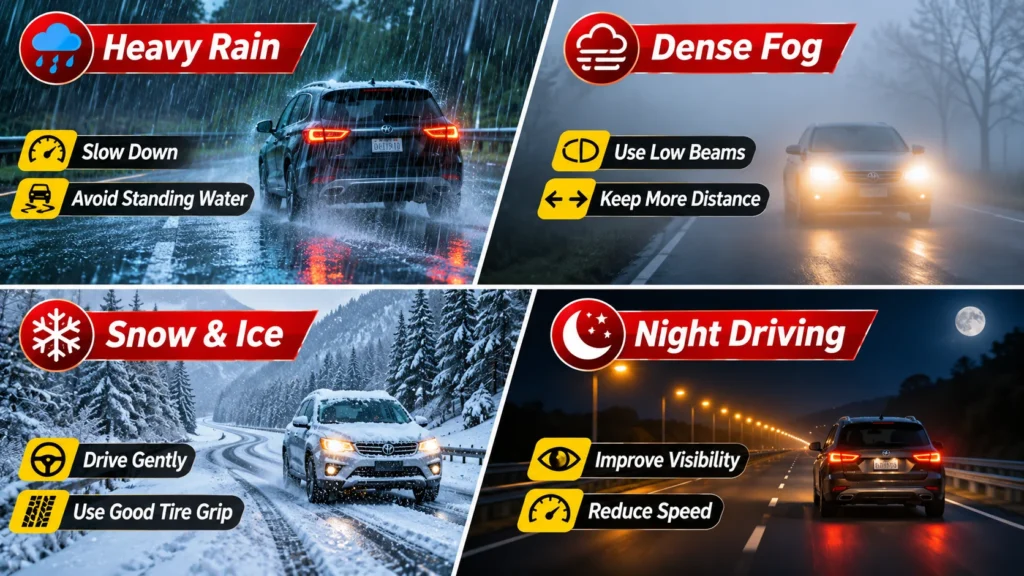
| Driving Condition | Recommended Safety Action |
|---|---|
| Heavy rain | Reduce speed and avoid standing water |
| Fog | Use low-beam headlights and increase following distance |
| Snow and ice | Accelerate, brake, and steer gently |
| Extreme heat | Monitor engine temperature and carry extra water |
| Mountain roads | Control downhill speed and avoid riding the brakes |
| Night driving | Reduce speed when visibility is limited |
| Strong crosswinds | Maintain firm steering control and reduce speed |
If weather conditions exceed your driving experience or your vehicle’s capabilities, delay your journey until it is safe to continue.
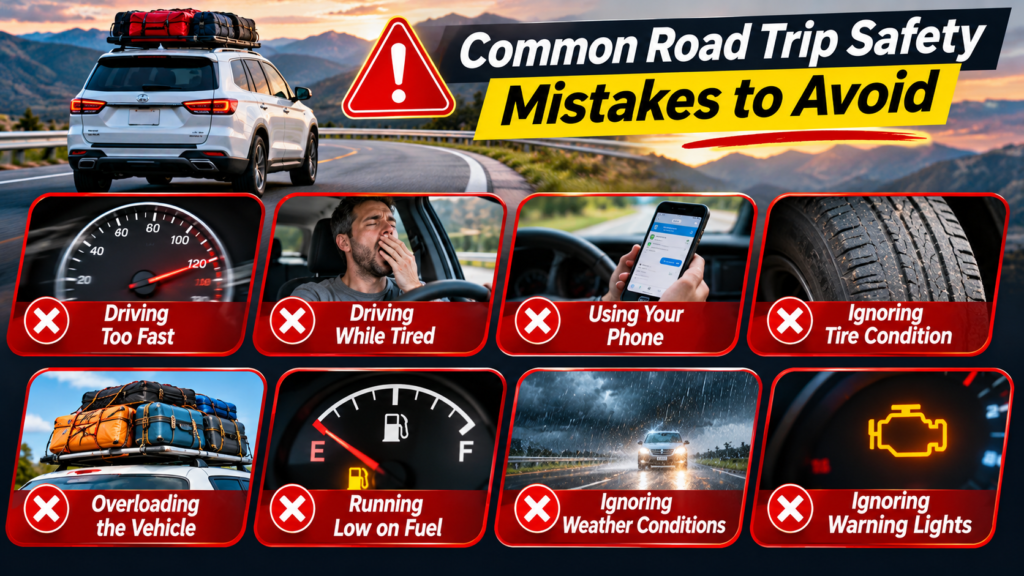
Common Road Trip Safety Mistakes to Avoid
Many travel problems can be avoided through simple preparation and responsible driving habits.
Avoid these common mistakes:
- Ignoring dashboard warning lights.
- Driving for several hours without resting.
- Depending entirely on online navigation.
- Overloading your vehicle with luggage.
- Ignoring tire pressure and tread condition.
- Driving too fast in poor weather.
- Continuing to drive while feeling sleepy.
- Leaving emergency supplies at home.
If you experience repeated yawning, heavy eyelids, missed exits, or difficulty staying in your lane, stop driving at a safe location. Loud music and open windows are not reliable solutions for driver fatigue.
Final Road Trip Safety Checklist
Complete this quick checklist before leaving:
- Check tire pressure and tire condition.
- Inspect brakes and essential engine fluids.
- Confirm that all lights and wipers work.
- Pack emergency roadside supplies.
- Download offline navigation maps.
- Check weather and traffic conditions.
- Carry insurance and vehicle documents.
- Secure luggage and equipment.
- Plan fuel, charging, and rest stops.
- Get enough sleep before departure.
- Share your travel itinerary.
- Ensure every passenger is properly restrained.
A few minutes of final preparation can help prevent unnecessary delays and reduce avoidable risks.
Frequently Asked Questions
What are the most important road trip safety tips?
Inspect your vehicle before leaving, get enough sleep, wear seat belts, carry emergency supplies, maintain a safe following distance, and take regular breaks. These precautions help reduce common driving and travel risks.
How often should you stop during a long road trip?
Plan to stop approximately every two hours. However, take a break immediately if you experience fatigue, reduced concentration, or physical discomfort.
What should I check on my car before a long road trip?
Check tire pressure, tread condition, brakes, engine oil, coolant, battery, headlights, windshield wipers, and spare tire condition. Address any mechanical issues before leaving.
What should I pack in a road trip emergency kit?
Pack a first aid kit, flashlight, jumper cables, tire inflator, drinking water, snacks, reflective warning equipment, phone charger, and basic emergency supplies.
Is it safer to drive during the day or at night?
Daytime driving generally provides better visibility. Night driving can be more challenging because of reduced visibility and fatigue. Choose a travel schedule that allows you to remain rested and alert.
How do I know if my car is ready for a long road trip?
Your vehicle should have properly maintained tires, reliable brakes, correct fluid levels, working lights, and no unresolved safety-related mechanical problems. If you are unsure about its condition, schedule a professional inspection.
Conclusion
A successful road trip starts with proper planning, a well-maintained vehicle, and responsible driving habits. Checking your car, preparing emergency supplies, monitoring weather conditions, and taking regular rest breaks can make your journey safer and more comfortable. By following these road trip safety tips, you can reduce avoidable risks, protect your passengers, and spend more time enjoying the journey rather than dealing with unexpected problems.