
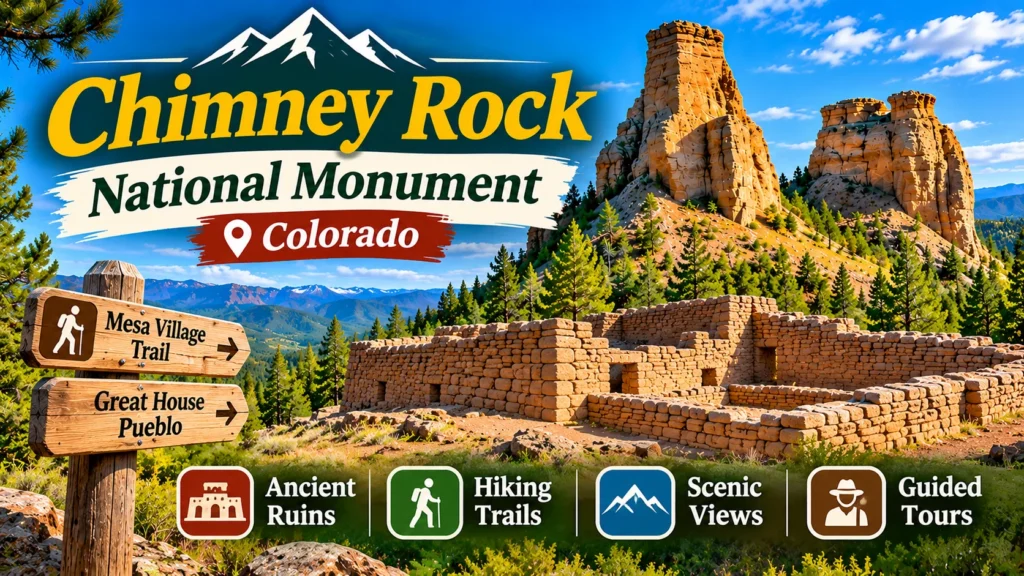
Imagine driving through the beautiful mountains of southwestern Colorado when two enormous sandstone spires suddenly rise above the surrounding forest. Behind these dramatic rock formations lies a story that began more than 1,000 years ago. Welcome to Chimney Rock National Monument, one of Colorado’s fascinating archaeological and scenic destinations.
Located between Durango and Pagosa Springs, this remarkable landmark offers more than beautiful mountain views. Visitors can explore ancient Puebloan structures, follow interpretive hiking trails, learn about remarkable astronomical connections, and discover an important part of the American Southwest’s cultural heritage. For travelers planning a Colorado scenic road trip, Chimney Rock makes a rewarding stop where natural beauty meets centuries of human history. Whether you’re interested in photography, Native American history, or a memorable family adventure, this guide covers everything you need to know before visiting Chimney Rock Colorado.
Chimney Rock National Monument at a Glance
| Visitor information | Details |
|---|---|
| Location | Southwestern Colorado, near Pagosa Springs |
| National monument designation | 2012 |
| Managed by | U.S. Forest Service |
| Main attractions | Chimney Rock, Companion Rock, Great Kiva, Great House Pueblo |
| Activities | Sightseeing, hiking, cultural tours, photography |
| Recommended visit duration | Approximately 2–3 hours |
| Best time to visit | During the seasonal operating period, especially late spring through early fall |
| Nearest towns | Pagosa Springs and Durango |
| Access | Highway 151, off U.S. Highway 160 |
| Ideal visitors | Road-trippers, families, photographers, history enthusiasts |
Seasonal update (November 2026): Regular tours have ended for the 2026 season. Guided tours are scheduled to return on May 15, 2027. Check current access and reservation information before planning your trip.
What Is Chimney Rock National Monument?
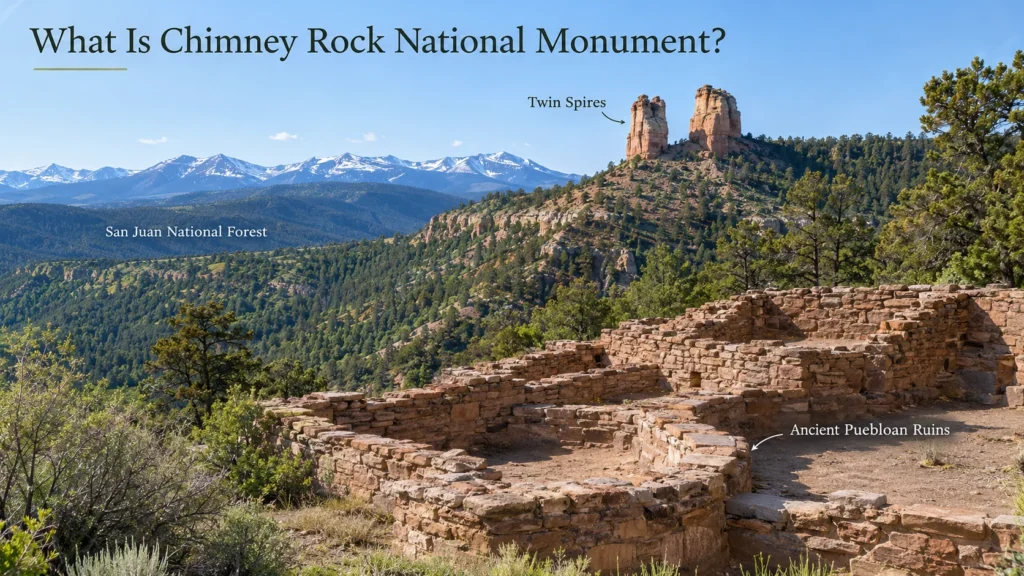
Chimney Rock National Monument is a protected archaeological and scenic landscape in the San Juan National Forest of southwestern Colorado. It is best known for its two towering sandstone pinnacles and the remains of an ancient Ancestral Puebloan settlement. The monument was established in 2012 to protect approximately 4,726 acres of culturally significant land.
Although its geological formations are the first thing many visitors notice, Chimney Rock is equally important for the archaeological structures preserved throughout the surrounding landscape. The area contains ancient dwellings, ceremonial spaces, and a remarkable Great House Pueblo associated with the wider Chacoan cultural world.
Unlike some national monuments that can be experienced almost entirely from the road, Chimney Rock encourages visitors to explore on foot. Short interpretive trails lead toward archaeological structures and elevated viewpoints overlooking the surrounding valleys and mountains. This combination of scenery, archaeology, and outdoor exploration makes Chimney Rock one of the more distinctive cultural stops on a southwestern Colorado itinerary.
Where Is Chimney Rock in Colorado?
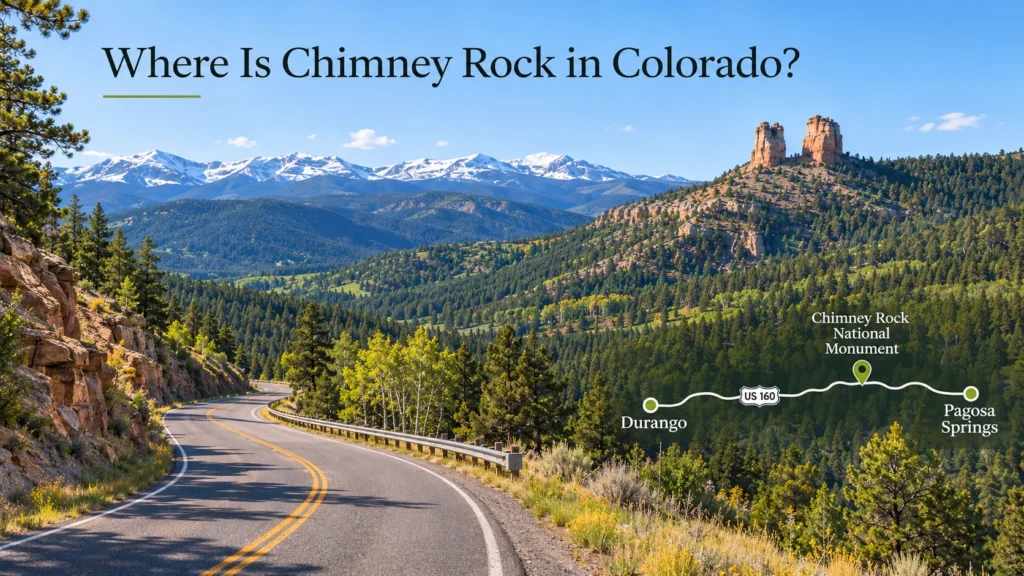
Chimney Rock National Monument is located in Archuleta County, between Pagosa Springs and Durango, in the southern foothills of the San Juan Mountains. Its setting makes it a convenient destination for travelers exploring southwestern Colorado and the Four Corners region. The monument is reached by turning from U.S. Highway 160 onto Colorado State Highway 151.
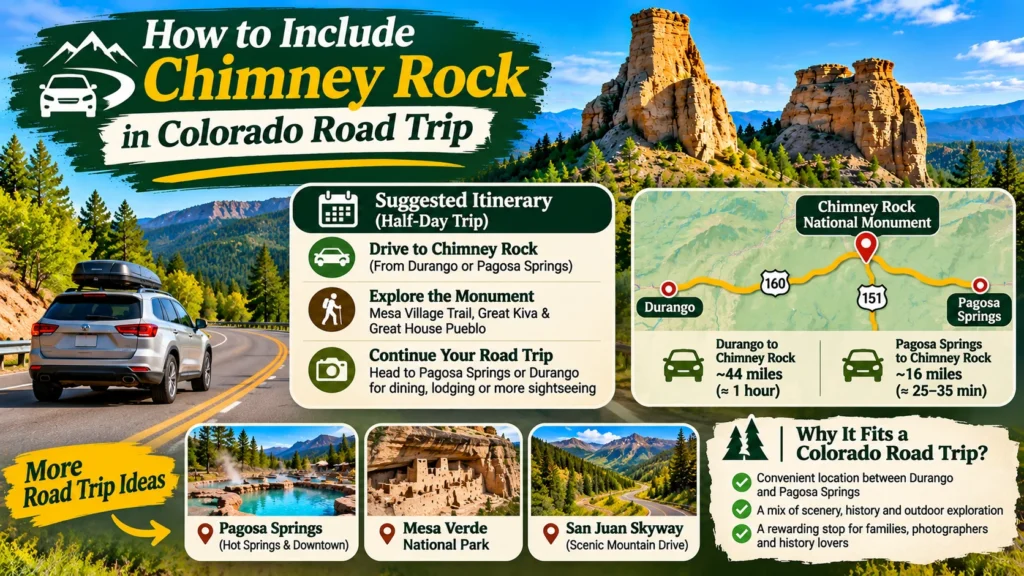
How to Get to Chimney Rock From Pagosa Springs
If you’re traveling from Pagosa Springs:
- Follow U.S. Highway 160 west.
- Continue approximately 16 miles to the Highway 151 junction.
- Turn south onto Highway 151.
- Drive approximately 3 miles to the monument entrance.
- Follow the designated visitor directions when the site is open.
The drive to the entrance generally takes about 25–35 minutes, depending on your starting point and road conditions.
How to Get to Chimney Rock From Durango
Travelers coming from Durango can reach Chimney Rock by heading east on U.S. Highway 160. After approximately 44 miles, turn south onto Highway 151 and continue to the monument entrance.
The drive typically takes about an hour, depending on traffic, weather, and your exact starting point. Once inside the monument during its operating season, visitors travel farther along a steep, winding gravel road toward the upper archaeological area.
Travel tip: Download directions before leaving town. Cellular service around Chimney Rock can be unreliable.
Why Is Chimney Rock National Monument Famous?
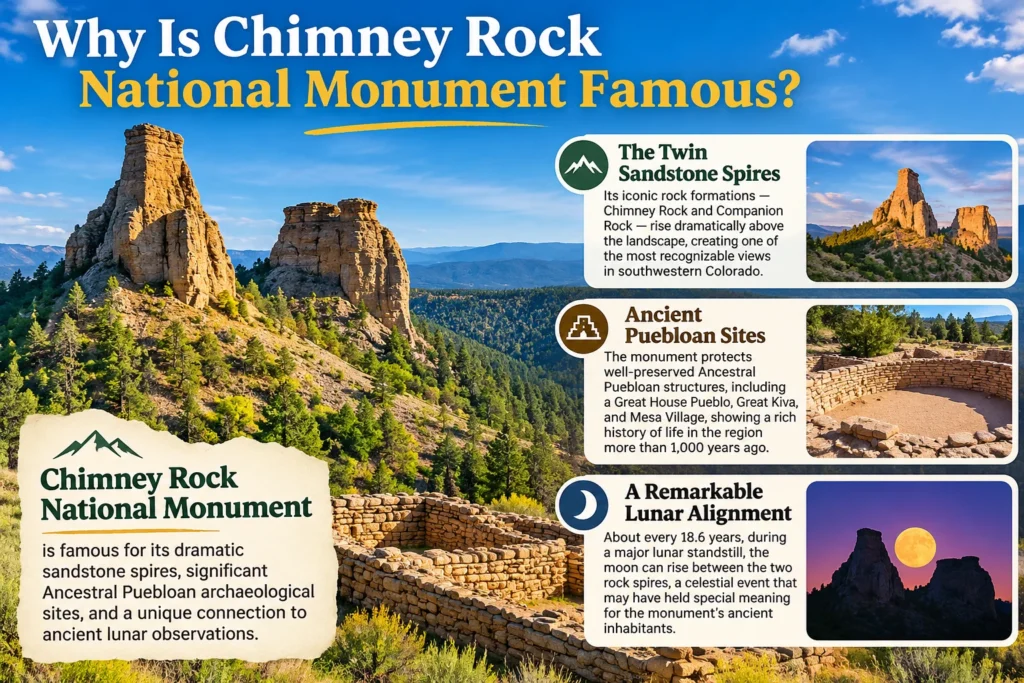
Chimney Rock is famous for three remarkable features: its unusual sandstone formations, important Ancestral Puebloan archaeological sites, and connections with ancient observations of the moon.
The Twin Sandstone Spires
The monument’s most recognizable landmarks are Chimney Rock and Companion Rock. These towering rock formations rise from a narrow ridge and create a dramatic silhouette against the surrounding mountains. Their unusual shapes developed through natural geological processes, including erosion of the surrounding rock. Today, the formations are among the most photographed features of the monument. From approved viewpoints, visitors can appreciate the steep ridges, weathered sandstone, and forested valleys that define the landscape.
Ancient Puebloan Civilization
Long before modern highways crossed southwestern Colorado, Ancestral Puebloan communities established settlements throughout this region. Chimney Rock preserves evidence of that occupation, including residential structures, ceremonial spaces, and large stone buildings.
These remains help researchers understand the region’s settlement patterns, architecture, community activities, and cultural connections. The site also holds continuing significance for present-day Pueblo peoples whose ancestors lived across the greater Southwest.
The Remarkable Lunar Alignment
One of Chimney Rock’s most intriguing features involves the moon. Approximately every 18.6 years, the moon reaches an extreme point in its rising and setting positions during a phenomenon known as a major lunar standstill.
From a particular viewing position near the Great House Pueblo, the moon can rise between the two sandstone spires during this cycle. Researchers have studied how this alignment may relate to the positioning of ancient structures and astronomical observations. Although the precise interpretations remain a subject of research, the relationship between the landscape, architecture, and sky adds another fascinating dimension to Chimney Rock’s history.
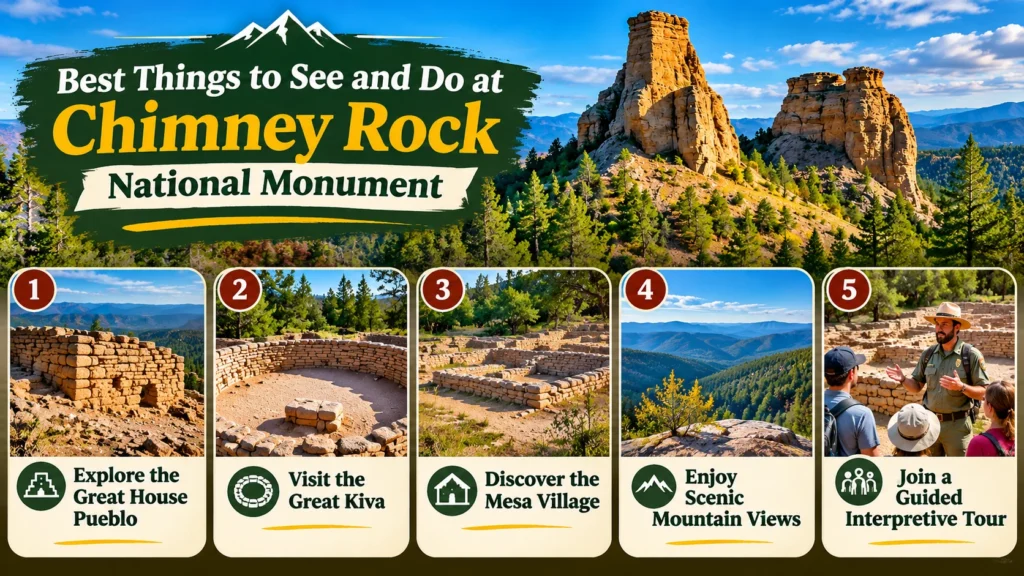
Best Things to See and Do at Chimney Rock National Monument
Despite its relatively compact visitor area, Chimney Rock offers several meaningful experiences. From archaeological discoveries to scenic viewpoints, these are the highlights worth including in your visit.
1. Explore the Great House Pueblo
The Great House Pueblo is one of the monument’s most impressive archaeological structures. Located on an elevated ridge, the building reflects architectural traditions associated with the Chacoan world. Its remains include stone walls, room foundations, and ceremonial structures that offer clues about the lives of people who occupied the area centuries ago. What makes the Great House particularly memorable is its location.
From the surrounding ridge, visitors can enjoy expansive views of the San Juan Mountains, nearby valleys, and the monument’s famous rock formations.Reaching the Great House requires an uphill walk, but for many visitors, it becomes the highlight of the entire experience.
2. Visit the Great Kiva
The Great Kiva is another important archaeological attraction at Chimney Rock. Kivas are circular structures associated with ceremonial and community activities in Ancestral Puebloan societies. The excavated Great Kiva provides a visible example of this architectural tradition.
Visitors can examine the preserved stone remains while learning about the building’s historical and cultural significance. Because the Great Kiva lies along the easier Mesa Village Trail, it is an excellent stop for families and visitors who prefer shorter walks.
3. Discover the Mesa Village
The Mesa Village area gives visitors a closer look at the daily lives of Chimney Rock’s ancient inhabitants. Along the interpretive trail, you can see archaeological features such as a pit house, the Great Kiva, and other settlement remains.
Interpretive information helps explain how people lived, gathered, and adapted to the surrounding environment. The Mesa Village also offers views toward the Piedra River Valley. For visitors with limited time or those who prefer a gentler experience, this area provides an introduction to the monument’s history.
4. Enjoy Scenic Mountain Views
Chimney Rock is worth visiting for its scenery as well as its archaeology. The elevated landscape provides sweeping views of wooded hillsides, rugged ridges, and distant mountains. The contrast between the sandstone formations and surrounding greenery creates beautiful photographic opportunities. On clear days, the broad landscape is especially impressive. Rather than rushing between archaeological sites, take time to appreciate the natural setting that made this location so distinctive.
5. Join a Guided Interpretive Tour
Guided programs can add valuable context to a Chimney Rock visit. Depending on the season and available schedule, tours may explore the archaeological structures, Ancestral Puebloan history, geological formations, and astronomical significance of the site. A knowledgeable interpreter can help visitors understand details that might otherwise be overlooked. Special educational programs are also offered at selected times. Advance reservations are recommended for ticketed programs, and some experiences require separate fees.
Chimney Rock Colorado Hiking Trails
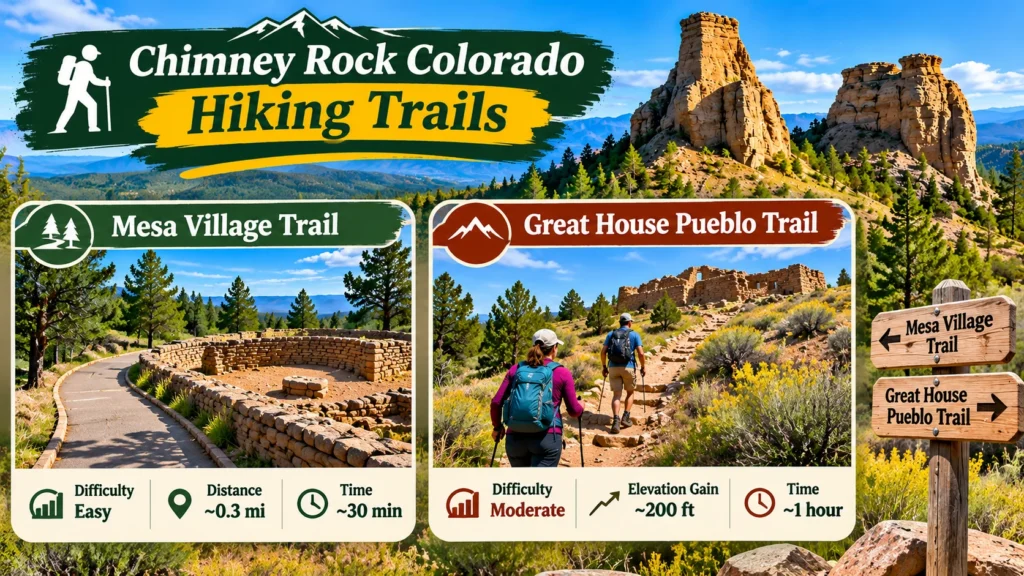
Hiking is one of the best ways to experience the monument. However, you don’t need to be an experienced long-distance hiker to enjoy the main archaeological attractions. Chimney Rock has two principal interpretive trails, each offering a different experience.
Mesa Village Trail
The Mesa Village Trail is the easier option. This short paved route passes important archaeological features, including the Great Kiva and pit-house remains.
It is an excellent choice for families with young children, visitors interested primarily in history, and travelers who prefer a less demanding walk. The trail also offers scenic views of the surrounding valley.
What to expect:
- Distance: Approximately one-third of a mile
- Trail surface: Paved
- Difficulty: Generally easy
- Main highlights: Great Kiva, pit house, archaeological remains
- Suggested walking time: Around 30 minutes
Visitors with mobility needs should confirm current accessibility conditions before arriving.
Great House Pueblo Trail
The Great House Pueblo Trail offers a more challenging but rewarding experience.
This route climbs toward the ancient Great House Pueblo on an elevated ridge. Along the way, hikers encounter uneven surfaces, exposed terrain, and impressive mountain views. The route involves approximately 200 feet of elevation gain.
Although it is relatively short, the combination of altitude, sun exposure, and climbing can make the walk feel more demanding than expected. At the upper archaeological area, visitors are rewarded with the remains of the Great House and sweeping views of the surrounding landscape.
What to expect:
- Difficulty: Moderate
- Terrain: Unimproved, rocky, and uphill
- Elevation gain: Approximately 200 feet
- Main highlights: Great House Pueblo, twin spires, panoramic views
- Suggested walking time: Around one hour
If you are comfortable with the terrain, exploring both trails is an excellent way to experience the monument.
Which Chimney Rock Trail Is Best?
| Trail | Best for | Difficulty |
|---|---|---|
| Mesa Village Trail | Families, beginners, archaeological sightseeing | Easy |
| Great House Pueblo Trail | Active travelers, history enthusiasts, photographers | Moderate |
For a complete experience, allow enough time to explore both trails without rushing.
Chimney Rock National Monument Hours, Tickets, and Entrance Fees
Understanding the monument’s access rules is essential because the archaeological area is not available for unrestricted, year-round vehicle access.
Opening Hours and Seasonal Access
Regular visitor operations are seasonal, generally beginning in mid-May and continuing into fall, subject to the published schedule. During the regular operating season, the main gate has commonly operated from 9:00 a.m. to 4:30 p.m.
Access to the upper archaeological area ends earlier than the main gate’s closing time. Visitors should arrive well before mid-afternoon if they want enough time to explore both trails. Weather, trail conditions, and special programs can also affect access.
Entrance Fees
Current visitor information lists the following day-use activity-pass fees:
| Pass type | Listed fee |
|---|---|
| Vehicle | $20 |
| Motorcycle | $10 |
| Pass validity | 5 days |
Qualifying federal recreation passes may be accepted for monument access. Guided tours and special interpretive programs may involve additional charges. Because fees and booking arrangements can change, verify the latest information before traveling.
Do You Need Reservations?
Self-guided access and scheduled guided programs have different arrangements. During normal operating periods, self-guided visitors may use the monument’s available visitor access system. Special guided programs often require tickets or advance reservations. Booking ahead is especially useful during busy travel periods or when you want a particular interpretive experience.
Best Time to Visit Chimney Rock National Monument
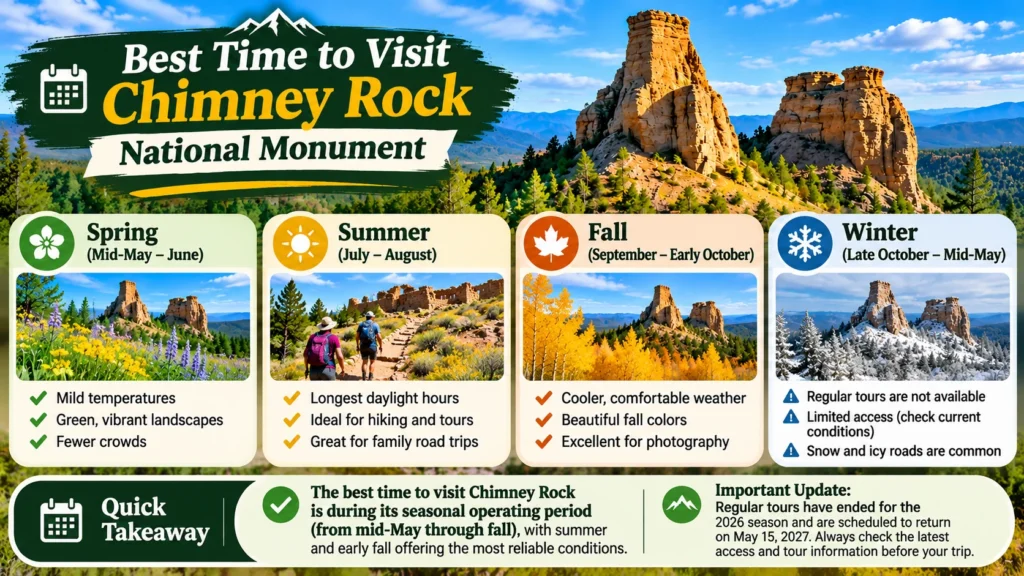
The best time to visit Chimney Rock is during its official operating season when the weather is comfortable and archaeological tours are available. However, each season offers a different experience.
Late Spring: Pleasant Weather and Green Landscapes
Late spring can be a beautiful time to explore southwestern Colorado. The surrounding hills begin to show fresh greenery, and temperatures are often comfortable for outdoor walking. For travelers who prefer milder conditions, this can be an appealing time to visit. However, always verify the season’s opening date before planning your trip.
Summer: Ideal for Family Road Trips
Summer is a popular season for travelers exploring Colorado’s national monuments and scenic highways.
Longer days provide more time to visit attractions around Durango and Pagosa Springs. The monument’s archaeological trails are especially interesting for families who enjoy educational outdoor activities. However, the exposed landscape can become hot during the afternoon. Bring plenty of water and sunscreen, and pay attention to changing weather conditions. Afternoon thunderstorms can develop in the mountains, making exposed ridges hazardous.
Early Fall: Beautiful Scenery and Cooler Conditions
Early fall can be an excellent time to explore the region. Cooler temperatures and changing colors in nearby mountain landscapes create attractive conditions for photography and scenic driving. This period can also be comfortable for hiking. Because monument operations are seasonal, confirm that the archaeological site remains open on your intended travel date.
Winter: Limited Visitor Access
Winter brings a different atmosphere to southwestern Colorado, but regular archaeological tours are not available during the closed season. Snow, icy conditions, and seasonal restrictions can limit access to the monument. Travelers planning a winter road trip should confirm permitted access with the land-management agency rather than assuming the upper mesa road is open.
How to Include Chimney Rock in a Colorado Road Trip
One of the biggest advantages of visiting Chimney Rock is its location between two popular southwestern Colorado destinations. A stop at the monument can add archaeological discovery and scenic views to a journey otherwise focused on mountain drives.
Option 1: Chimney Rock Half-Day Road Trip
This itinerary works well for travelers driving between Durango and Pagosa Springs.
Morning: Begin your journey from Durango or Pagosa Springs and drive toward Chimney Rock.
Late morning: Arrive at the monument, check visitor access, and continue toward the archaeological area.
Midday: Explore the Mesa Village Trail and Great Kiva. If your group is comfortable with the terrain, continue to the Great House Pueblo Trail.
Afternoon: Continue your journey to Pagosa Springs or Durango for food, relaxation, or additional sightseeing.
Allow approximately two to three hours for the monument itself.
Option 2: A Full-Day Southwestern Colorado Adventure
If you have more time, combine Chimney Rock with other attractions in the area. Start the morning with an archaeological visit to Chimney Rock National Monument. Spend time exploring both trails and learning about the site’s history.
Afterward, continue toward Pagosa Springs. Enjoy lunch, explore the town, or relax near the San Juan River. Depending on your interests and schedule, a hot-spring experience can provide a relaxing finish to the day.
This itinerary combines history, mountain scenery, and recreation without requiring an exhausting driving schedule.
Option 3: Chimney Rock and the Four Corners Region
Travelers planning a longer southwestern road trip can connect Chimney Rock with the broader Four Corners region. Durango provides access to scenic mountain routes and cultural attractions.
Mesa Verde National Park, located farther west, offers another opportunity to explore Ancestral Puebloan heritage. The two protected sites provide different experiences and are best enjoyed with sufficient time allocated to each. For an extended road trip, Chimney Rock adds an interesting cultural stop to an itinerary that might otherwise focus mainly on famous national parks.
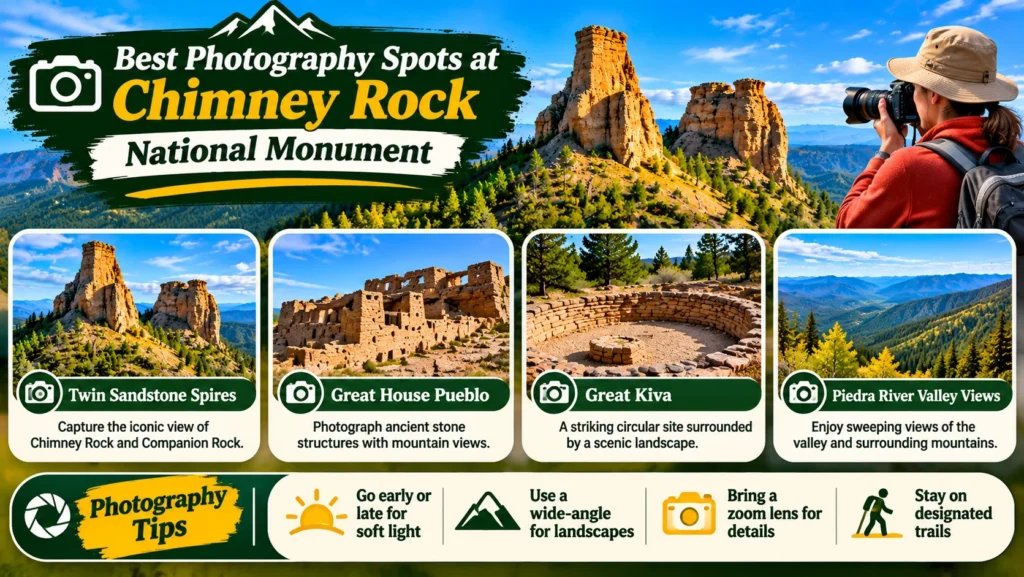
Best Photography Spots at Chimney Rock
Photographers will find Chimney Rock especially appealing because the landscape combines distinctive geological features with historic architecture.
Twin Sandstone Spires
The monument’s iconic formations make an excellent main subject. Photographing them from approved viewpoints allows you to emphasize their scale and unusual shapes. Wide landscape compositions can capture the relationship between the rock formations and surrounding valleys.
Great House Pueblo
The Great House offers opportunities to photograph historic stone architecture against the surrounding mountain landscape. Its elevated setting creates interesting compositions with foreground stone walls and distant ridgelines.
Piedra River Valley Views
The Mesa Village area includes scenic viewpoints overlooking the Piedra River Valley. These views are particularly attractive on clear days when distant landscape features are visible.
Photography Tips
Try including natural foreground elements to add depth to your images. A wide-angle lens is useful for capturing broad landscapes, while a moderate zoom can help isolate geological details. Always remain on designated trails and respect archaeological boundaries. Do not climb ancient structures or remove objects for photographs.
Essential Tips Before Visiting Chimney Rock Colorado
A little preparation can make your visit safer and more enjoyable.
Bring Enough Drinking Water
Drinking water is not provided at the monument. Carry sufficient water for everyone in your group, particularly during warm weather.
Wear Comfortable Hiking Shoes
Even relatively short trails can involve uneven or rocky surfaces. Sturdy shoes with good traction are especially important for the Great House Pueblo Trail.
Prepare for Sun Exposure
Much of the visitor area is exposed to direct sunlight. Wear sunscreen, a hat, and suitable clothing.
Consider the Elevation
The upper archaeological area reaches approximately 7,600 feet above sea level. Visitors arriving from lower elevations may notice the thinner air, particularly while walking uphill. Take breaks and avoid rushing.
Check Vehicle Restrictions
The road leading toward the upper archaeological area is steep, winding, and gravel-surfaced. RVs, trailers, and vehicles towing equipment are restricted from using the upper road. Visitors traveling in larger vehicles should check available arrangements before arriving.
Follow Archaeological Site Rules
Chimney Rock protects culturally important structures and landscapes. Stay on approved routes, respect closures, and avoid disturbing historic materials. Pets are not permitted on the archaeological interpretive trails, although applicable service-animal rules differ.
Things to Do Near Chimney Rock National Monument
Chimney Rock’s location makes it easy to combine with other southwestern Colorado attractions.
Pagosa Springs
Pagosa Springs is a popular mountain town known for its geothermal hot springs and scenic location along the San Juan River. It offers restaurants, lodging, outdoor recreation, and opportunities to relax after exploring Chimney Rock. For visitors planning a longer stay, Pagosa Springs is an excellent base.
Durango
Durango combines historic charm with access to some of Colorado’s most scenic mountain landscapes. Visitors can explore the downtown area, enjoy riverfront activities, and discover additional attractions throughout the surrounding region. Durango also serves as a convenient starting point for road trips across southwestern Colorado.
Mesa Verde National Park
History enthusiasts should consider adding Mesa Verde National Park to a longer itinerary. Known for its extensive Ancestral Puebloan archaeological sites, Mesa Verde provides a different perspective on the cultural history of the American Southwest.
A visit requires separate travel and sightseeing time, so it is better planned as a substantial destination rather than a rushed side trip.
San Juan Skyway
For travelers who love scenic drives, the San Juan Skyway offers a memorable journey through southwestern Colorado’s mountain landscapes. The broader route passes historic mountain communities, forests, and dramatic alpine scenery. Road conditions and seasonal closures should always be checked before traveling.
Is Chimney Rock National Monument Worth Visiting?
Yes, Chimney Rock National Monument is worth visiting if you enjoy natural landmarks, cultural history, and scenic outdoor experiences.
Its greatest strength is the combination of a beautiful mountain setting and significant archaeological heritage. Visitors can see ancient structures, learn about the Ancestral Puebloan communities who lived here, and appreciate the unusual sandstone formations that make the landscape recognizable.
Unlike a conventional scenic highway overlook, Chimney Rock rewards visitors who are willing to spend time exploring. The Mesa Village Trail provides an approachable introduction, while the Great House Pueblo Trail offers a more challenging experience with impressive views.
However, travelers looking for a drive-only attraction or visiting during the closed season may find the site less convenient. For most visitors planning a southwestern Colorado road trip during the operating season, allocating a few hours to Chimney Rock is a worthwhile choice.
Frequently Asked Questions About Chimney Rock National Monument
Where is Chimney Rock National Monument located?
Chimney Rock National Monument is located in southwestern Colorado, between Durango and Pagosa Springs. The main visitor entrance is along Colorado State Highway 151, south of U.S. Highway 160.
How much does it cost to visit Chimney Rock National Monument?
Current published activity-pass information lists $20 per vehicle and $10 per motorcycle. Eligible federal passes may cover monument access, while guided tours and special programs may have separate fees. Prices are subject to change.
How long does it take to visit Chimney Rock?
Most visitors should allow approximately two to three hours to explore the monument’s main archaeological trails, enjoy scenic viewpoints, and learn about its history.
Can you drive to Chimney Rock National Monument?
Yes. Visitors can reach the monument entrance by road and, during authorized operating periods, drive along a winding gravel road to the upper parking area. The main archaeological attractions require walking.
Is Chimney Rock Colorado good for families?
Yes. Families interested in history and nature can enjoy the interpretive exhibits and archaeological sites. The short paved Mesa Village Trail is particularly suitable for visitors who prefer an easier walk.
Is Chimney Rock National Monument open year-round?
No. Regular visitor operations and archaeological tours are seasonal. The 2026 season has ended, with guided tours scheduled to resume on May 15, 2027.
What is Chimney Rock famous for?
Chimney Rock is famous for its two sandstone spires, ancient Ancestral Puebloan archaeological structures, Chacoan-style Great House Pueblo, and an astronomical alignment associated with the moon’s major northern standstill.
Can you climb Chimney Rock in Colorado?
No. Climbing Chimney Rock and Companion Rock is not permitted. Visitors can appreciate the formations from designated trails and viewpoints.
What is the best time of day to visit Chimney Rock?
Morning visits can be comfortable during warmer months and allow more time to explore before afternoon weather changes. Visitors should arrive early enough to complete their activities before the upper archaeological area closes.
What should I bring when visiting Chimney Rock?
Bring drinking water, comfortable walking shoes, sunscreen, a hat, weather-appropriate clothing, and a camera. Because cellular coverage is unreliable, downloading directions in advance is also recommended.
Final Thoughts
Chimney Rock National Monument is much more than a scenic roadside attraction. It is a place where dramatic geological formations, ancient architecture, and the cultural history of the American Southwest come together in one remarkable landscape.
For travelers exploring Chimney Rock Colorado, the experience offers an opportunity to discover ancient Puebloan heritage while enjoying some of the region’s beautiful mountain scenery. Whether you spend your time exploring the Great Kiva, hiking toward the Great House Pueblo, or admiring the twin sandstone spires, the monument provides a meaningful addition to a southwestern Colorado adventure.
If your next road trip takes you between Durango and Pagosa Springs, consider setting aside a few hours to explore Chimney Rock National Monument. With a little advance planning, this fascinating historic landscape can become one of the memorable stops on your Colorado road trip.