

Does gasoline freeze in cold weather? Yes, gasoline can freeze under extreme conditions, but temperatures must fall far below the freezing point of water. For most drivers in the United States, frozen gasoline is highly unlikely.
Gasoline does not have one exact freezing temperature because it contains a mixture of hydrocarbons. Depending on its composition, certain components may begin crystallizing at extremely low temperatures.
However, winter can still cause fuel-related problems. Moisture inside the fuel system may freeze, restrict fuel delivery, and make an engine difficult to start.
Understanding what happens to gasoline in freezing temperatures can help you protect your car and avoid unnecessary winter repairs.
At What Temperature Does Gasoline Freeze?

Gasoline can begin forming crystals or thickening at approximately -40°F (-40°C) under some conditions. Other gasoline blends can remain liquid at substantially lower temperatures.
AAA describes a broad freezing range of approximately -40°F to -200°F, depending on fuel composition. This is not a single standardized freezing point for every gasoline blend.
Unlike pure water, gasoline contains multiple substances that respond differently to temperature changes.
Gasoline vs. Water Freezing Temperature
| Substance | Freezing behavior |
|---|---|
| Water | Freezes at 32°F (0°C) |
| Gasoline | Varies by blend; may begin crystallizing around -40°F or lower |
| Water contamination in gasoline | Can form ice near or below 32°F |
| Diesel fuel | Can develop wax crystals and gel in cold weather |
The most important difference is that gasoline rarely freezes during normal winter conditions, but water contamination can create problems much sooner.
Can Gasoline Freeze in Your Car’s Gas Tank?

Technically, yes. However, it is extremely unlikely in ordinary winter weather.
Even when temperatures fall below 0°F, gasoline generally remains liquid.
A vehicle parked outside overnight is therefore more likely to experience a weak battery, thickened engine oil, or freezing moisture than a completely frozen tank of gasoline.
What Happens When Water Gets Into the Gas Tank?
Small amounts of moisture can enter a fuel system through condensation or contaminated fuel.
When temperatures drop below freezing, that water may form ice crystals.
These crystals can interfere with fuel delivery if they collect in a vulnerable section of the fuel system.
Potential symptoms include:
- Difficulty starting the engine
- Rough or inconsistent engine operation
- Hesitation during acceleration
- Stalling or reduced power
These symptoms can also indicate battery, ignition, or mechanical problems. They do not confirm that fuel lines are frozen.
What Happens to Gasoline in Extremely Cold Weather?
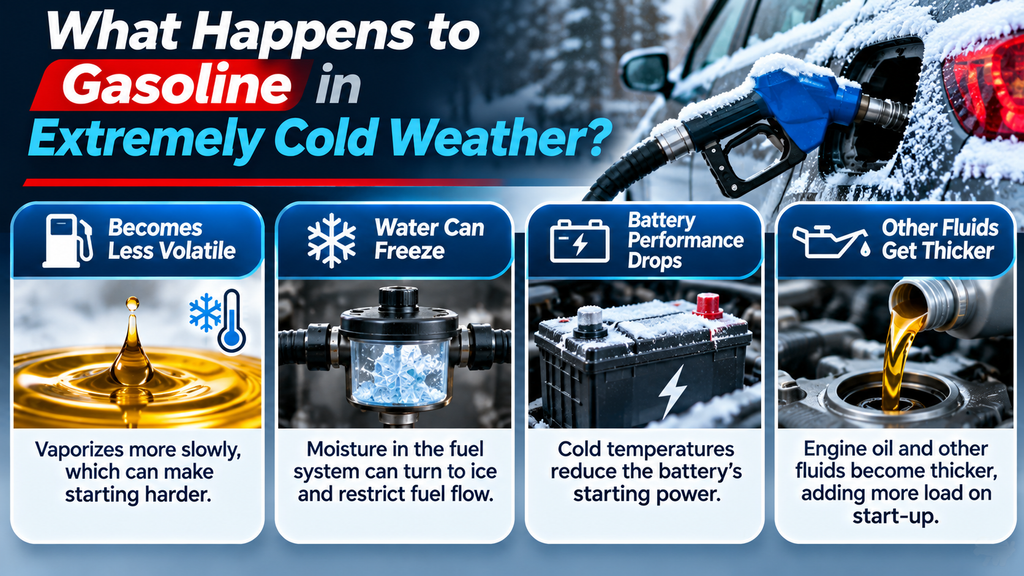
Extreme cold affects fuel behavior, but it also changes how other vehicle components operate.
Gasoline May Become Less Volatile
Gasoline must vaporize sufficiently to form a combustible mixture inside the engine.
Cold temperatures can make vaporization more difficult, contributing to starting problems.
Fuel suppliers adjust gasoline formulations seasonally to support cold-weather operation.
Ice Can Restrict Fuel Delivery
Water contamination may freeze inside a fuel line or filter.
If an ice blockage limits the fuel reaching the engine, the vehicle may crank without starting or operate poorly.
Batteries Deliver Less Starting Power
Cold weather reduces the starting performance of automotive batteries.
A weak battery may struggle to crank the engine, even when the gasoline and fuel system are functioning normally.
This is one reason winter starting problems should not automatically be blamed on frozen fuel.
Why Won’t My Car Start in Freezing Weather?

If your vehicle refuses to start on a cold morning, use the symptoms to identify the likely problem.
| Symptom | Possible cause |
|---|---|
| Slow engine cranking | Weak battery |
| Clicking without starting | Battery or electrical connection problem |
| Normal cranking but no start | Fuel, ignition, or engine-management issue |
| Engine starts but runs poorly | Fuel delivery, ignition, or sensor problem |
| Engine stalls in severe cold | Possible fuel restriction or another mechanical fault |
Important: A no-start condition is not proof that gasoline has frozen.
If repeated starting attempts fail, consult the owner’s manual and arrange professional diagnosis instead of continuously cranking the engine.
How to Prevent Fuel Problems During Winter
Although gasoline freezing is uncommon, a few preventive habits can reduce winter-related vehicle problems.
Keep Your Gas Tank at Least Half Full
Maintaining adequate fuel helps reduce the amount of air space inside the tank and provides a useful reserve during winter emergencies.
AAA recommends keeping the tank at least half full during cold weather.
This precaution is particularly valuable when traveling through remote areas or regions experiencing severe storms.
Buy Fuel From Reputable Stations
Purchase gasoline from established fuel stations with properly maintained storage systems.
Use the fuel grade recommended in your vehicle’s owner’s manual.
Premium gasoline does not automatically offer better freeze protection than regular gasoline.
Maintain Your Battery
Have an aging battery tested before winter arrives.
Inspect the terminals for corrosion and verify that the charging system is operating correctly.
Use the Correct Engine Oil
Engine oil becomes more resistant to flowing as temperatures fall.
Use the viscosity specified by your vehicle manufacturer for the expected climate.
Avoid switching oil grades without checking the owner’s manual.
Park in a Protected Location
Parking inside a suitable garage can help protect your vehicle from extreme temperatures, ice, and snow.
Never operate a gasoline-powered vehicle inside a closed garage, even briefly, because of carbon monoxide poisoning risks.
Can You Use Gas-Line Antifreeze?
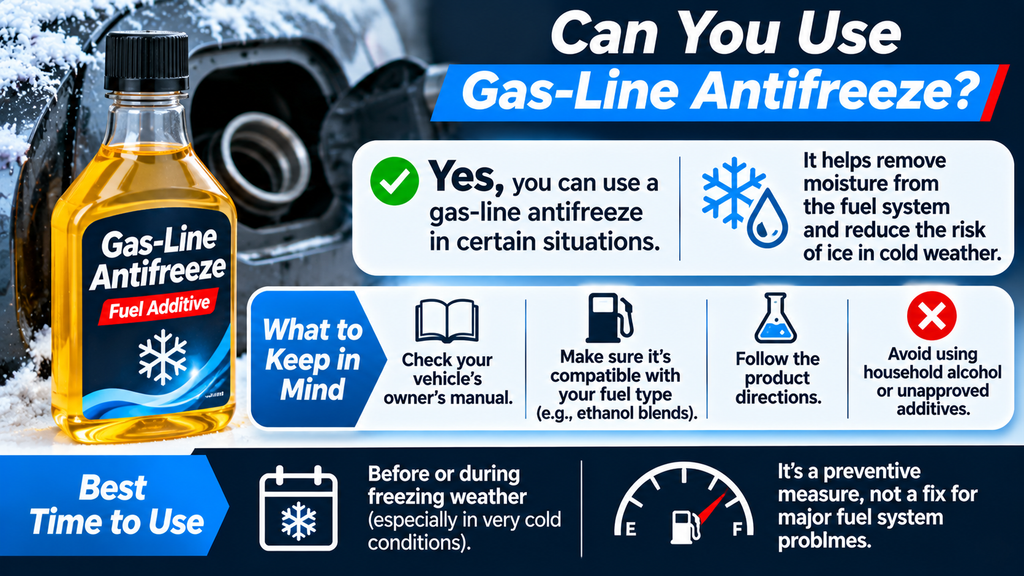
Gas-line antifreeze products are designed to address certain moisture-related fuel problems.
However, not every product is compatible with every vehicle or fuel formulation.
Many modern gasoline blends already contain ethanol, which affects how small amounts of moisture behave within the fuel system.
Before using an additive:
- Check the vehicle manufacturer’s guidance.
- Confirm compatibility with your fuel system.
- Follow the product’s instructions.
- Avoid mixing multiple additives without professional advice.
Do not pour household alcohol, antifreeze coolant, or other unapproved chemicals into your gas tank.
If significant water contamination is suspected, professional fuel-system inspection may be necessary.
Gasoline vs. Diesel: Which Freezes First?
Gasoline and diesel behave differently in winter.
Diesel fuel contains components that can form wax crystals when temperatures fall.
As crystallization increases, diesel may become cloudy or gel-like, potentially clogging fuel filters.
Gasoline generally remains usable at much lower temperatures.
This is why diesel vehicles may require winter-grade fuel or specialized cold-weather precautions, while gasoline-powered vehicles typically do not need comparable treatment.
Frequently Asked Questions
Does Gasoline Freeze at 32 Degrees?
No. Gasoline does not freeze at the same temperature as water. However, water contamination inside the fuel system can freeze around 32°F.
Can Gasoline Freeze at 0°F?
Gasoline is highly unlikely to freeze at 0°F. Cold-weather starting problems at this temperature usually involve other vehicle systems.
Can Gasoline Freeze at -40°F?
Some gasoline components may begin crystallizing around -40°F, but the behavior depends on the blend. Not all gasoline becomes completely solid at this temperature.
Does a Full Gas Tank Prevent Freezing?
A fuller tank does not change gasoline’s freezing properties. However, keeping adequate fuel can help reduce condensation-related concerns and provides an emergency reserve.
Does Premium Gas Freeze at a Lower Temperature?
Not necessarily. Octane rating measures resistance to engine knock, not freeze protection. A higher-octane rating does not guarantee a lower freezing point.
Final Thoughts
Does gasoline freeze? Yes, but only at extremely low temperatures that most American drivers will never encounter.
The greater winter concern is moisture freezing in the fuel system, along with weak batteries and other cold-related starting problems.
Keep your tank adequately filled, maintain your battery, use manufacturer-recommended fluids, and address unusual engine symptoms promptly.
With basic winter preparation, you can reduce the likelihood of fuel-related trouble and keep your vehicle operating more reliably during freezing weather.