

A great road trip starts long before you turn the ignition key. Whether you’re planning a weekend getaway, a family vacation, or a cross-country adventure, packing the right essentials can make your journey safer, more comfortable, and less stressful.
A well-organized road trip packing list should include more than clothing and snacks. Your vehicle needs emergency equipment, passengers need comfort supplies, and everyone needs access to important documents and navigation tools.
Quick Answer: Essential road trip items include your driver’s license, vehicle registration, insurance information, phone charger, offline maps, drinking water, snacks, first-aid kit, flashlight, tire pressure gauge, jumper cables or jump starter, spare tire or approved repair equipment, weather-appropriate clothing, and personal medications.
The National Highway Traffic Safety Administration (NHTSA) recommends checking vehicle condition, preparing emergency supplies, and reviewing travel conditions before long-distance driving. NHTSA
This ShiftAndCruise guide introduces the Pack–Place–Prepare Framework, helping you decide what to bring, where to store it, and how to prepare your vehicle before departure.
Essential Road Trip Packing Checklist
The most important items are those that protect your safety, keep your vehicle operating, and help you navigate unexpected situations.
Important Documents and Travel Essentials
Keep these items somewhere secure and easily accessible:
- Driver’s license.
- Vehicle registration and proof of insurance.
- Roadside assistance contact information.
- Rental agreement, if applicable.
- Credit or debit cards and some emergency cash.
- Hotel reservations and booking confirmations.
- Toll pass, when needed.
- Offline navigation maps.
Save digital copies of important travel information for emergencies, but keep legally required documents in an acceptable format.
Car Emergency Kit
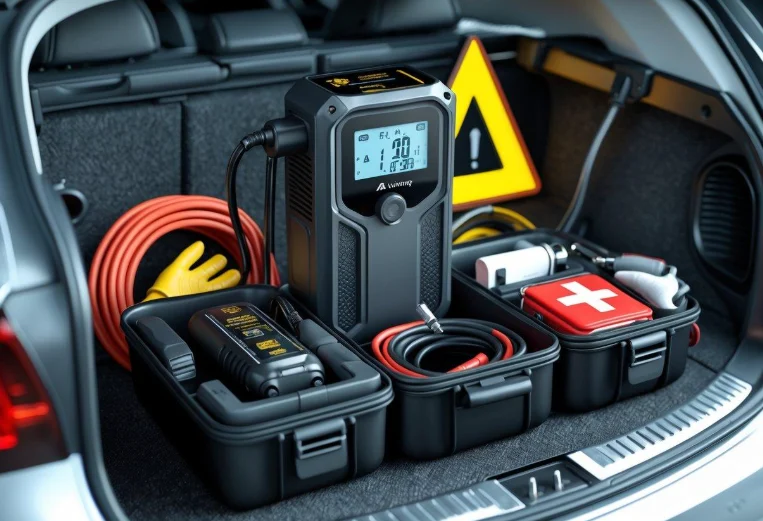
An emergency kit is essential even when your vehicle is well-maintained.
| Emergency item | Main purpose |
|---|---|
| First-aid kit | Minor injuries |
| Portable jump starter | Battery-related starting problems |
| Jumper cables | Emergency battery assistance |
| Flashlight | Visibility after dark |
| Reflective warning triangles | Warning approaching traffic when safely deployed |
| Tire pressure gauge | Checking tire pressure |
| Spare tire or approved repair kit | Tire emergencies |
| Work gloves | Protecting hands |
| Emergency blanket | Cold-weather protection |
| Drinking water and nonperishable food | Unexpected delays |
NHTSA also recommends carrying phone charging equipment, basic tools, necessary medicines, and emergency clothing. NHTSA
Never attempt tire changes or roadside repairs in an unsafe traffic location.
Navigation and Technology
Smartphones are valuable travel tools, but cellular coverage can disappear in remote areas.
Consider packing a secure phone mount, compatible vehicle charger, portable power bank, charging cables, and downloaded maps.
A separate GPS device or paper road map may provide useful backup navigation.
What to Pack for Comfort, Food, and Passengers
How to Organize Your SUV Trunk for a Week-Long Road Trip – TrunkTrek
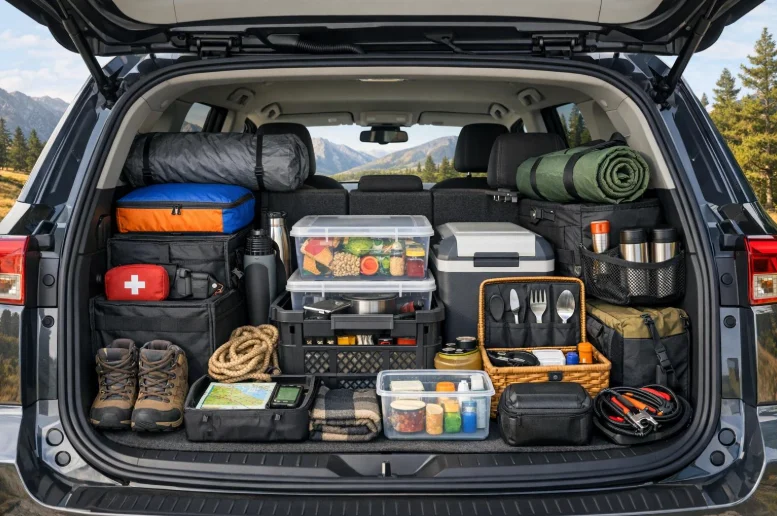
Long driving days become easier when passengers have access to food, personal belongings, and comfortable travel equipment.
Food and Drinks
Pack refillable water bottles, a small cooler, and easy-to-eat snacks.
Good options include fruit, crackers, granola bars, nuts, and sandwiches stored at safe temperatures.
Include napkins, reusable utensils, hand sanitizer, and a small trash bag.
Avoid keeping perishable foods in a warm vehicle for extended periods. Use adequate ice packs and monitor cooler temperatures.
Clothing and Personal Care
The amount of clothing depends on trip duration, activities, and weather conditions.
Consider bringing:
- Comfortable driving clothes and extra layers.
- Weather-appropriate jackets.
- Walking shoes.
- Toiletries and personal hygiene supplies.
- Sunscreen and sunglasses.
- Required prescription medications.
- A small overnight bag.
Keep one change of clothes accessible in case your luggage becomes difficult to reach.
Traveling With Children or Pets
For children, include age-appropriate entertainment, snacks, extra clothing, and essential care supplies.
Use correctly installed car seats or booster seats according to applicable requirements.
For pets, pack water, a bowl, waste bags, medications, and an appropriate secured carrier or restraint.
Never leave children or animals unattended in a parked vehicle.
Entertainment for Long Drives
Download music, podcasts, audiobooks, and passenger entertainment before leaving.
Passengers may enjoy books, travel games, or offline movies.
Drivers should avoid handling devices while moving. Set navigation and audio before departure or ask a passenger to make adjustments.
The Pack–Place–Prepare Road Trip Framework
Packing everything is not enough. You also need to know where each item belongs.
The ShiftAndCruise Pack–Place–Prepare Framework separates travel preparation into three practical decisions.
| Stage | Main question | Recommended action |
|---|---|---|
| Pack | What do I actually need? | Prioritize safety, documents, and essentials |
| Place | Where should everything go? | Store equipment based on access and safety |
| Prepare | Is the vehicle ready? | Inspect the car and confirm the route |
Organize Your Car Into Three Storage Zones
How to Keep the Car Organized for a Road Trip
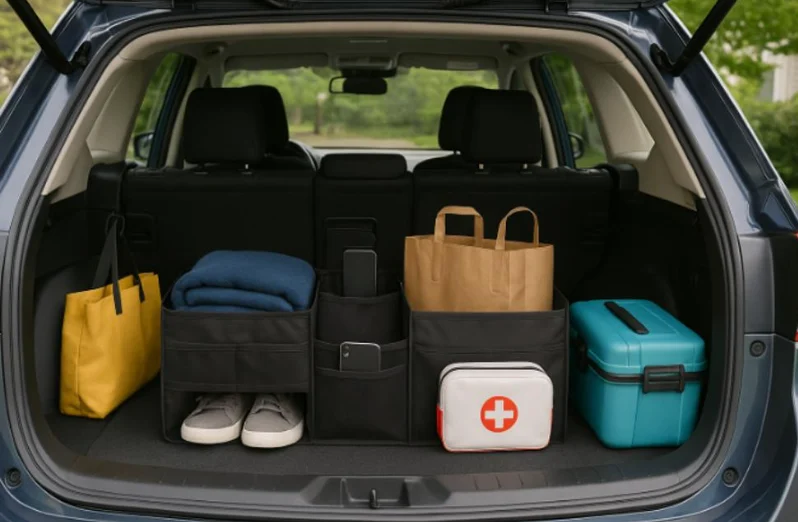
Use the following arrangement to prevent clutter and keep important supplies available.
| Storage zone | Recommended items |
|---|---|
| Cabin | Water, snacks, chargers, medications, navigation |
| Cargo area | Clothing, cooler, luggage, travel equipment |
| Accessible emergency compartment | First-aid kit, flashlight, safety equipment |
Secure all loose objects to prevent them from becoming projectiles during sudden braking.
Keep heavy luggage low and properly restrained. Never block the driver’s view or exceed the vehicle’s payload limits.
How Much Should You Pack?
Use this planning guide to avoid unnecessary cargo.
| Trip length | Suggested approach |
|---|---|
| Weekend | Small luggage bag, essentials, emergency kit |
| 3–5 days | Clothing organizer, cooler, daily supplies |
| One week | Additional clothing, toiletries, activity equipment |
| Two weeks or longer | Laundry plan, layered clothing, replenishable supplies |
These are suggested packing approaches, not fixed requirements.
Remember that unnecessary cargo adds vehicle weight and may affect fuel economy.
Adjust Your Packing List for Weather and Trip Type
The best supplies depend on your destination, season, and vehicle.
Summer Road Trips
For hot-weather driving, prioritize drinking water, sun protection, light clothing, and an effective cooling system.
Keep your vehicle’s coolant system properly maintained and monitor overheating warnings.
Never open a hot radiator cap.
Winter Road Trips
For cold-weather travel, consider adding:
- Ice scraper and snow brush.
- Warm blankets and extra clothing.
- Gloves and insulated footwear.
- Compact shovel where appropriate.
- Winter traction equipment approved for your vehicle.
Check tire suitability, weather forecasts, and road restrictions before departure.
Remote and Mountain Drives
Remote routes may require additional water, food, offline maps, emergency supplies, and more conservative fuel planning.
For electric vehicles, identify compatible charging stations and backup charging options before entering areas with limited infrastructure.
Check elevation changes, weather conditions, and potential road closures.
Final Vehicle Preparation Checklist
Before departure, inspect your vehicle rather than relying only on packed equipment.
Sau hành trình Từ Độc Lập tới Thống Nhất, đây là kinh nghiệm xuyên Việt ai cũng cần biết
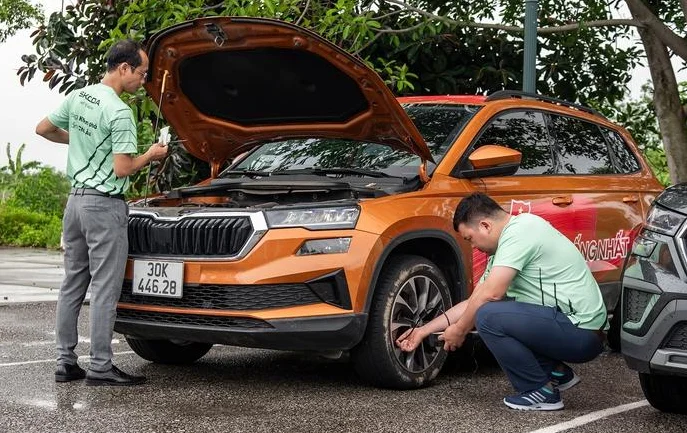
- Check tire pressure and visible tread condition.
- Inspect engine oil and coolant according to the owner’s manual.
- Verify brake, headlight, and turn-signal operation.
- Inspect windshield wipers and washer fluid.
- Check the battery if starting performance is questionable.
- Verify spare tire or repair-kit condition.
- Review outstanding safety recalls.
- Confirm route, weather, and fuel or charging stops.
- Secure luggage and passenger equipment.
- Get adequate rest before driving.
Address mechanical warning signs before leaving, especially problems involving brakes, tires, overheating, or engine performance.
Final Printable Road Trip Packing List
Use this condensed road trip packing list before closing the trunk.
| Category | Essential items |
|---|---|
| Documents | License, registration, insurance, reservations |
| Navigation | Phone, charger, offline maps |
| Safety | First-aid kit, flashlight, warning triangles |
| Vehicle | Tire gauge, jump starter, approved tire equipment |
| Food | Water, snacks, cooler |
| Comfort | Pillows, sunglasses, extra clothing |
| Personal care | Toiletries, medications, sanitizer |
| Entertainment | Downloaded music, books, passenger games |
| Weather | Seasonal clothing and protective supplies |
| Organization | Luggage organizers, trash bags, storage pouches |
Final Takeaway: Pack Smart, Drive Prepared
A successful road trip doesn’t require filling every available inch of your vehicle with supplies.
The goal is to bring the items that protect your safety, support vehicle reliability, and make long-distance travel comfortable.
Start with emergency equipment and essential documents, then add food, clothing, entertainment, and destination-specific supplies.
Use the Pack–Place–Prepare Framework to organize your vehicle efficiently and complete a final safety inspection before departure.
The best road trip packing strategy is simple: carry what matters, keep important items accessible, and prepare for changing conditions before you hit the road.