
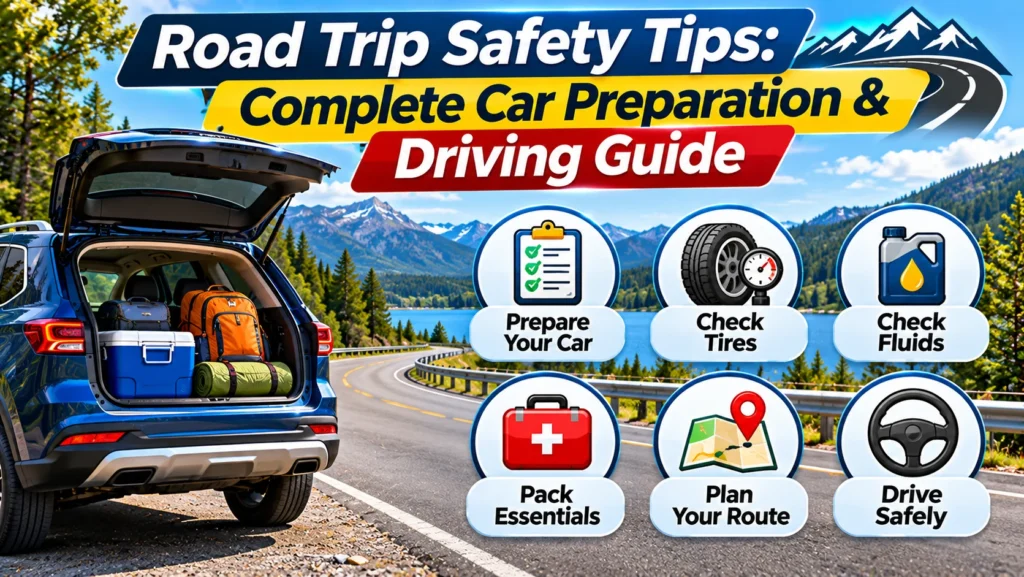
A successful road trip isn’t just about choosing the perfect destination. It’s about making sure your vehicle, passengers, and travel plans are ready for unexpected situations.
Whether you’re planning a weekend getaway, a family vacation, or a cross-country adventure, following practical road trip safety tips can help reduce breakdown risks, prevent avoidable accidents, and make long-distance driving less stressful.
The National Highway Traffic Safety Administration (NHTSA) recommends inspecting tires, checking essential vehicle systems, carrying emergency supplies, and reviewing road conditions before traveling.
At ShiftAndCruise, we’ve organized these recommendations into a practical Ready–Drive–Respond Framework that helps drivers prepare before departure, stay alert during the journey, and handle roadside emergencies.
Check Your Vehicle Before a Long Road Trip
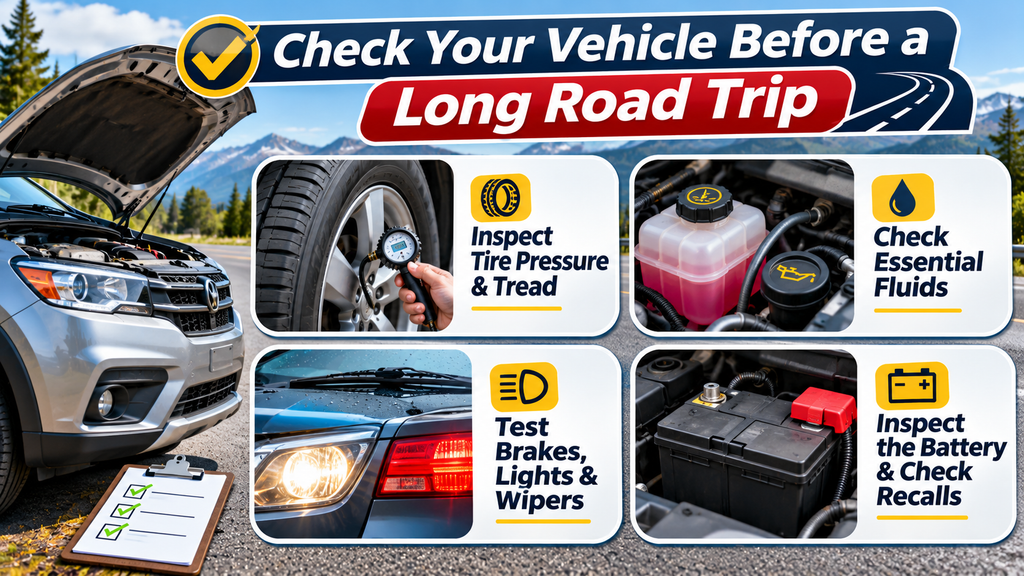
The following checks focus on vehicle reliability and preventing common problems before departure.
1. Inspect Tire Pressure and Tread
Tires are essential for braking, handling, and maintaining traction.
Before leaving:
- Check all four tires for proper inflation.
- Inspect the spare tire, if equipped.
- Look for cracks, bulges, punctures, or uneven wear.
- Check tread depth and replace unsafe tires.
Use the tire pressure listed on the driver’s door-jamb label, not the maximum pressure printed on the tire.
The U.S. minimum tread-depth benchmark for many passenger tires is 2/32 inch, but wet-road performance may deteriorate before reaching that limit.
2. Check Essential Fluids
Inspect engine oil, coolant, brake fluid, and windshield washer fluid according to your owner’s manual.
Low coolant can contribute to overheating, while insufficient engine oil may cause serious damage.
Never open a hot pressurized cooling-system cap.
3. Test Brakes, Lights, and Wipers
Confirm that headlights, brake lights, turn signals, and windshield wipers work correctly.
Unusual brake noises, vibration, reduced braking performance, or warning lights require attention before departure.
4. Inspect the Battery and Check Recalls
A weak battery can leave you stranded far from home.
Check accessible terminals for corrosion and loose connections. Consider professional battery testing if starting performance has deteriorated.
Also check your vehicle identification number (VIN) for outstanding safety recalls and arrange necessary repairs.
Prepare Passengers and Pack Emergency Essentials
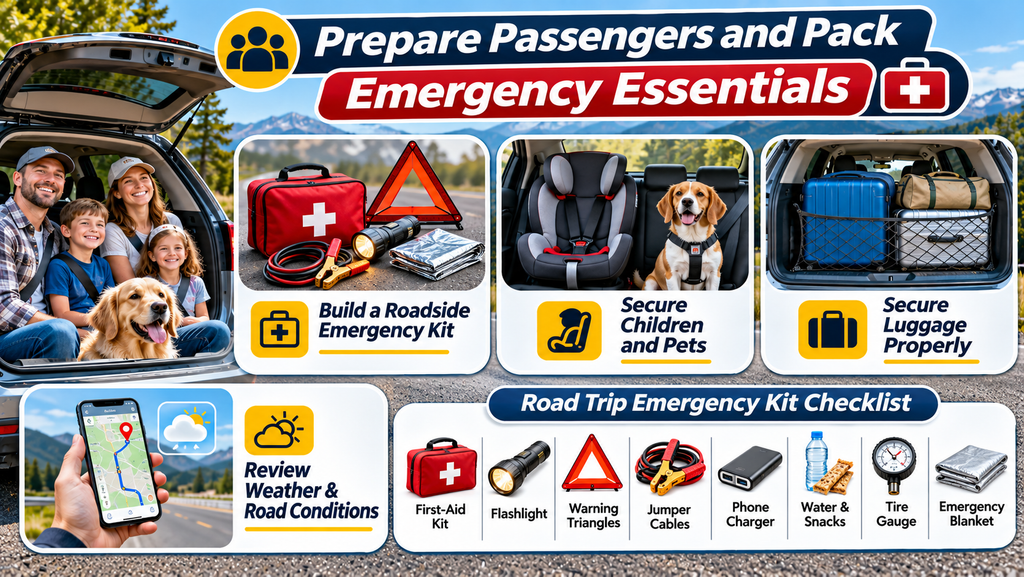
Proper preparation protects occupants and helps when assistance is delayed.
5. Build a Roadside Emergency Kit
Even a properly maintained car can experience an unexpected breakdown.
Use this practical packing checklist:
| Emergency item | Why you need it |
|---|---|
| First-aid kit | Minor injuries |
| Flashlight | Nighttime visibility |
| Reflective warning triangles | Alert approaching drivers |
| Portable phone charger | Emergency communication |
| Jumper cables or jump starter | Battery problems |
| Drinking water and snacks | Unexpected delays |
| Tire pressure gauge | Tire checks |
| Emergency blanket | Cold-weather protection |
Include prescribed medications, seasonal clothing, and vehicle-specific equipment when necessary.
6. Secure Children and Pets
All passengers must wear seat belts correctly.
Children need appropriate car seats or booster seats based on their age, height, weight, and applicable laws. NHTSA recommends that children younger than 13 ride in the back seat.
Pets should travel in appropriately secured carriers or restraints designed for vehicle use.
Never leave children or pets unattended inside a parked vehicle.
7. Secure Luggage Properly
Loose objects can become dangerous projectiles during sudden braking.
Store heavier items low in the cargo area and secure bags to prevent movement.
Never obstruct rear visibility or exceed the vehicle’s payload capacity.
8. Review Weather and Road Conditions
Check forecasts, road closures, construction zones, and potential hazards before departure.
Download offline maps for locations with unreliable cellular coverage.
Share your planned route and expected arrival time with someone you trust.
Follow the Safe Driving Framework
The most important road trip safety tips involve decisions made while driving, especially during long or unfamiliar journeys.
9. Follow the Two-Hour Break Rule
As a practical planning guideline, schedule a short break approximately every two hours.
Stretch, drink water, and assess your alertness.
This is not a guarantee against fatigue. If you’re becoming sleepy, stop at a safe location and rest before continuing. A short nap or switching to a rested driver may be necessary.
10. Avoid Distracted Driving
Set navigation, mirrors, and climate controls before departure.
Never text while driving. Ask a passenger to handle navigation changes or stop somewhere safe.
Driver-assistance systems do not replace attentive driving.
11. Maintain Safe Speed and Following Distance
Follow posted speed limits and adjust your speed for visibility, traffic, and weather.
Maintain sufficient following distance, allowing additional room in rain, snow, or heavy traffic.
Avoid sudden lane changes and aggressive braking.
12. Monitor Fuel and Vehicle Warnings
Don’t wait until the fuel gauge approaches empty in remote locations.
For electric vehicles, identify suitable charging locations and backup options.
Take dashboard warnings seriously, particularly those related to overheating, oil pressure, or braking.
Use the Ready–Drive–Respond Safety Framework
This original ShiftAndCruise planning framework organizes preparation into three decision stages.
| Stage | Primary focus | Key question |
|---|---|---|
| Ready | Vehicle inspection, supplies, route | Is everything prepared? |
| Drive | Alertness, speed, passenger safety | Are conditions safe? |
| Respond | Breakdowns, weather, emergencies | What is the safest next action? |
13. Know What to Do During a Breakdown
If your vehicle develops a serious mechanical problem, reduce speed safely and move away from traffic when possible.
Activate hazard lights and contact roadside assistance.
If you cannot reach a safe stopping location, or your vehicle remains exposed to high-speed traffic, follow emergency dispatch instructions. Never attempt roadside repairs in dangerous traffic conditions.
14. Prepare for Changing Weather
Heavy rain, snow, strong winds, and extreme heat can dramatically change driving conditions.
Slow down, increase following distance, and stop in a safe location when visibility becomes inadequate.
Never drive through flooded roads. Water depth and road damage may be impossible to judge.
15. Use the Three-Decision Safety Check
Before continuing after an unexpected problem, ask:
- Vehicle: Is the car mechanically safe to operate?
- Driver: Am I alert and capable of driving safely?
- Conditions: Are the road and weather conditions acceptable?
If any answer is no, postpone driving until the problem is resolved.
This simple check helps prevent avoidable risks caused by rushing or ignoring warning signs.
Final Road Trip Safety Checklist
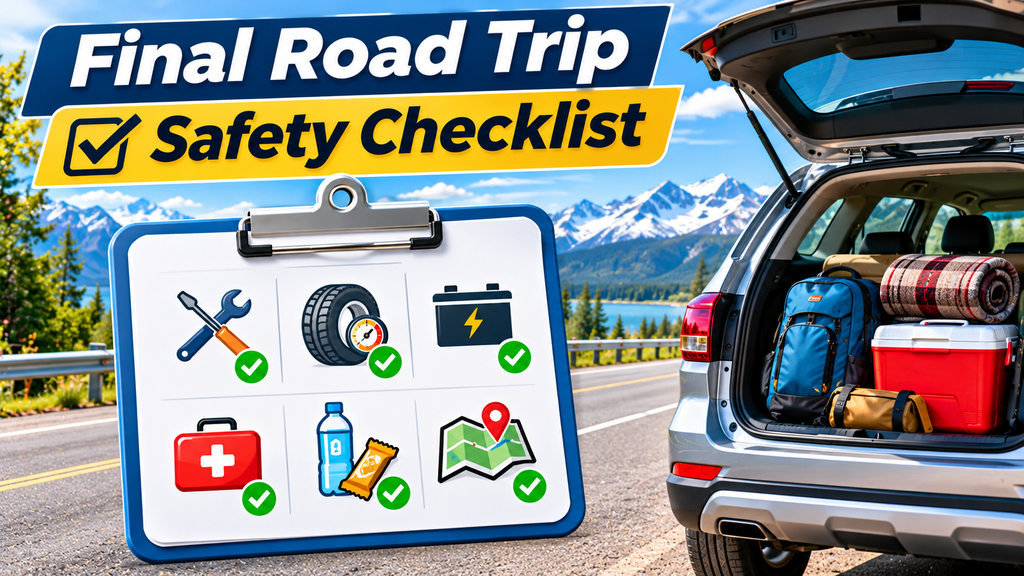
Use this quick checklist before leaving home.
- Tires, brakes, battery, and fluids checked
- Vehicle safety recalls reviewed
- Emergency kit and necessary medications packed
- Passengers and luggage properly secured
- Weather, route, and fuel stops reviewed
- Driver rested and backup plans prepared
- Roadside assistance information accessible
Following these road trip safety tips won’t eliminate every travel risk, but careful preparation can improve your ability to prevent problems and respond effectively.
The goal is simple: prepare your vehicle, protect your passengers, stay alert, and make safety your priority throughout the journey.